

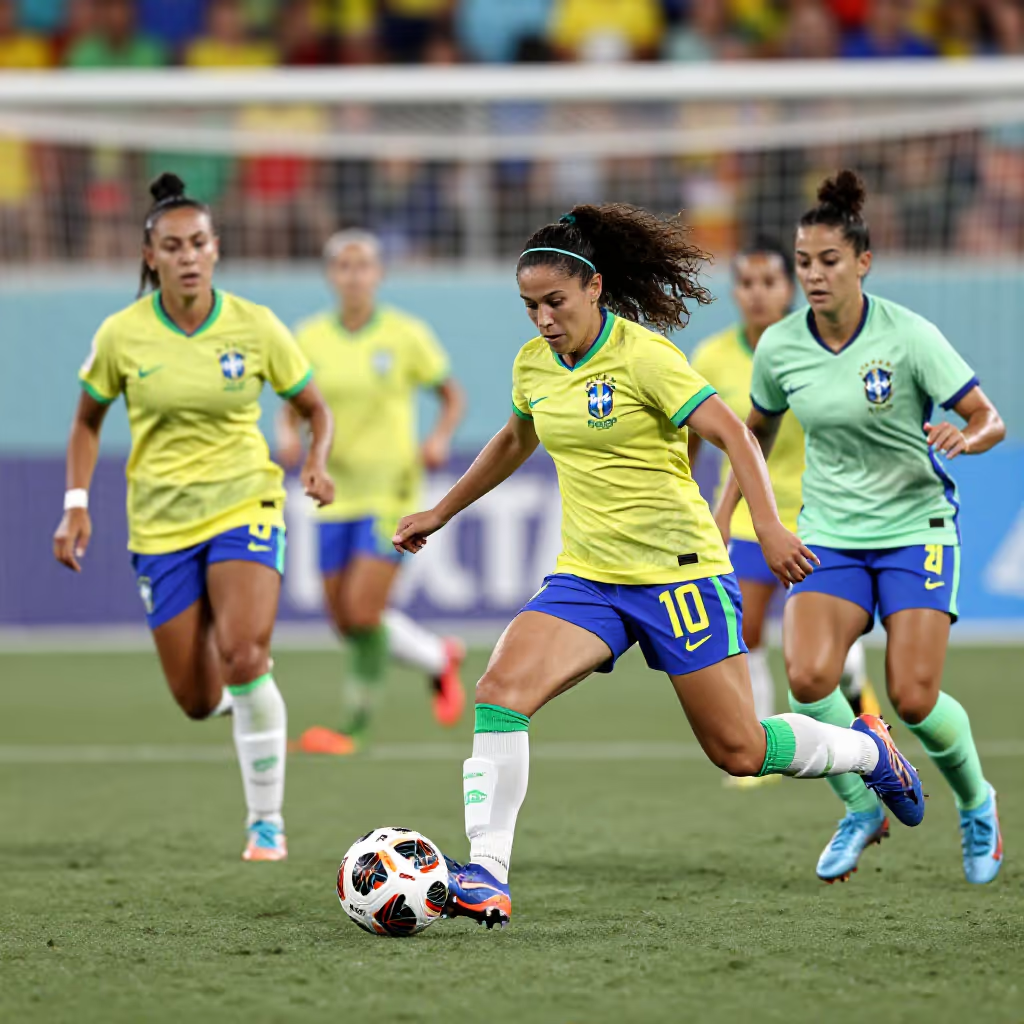
vorrücken
to advance
To move oneself or something forward, usually in a military, sports, or strategic context.
EXAMPLE
Die Armee rückte bis an die Grenze der Hauptstadt vor.
The army advanced as far as the border of the capital.
to advance
Loading your saved state.
to advance
To move oneself or something forward, usually in a military, sports, or strategic context.
Die Armee rückte bis an die Grenze der Hauptstadt vor.
The army advanced as far as the border of the capital.

to move up
To rise to a better or higher place in a ranking, hierarchy, or position.
Durch den Sieg ist die Mannschaft auf den zweiten Tabellenplatz vorgerückt.
Because of the victory, the team moved up to second place in the table.

to advance
To move forward on a time scale; to progress toward a later point in time.
Mit vorrückender Stunde wurde die Party immer lauter.
As the hour advanced, the party got louder and louder.
'Vorrücken' (to advance) is a separable verb. The prefix 'vor-' goes at the end in a main clause. In subordinate clauses and in the infinitive with 'zu', the verb stays together.
Der Zeiger der Uhr rückt langsam vor.
The hand of the clock slowly advances.
Since 'vorrücken' (to advance) describes movement or a change of state, the perfect tense is always formed with the auxiliary verb 'sein' (to be).
Die Mannschaft ist auf den ersten Platz vorgerückt.
The team has moved up to first place.
This meaning is often recognized from a military or strategic context, e.g. 'Armee' (army), 'Front' (front), or 'Figuren' (pieces) on a game board. Usually a preposition such as 'an' (up to), 'bis zu' (as far as), or 'auf' (onto/toward) is used to indicate the destination.
Die Spielfigur darf nur ein Feld vorrücken.
The game piece may advance only one square.
When it is about rising in a hierarchy, you will often find words in the sentence such as 'Platz' (place), 'Position' (position), 'Rang' (rank), or 'Tabelle' (table/standings). The typical preposition here is 'auf' (to).
Sie hofft, bald in eine höhere Position vorrücken zu können.
She hopes to be able to move up into a higher position soon.
In this meaning, the subject of the sentence is a time expression such as 'die Stunde' (the hour), 'die Zeit' (time), or 'das Alter' (age). The participial construction 'mit vorrückender Stunde' (as the hour advances) or 'bei vorrückendem Alter' (with advancing age) is especially common.
Bei vorrückendem Alter werden manche Dinge beschwerlicher.
With advancing age, some things become more difficult.
advance
Vormarsch and vorrücken can both refer to a military movement forward. Vorrücken is especially suited to an individual movement or change of position, while Vormarsch tends to describe a sustained, larger gain of territory. Use vorrücken for the next step and Vormarsch for the overall development.
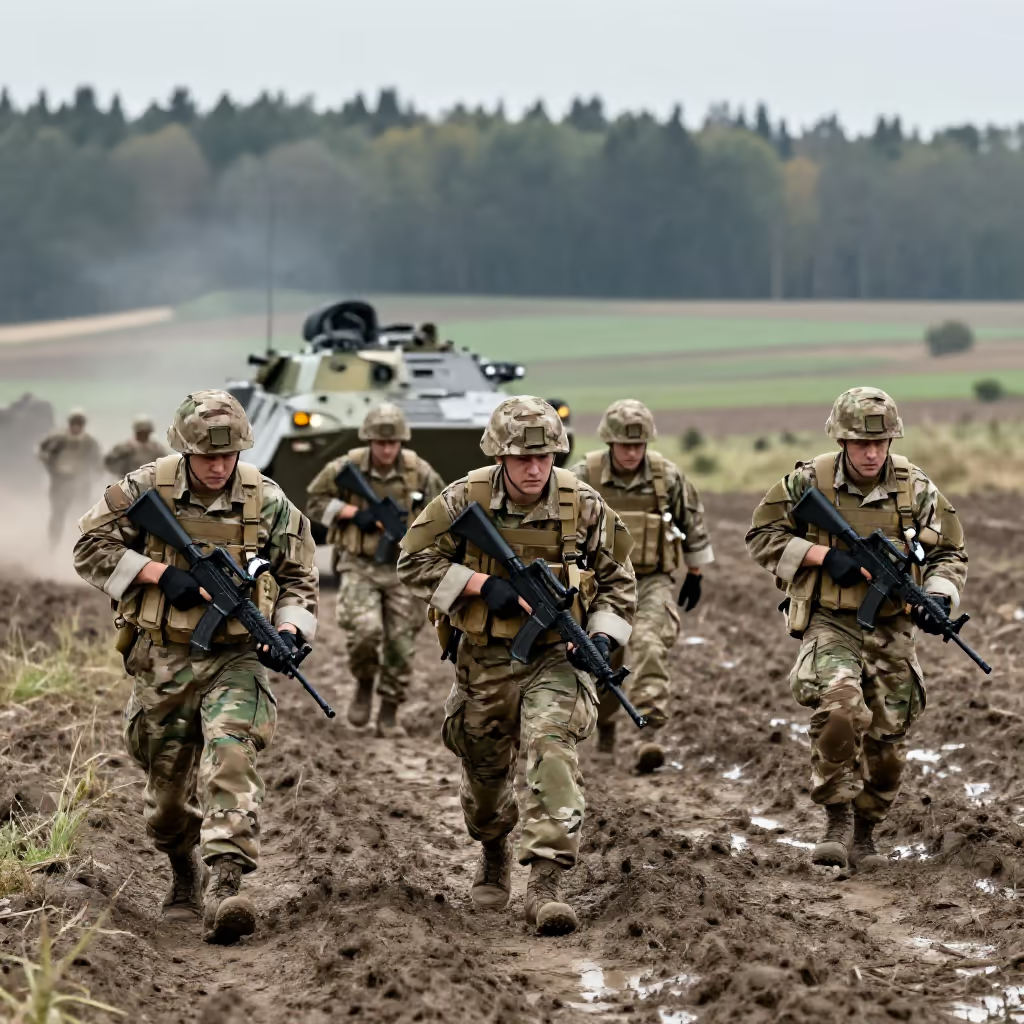
Die Soldaten konnten nach der Pause einige Kilometer vorrücken.
After the break, the soldiers were able to advance several kilometers.
Der Vormarsch der Armee brachte ihr in kurzer Zeit viel neues Gebiet.
The army’s advance brought it a great deal of new territory in a short time.