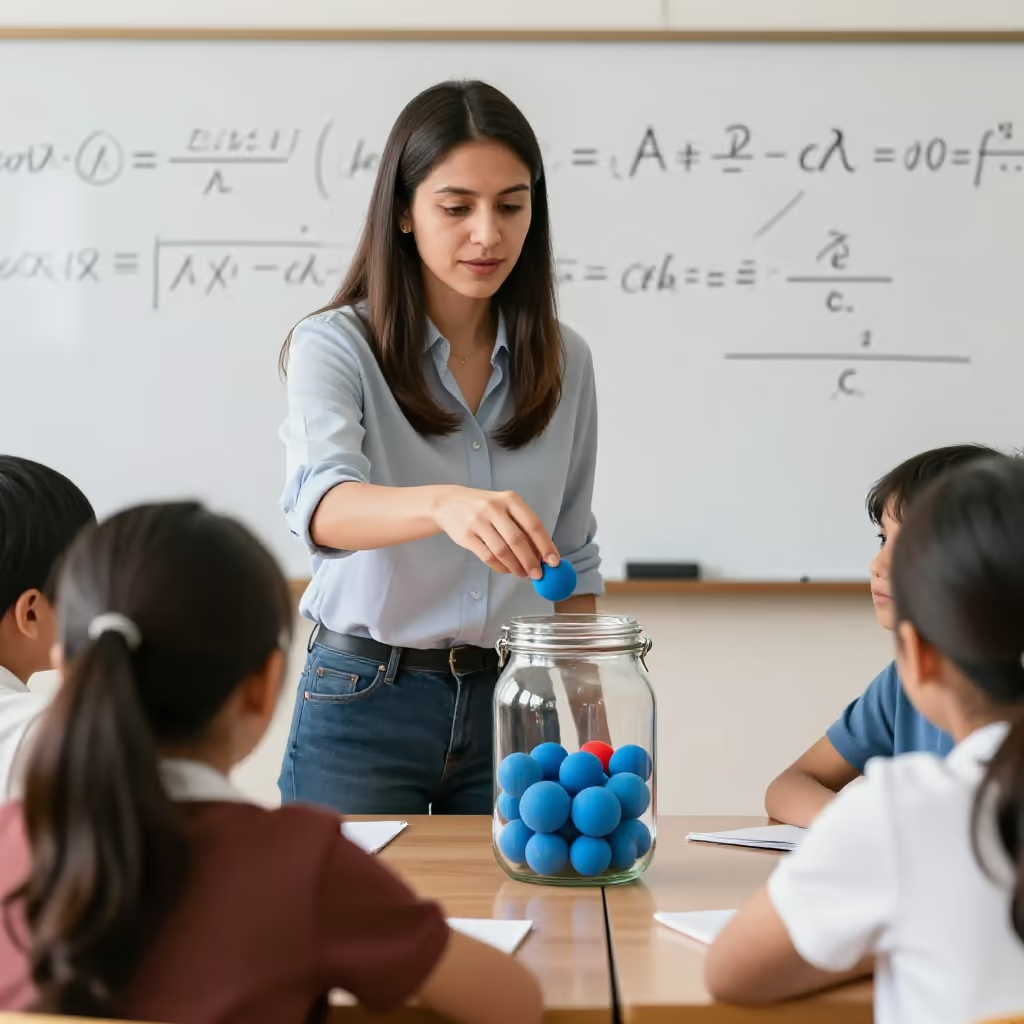
The extent to which something is probable; the chance that a particular event will occur. It is a measure of certainty or uncertainty.
example
Die Wahrscheinlichkeit, von einem Blitz getroffen zu werden, ist extrem gering.
The probability of being struck by lightning is extremely low.
Usage tips
Word structure
The word is logically structured: Something that 'appears true' ('wahr' + 'scheinen') is 'wahrscheinlich' (probable). The ending '-keit' turns it into a noun that describes this state: the quality of appearing true.
EXAMPLE
Die Wahrscheinlichkeit eines Gewinns ist gering, aber nicht null.
The probability of winning is low, but not zero.
Sentence structure
'Die Wahrscheinlichkeit' (the probability) is very often combined with a subordinate clause using 'dass' (that) or an infinitive construction with 'zu' (to) to describe what is probable.
EXAMPLE
Die Wahrscheinlichkeit, dass wir den Zug noch erwischen, ist gering.
The probability that we will still catch the train is low.
Typical adjectives
To describe the degree, 'Wahrscheinlichkeit' is frequently combined with the adjectives 'hoch' (high), 'groß' (great), 'gering' (low), or 'klein' (small).
EXAMPLE
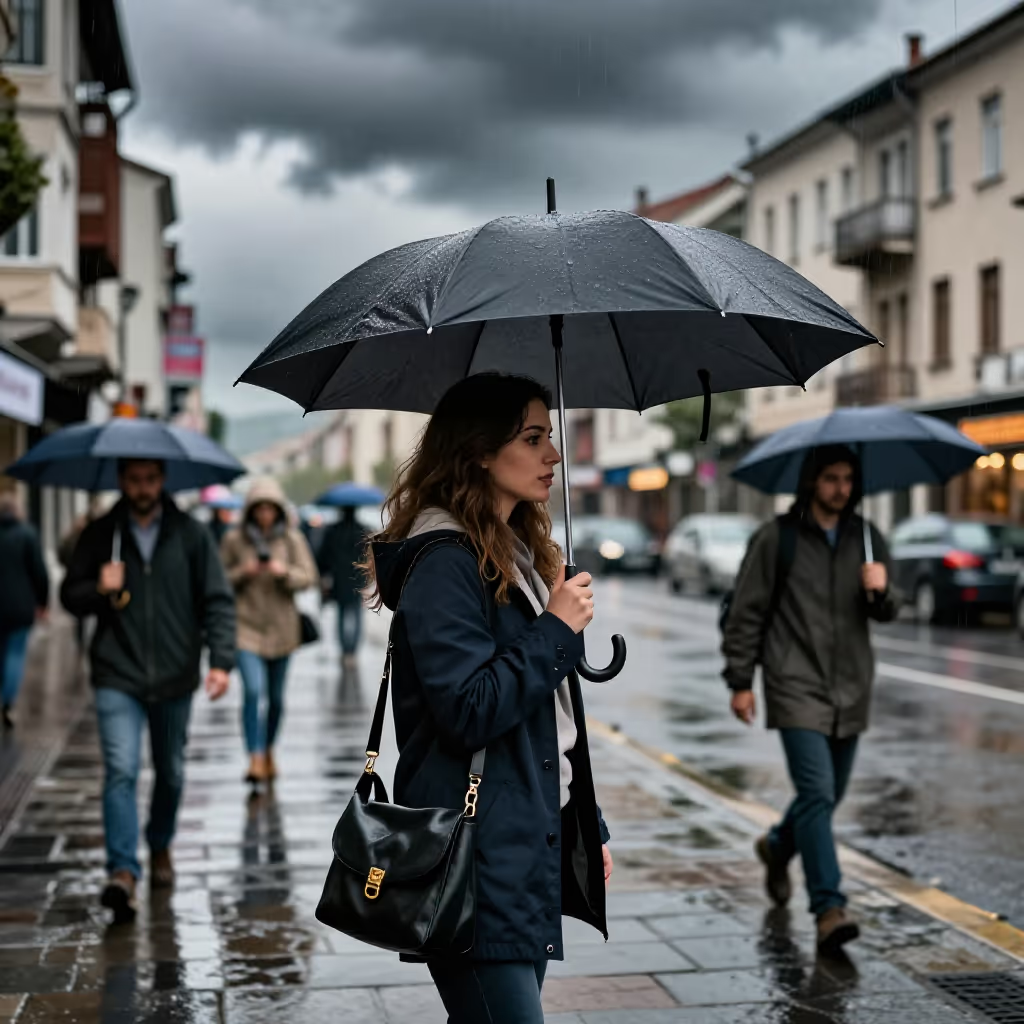
Es gibt eine hohe Wahrscheinlichkeit für Regen am Nachmittag.
There is a high probability of rain in the afternoon.
Fixed expression
The expression 'mit hoher/größter Wahrscheinlichkeit' (with high/greatest probability) functions like an adverb (e.g., like 'wahrscheinlich' or 'sehr wahrscheinlich') and usually appears at the beginning or in the middle of a sentence.
EXAMPLE
Das Paket kommt mit hoher Wahrscheinlichkeit morgen an.
The package will, with high probability, arrive tomorrow.
Compare with
confusable
Wahrscheinlichkeit vs wahrscheinlich
probable / likely
'wahrscheinlich' and 'die Wahrscheinlichkeit' are related in meaning, but they are used differently grammatically. 'wahrscheinlich' directly describes that something is very possible: 'Es regnet wahrscheinlich' (It will probably rain). 'die Wahrscheinlichkeit' is a noun and refers to the chance or the measure of how possible something is. For example, you say 'die Wahrscheinlichkeit ist hoch' (the probability is high) or 'mit hoher Wahrscheinlichkeit' (with high probability). Learners easily confuse the words because they look similar. Memory tip: 'wahrscheinlich' fits directly into the sentence, while 'die Wahrscheinlichkeit' usually needs an article or a fixed expression.
Wahrscheinlichkeit
Im Büro ist die Wahrscheinlichkeit hoch, dass du morgen alle Kollegen triffst.
At the office, there is a high probability that you will see all your colleagues tomorrow.
wahrscheinlich
Wir kommen wahrscheinlich etwas später, weil der Zug Verspätung hat.
We will probably arrive a little later because the train is delayed.