

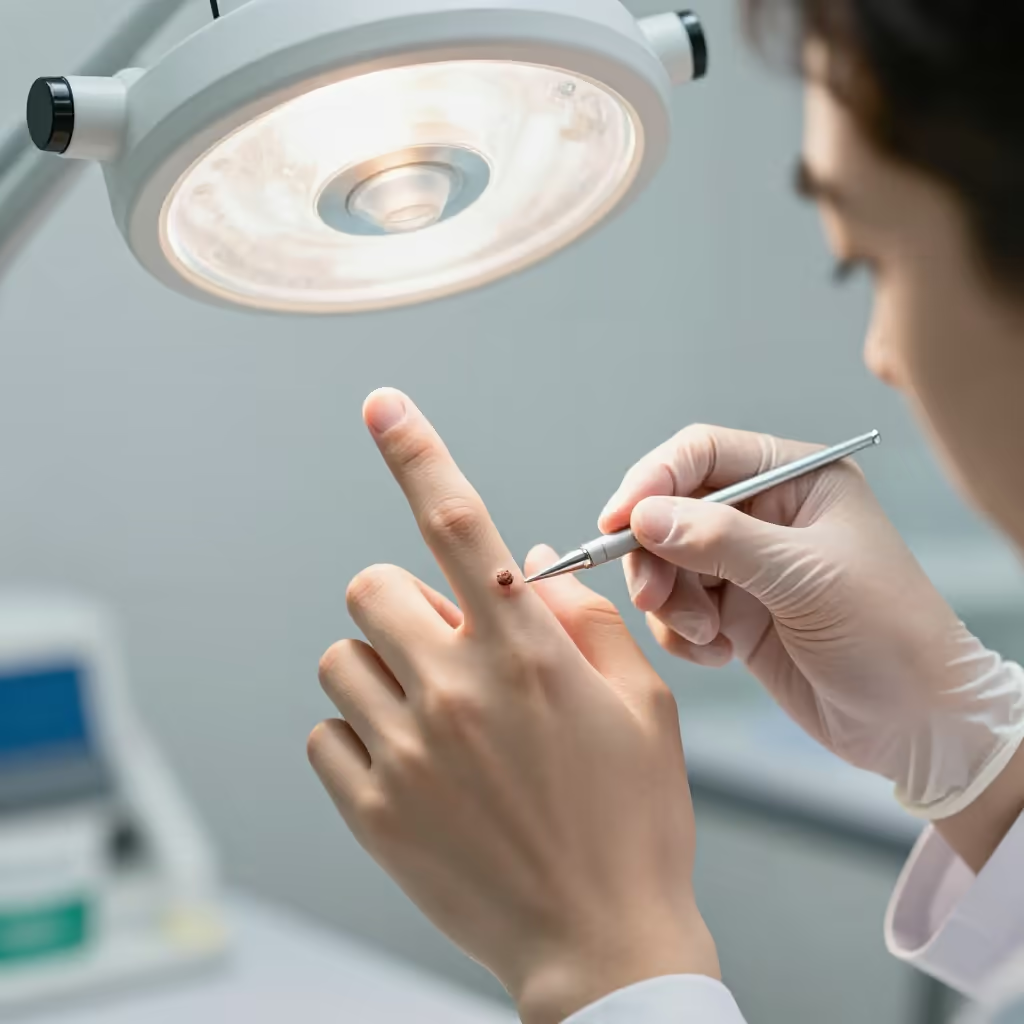
A small, usually benign skin growth, often caused by viruses, with a hardened surface.
example
Der Hautarzt hat die Warze an seiner Hand mit einer speziellen Tinktur behandelt.
The dermatologist treated the wart on his hand with a special tincture.
Usage tips
Typical verbs
In connection with warts, the verbs 'haben' (to have), 'bekommen' (to get), 'entfernen' (to remove), or 'behandeln' (to treat) are often used.
EXAMPLE
Viele Kinder bekommen irgendwann einmal eine Warze.
Many children get a wart at some point.
Correct preposition
To describe the position of a wart on the body, you usually use the preposition 'an' with the dative for body parts like hands or feet, and 'auf' with the dative for surfaces like the skin.
EXAMPLE
Er hat eine kleine Warze am Finger.
He has a small wart on his finger.
Word family
The related adjective is 'warzig' (warty). It describes a surface that is covered with warts or has a similar structure.
EXAMPLE
Die Haut der Kröte fühlte sich rau und warzig an.
The toad’s skin felt rough and warty.
Compare with
confusable
Warze vs Pickel
pimple / pickaxe
'der Pickel' and 'die Warze' can both be small raised areas on the skin. That is why they are easy to confuse. A 'Pickel' is usually inflamed and often forms because of a clogged pore; it may disappear again after a short time. A 'Warze' is a skin growth, often with a rather hard or rough surface. When talking about acne or blemished skin, 'Pickel' fits. If the spot is firm, rough, and stays there for a longer time, people are more likely to say 'Warze'.
Warze
Wegen der Warze am Finger macht Lisa einen Termin bei der Hautärztin.
Because of the wart on her finger, Lisa makes an appointment with the dermatologist.
Pickel
Der Pickel tut weh, weil er direkt neben der Nase sitzt.
The pimple hurts because it is right next to his nose.