

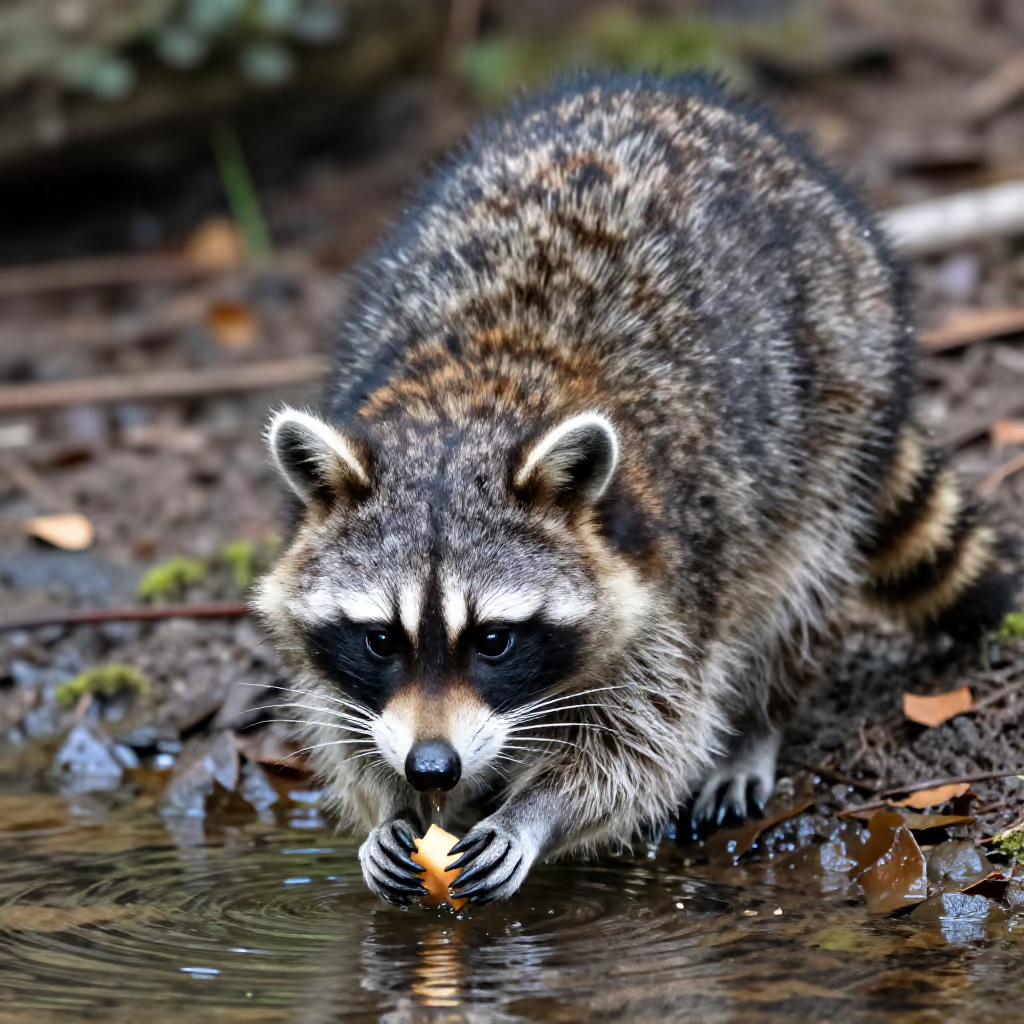
A medium-sized mammal with a striking black facial mask and dexterous front paws, originally from North America. The name comes from its habit of dipping food in water before eating it.
example
Nachts kommt manchmal ein Waschbär in unseren Garten und plündert die Mülltonne.
At night, a raccoon sometimes comes into our garden and raids the trash can.
Usage tips
Compound word
The name 'Waschbär' (raccoon) is a direct description of the animal. It is made up of 'waschen' (to wash) and 'Bär' (bear). The name comes from the fact that raccoons often dip their food in water, which looks as if they were washing it.
EXAMPLE
Kinder finden den Namen „Waschbär“ oft sehr lustig und passend.
Children often find the name 'Waschbär' (raccoon, literally 'wash bear') very funny and fitting.
Typical context
In Germany, raccoons are often found near people. That's why you often hear sentences about them searching through trash cans, stealing food in the garden, or living in attics.
EXAMPLE
Letzte Nacht hat ein Waschbär unsere Mülltonne umgeworfen.
Last night, a raccoon knocked over our trash can.
Typical features
When Germans talk about a 'Waschbär' (raccoon), they often mention its characteristic black facial mask and its ringed tail. These features help describe the animal.
EXAMPLE
Man erkennt den Waschbären sofort an seiner schwarzen Maske um die Augen.
You can recognize the raccoon immediately by its black mask around the eyes.
Compare with
confusable
Waschbär vs Bär
bear
'der Bär' and 'der Waschbär' are both animal names, but they do not mean the same animal. A bear is a large, strong mammal with thick fur, for example a brown bear or a polar bear. A raccoon is much smaller and often has a black mask on its face and dexterous front paws. The words can be confusing because 'Waschbär' contains the word 'Bär'. Even so, a raccoon is not a small kind of bear, but a different animal.
Waschbär
Heute Nacht hat ein Waschbär die Mülltonne vor dem Haus geöffnet.
Tonight, a raccoon opened the trash can in front of the house.
Bär
Im Nationalpark hat ein Wanderer aus der Ferne einen Bären gesehen.
In the national park, a hiker saw a bear from a distance.