

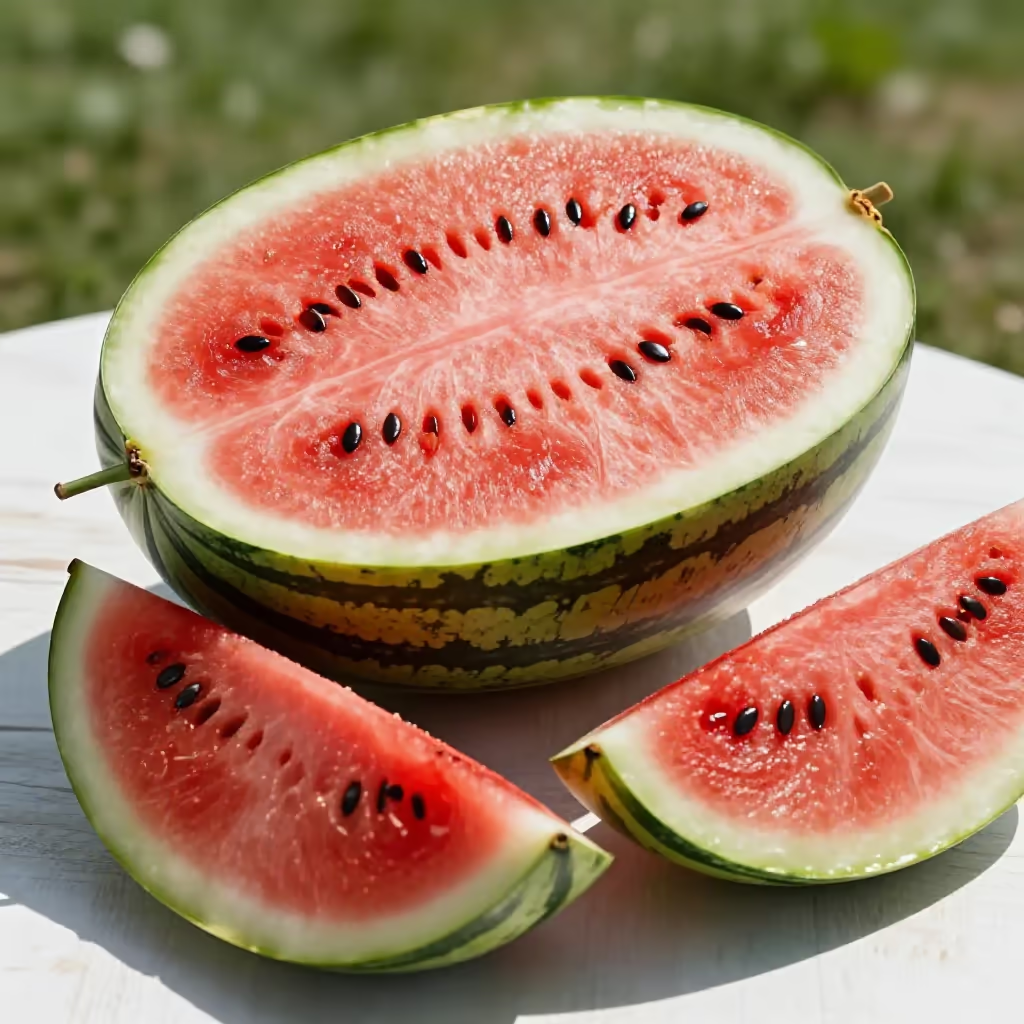
A large, round or oval fruit with a green rind, red, juicy flesh, and black seeds, especially popular in summer.
example
An heißen Tagen gibt es nichts Erfrischenderes als ein Stück kalte Wassermelone.
On hot days, there is nothing more refreshing than a piece of cold watermelon.
Usage tips
Word composition
The word is made up of 'das Wasser' (water) and 'die Melone' (melon). The name comes from the fact that this fruit consists of more than 90 percent water.
EXAMPLE
Eine Wassermelone ist wegen ihres hohen Wassergehalts sehr erfrischend.
A watermelon is very refreshing because of its high water content.
Use with an article
When talking about the fruit as food in general, no article is often used. When talking about a specific, individual item, the article is used.
EXAMPLE
Ich esse im Sommer gern Wassermelone.
I like eating watermelon in summer.
Typical collocations
Common and natural combinations are 'ein Stück Wassermelone' (a piece of watermelon), 'eine saftige Wassermelone' (a juicy watermelon), or 'eine eiskalte Wassermelone genießen' (to enjoy an ice-cold watermelon).
EXAMPLE
Nach dem Sport gab es für alle ein Stück saftige Wassermelone.
After sports, everyone got a piece of juicy watermelon.
Compare with
near_synonym · confusable
Wassermelone vs Melone
melon / bowler hat
'Melone' and 'Wassermelone' both belong to the area of fruit. 'Melone' is the more general term and can refer to different varieties, for example 'Honigmelone' (honeydew melon) or 'Wassermelone' (watermelon). 'Wassermelone' is a specific type of melon with a green rind and very juicy, usually red flesh. The words can be confused because every watermelon is a melon, but not every melon is a watermelon. If the variety is important, it is better to say 'Wassermelone'.
Wassermelone
Im Sommer essen wir gern kalte Wassermelone im Garten.
In summer, we like eating cold watermelon in the garden.
Melone
Für den Obstsalat kauft Mehmet eine Melone und ein paar Trauben.
For the fruit salad, Mehmet buys a melon and a few grapes.