

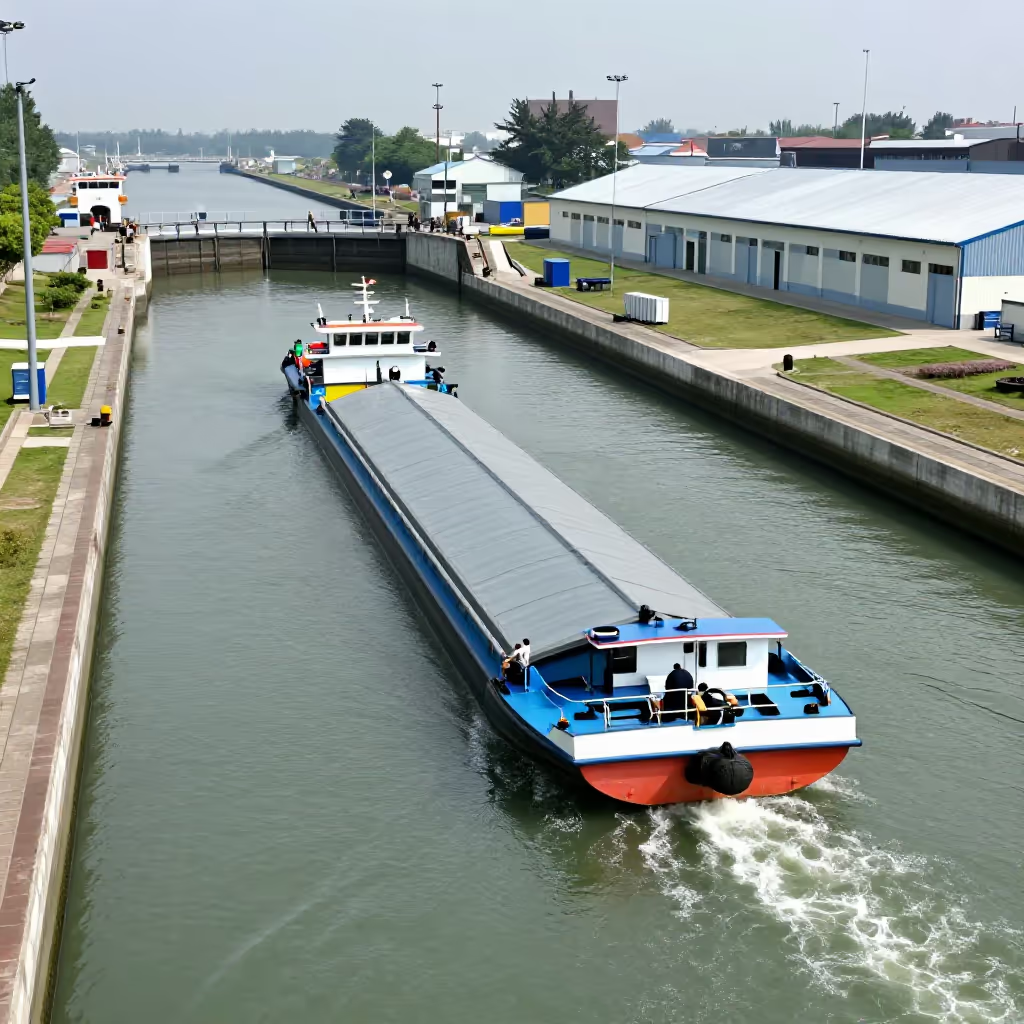
A navigable water route, such as a river or canal, that is used for transporting goods and people by ship. The spelling with 'ss' is common in Switzerland.
example
Der Rhein ist eine der verkehrsreichsten Wasserstrassen der Welt.
The Rhine is one of the busiest waterways in the world.
Usage tips
Word composition
The word is a simple compound made up of 'Wasser' (water) and 'Strasse' (street/road). So it literally describes a 'Strasse auf dem Wasser' (road on the water) for ships.
EXAMPLE
Kanäle sind künstlich angelegte Wasserstrassen.
Canals are artificially constructed waterways.
Regional spelling
The spelling 'Wasserstrasse' with 'ss' is common in Switzerland. In Germany and Austria, after the spelling reform, it is written 'Wasserstraße' with 'ß' because the vowel before it is long.
EXAMPLE
Die Donau ist eine wichtige europäische Wasserstraße.
The Danube is an important European waterway.
Typical verbs
In connection with waterways, verbs like 'befahren' (to navigate/travel on), 'nutzen' (to use), or 'ausbauen' (to expand/upgrade) are often used. A Wasserstrasse (waterway) can also be 'für die Schifffahrt gesperrt' (closed to shipping).
EXAMPLE
Große Containerschiffe befahren diese Wasserstrasse täglich.
Large container ships navigate this waterway every day.
Compare with
near_synonym · confusable
Wasserstrasse vs Kanal
canal / channel
'der Kanal' and 'die Wasserstrasse' can both be waterways for ships. 'Kanal' more specifically means an artificially built waterway. 'Wasserstrasse' is more general: it can be a canal, but also a navigable river. The words can be confused because a canal can be a type of waterway. If you want to emphasize that it is artificially built, use 'Kanal'. If you are speaking generally about a transport route on water, 'Wasserstrasse' fits. The spelling 'Wasserstrasse' with 'ss' is especially common in Switzerland.
Wasserstrasse
Auf der Karte sind die wichtigsten Wasserstrassen der Schweiz markiert.
The most important waterways in Switzerland are marked on the map.