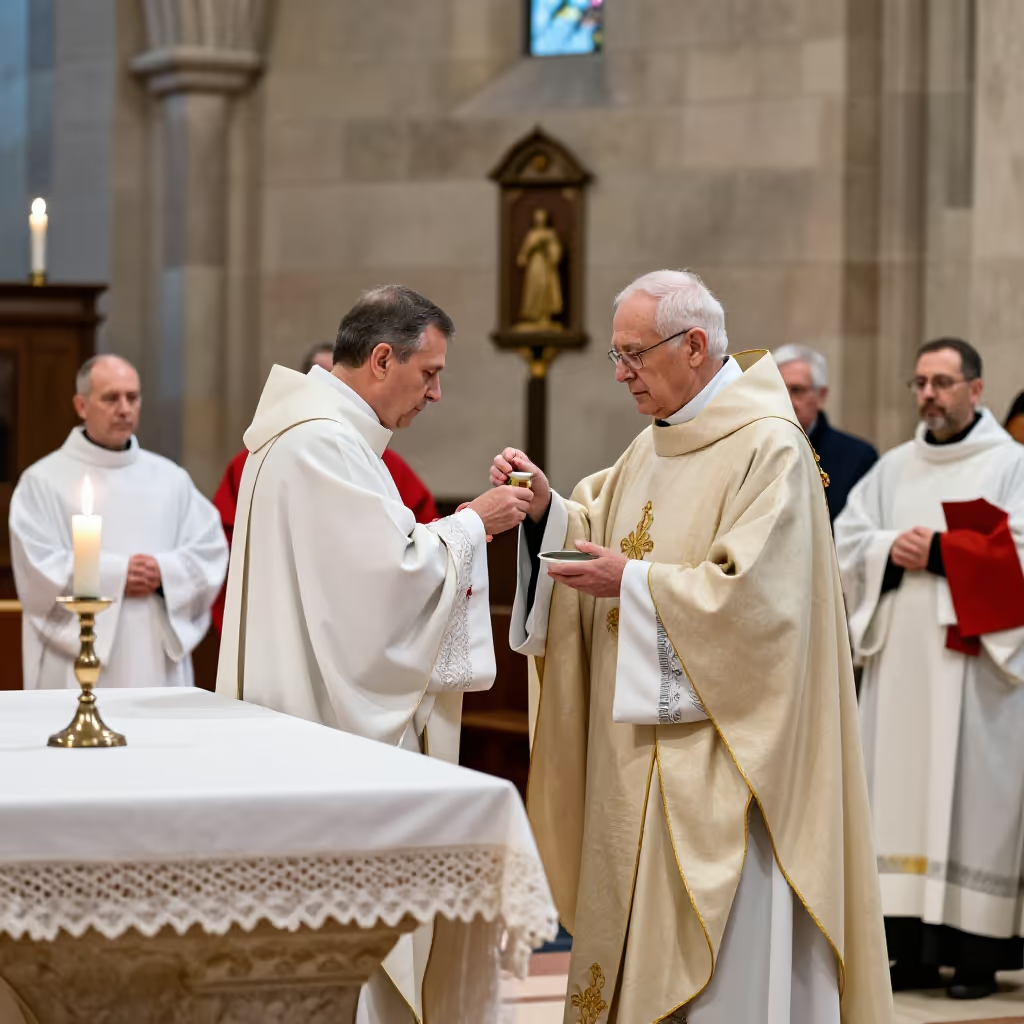
In a religious or ceremonial act, to declare something or someone holy or dedicate them to a divine purpose. This often concerns churches, altars, or people taking up a religious office.
example
Der Bischof wird die neue Kapelle am Sonntag weihen.
The bishop will consecrate the new chapel on Sunday.

Usage tips
Register and style
The verb 'weihen' (to consecrate/dedicate) is a very formal and elevated word. It is used almost exclusively in solemn, religious, or very poetic contexts.
EXAMPLE
Mit einer feierlichen Zeremonie wurde das Denkmal geweiht.
The monument was consecrated in a solemn ceremony.
Context clue
The context makes the meaning clear: if it is about religion, a ceremony, a church, or a priest, the literal meaning 'heiligen' (to sanctify/consecrate) is meant. If it is about life, time, or energy for an idea, the figurative meaning 'widmen' (to dedicate) is meant.
EXAMPLE
Der Priester weihte das Wasser.
The priest consecrated the water.
Accusative object
In the religious or ceremonial meaning, what is being consecrated is always in the accusative. The structure is: someone consecrates something.
EXAMPLE
Der Bürgermeister weihte die neue Brücke feierlich.
The mayor ceremonially dedicated the new bridge.
Dative construction
In the figurative meaning 'widmen' (to dedicate), a dative construction is always used. The structure is: someone dedicates to something (dative) their life/their time (accusative).
EXAMPLE
Die Forscherin hat ihr gesamtes Schaffen der Wissenschaft geweiht.
The researcher dedicated her entire body of work to science.
Compare with
near_synonym · confusable
weihen vs opfern
to sacrifice
'opfern' and 'weihen' can both have to do with religion, devotion, or a higher goal. 'opfern' means that you voluntarily give up something valuable, for example time, money, or, in a religious ritual, an offering. 'weihen' is more about declaring something or someone holy in a ceremony or dedicating them to a special purpose. In a figurative sense, you can dedicate your life or energy to a task. Learners may confuse the words because both sound solemn and are connected with devotion. The practical difference is: with 'opfern', the focus is on loss; with 'weihen', it is on a special purpose or dedication.
weihen
Der alte Altar wurde in einer feierlichen Messe geweiht.
The old altar was consecrated in a solemn mass.
opfern
Für den kranken Nachbarn opfert Ali am Montag seinen freien Abend.
Ali sacrifices his free evening on Monday for his sick neighbor.