

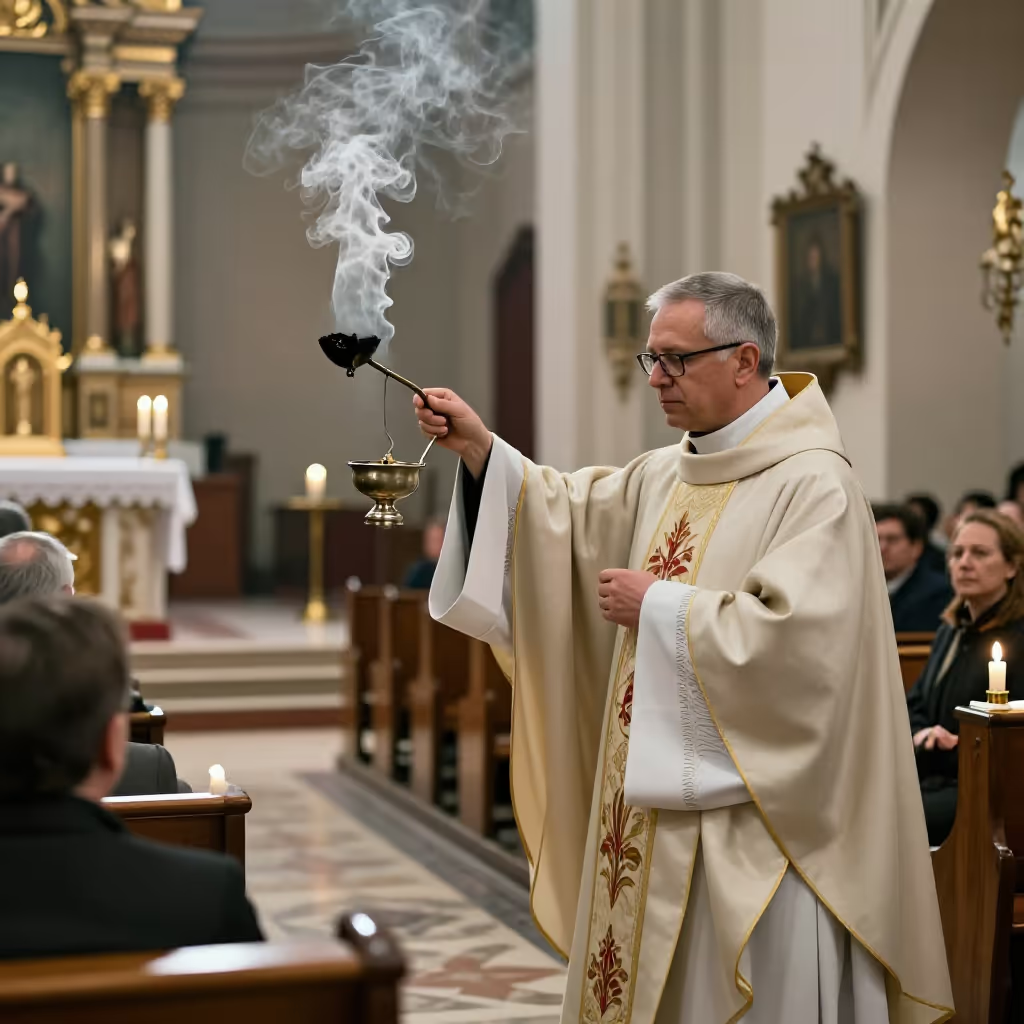
An aromatic resin from certain trees that produces strongly scented smoke when burned and is used especially in religious ceremonies.
example
In der katholischen Kirche roch es intensiv nach Weihrauch.
In the Catholic church, there was a strong smell of incense.
Usage tips
Word composition
The word is made up of 'weih-' and 'Rauch' (smoke). 'Weih-' comes from the verb 'weihen' (to consecrate, to bless). So 'Weihrauch' (incense) is literally 'holy smoke'.
EXAMPLE
Der Geruch von Weihrauch erinnert viele Menschen an eine Kirche.
The smell of incense reminds many people of a church.
Uncountable noun
'Weihrauch' (incense) is the name of a substance and is therefore usually used as an uncountable noun without a plural form. You say 'viel Weihrauch' (a lot of incense), not 'viele Weihrauche'.
EXAMPLE
Für die Zeremonie wurde Weihrauch aus dem Oman importiert.
Incense from Oman was imported for the ceremony.
Typical verbs
Typical verbs used with 'Weihrauch' (incense) are 'verbrennen' (to burn), 'anzünden' (to light), or 'verströmen' (to give off). Passive perception is also often described: 'nach Weihrauch riechen' (to smell of incense).
EXAMPLE
Der Priester begann, den Weihrauch im Gottesdienst zu verbrennen.
The priest began to burn the incense during the service.
Compare with
confusable
Weihrauch vs Rauch
smoke
'Rauch' and 'Weihrauch' are connected because incense produces smoke when it burns. But 'Rauch' is the general word for the visible cloud that forms during combustion. 'Weihrauch' is a specific resin with a strong scent, known especially from churches or religious ceremonies. The words can be confused because both contain the word 'Rauch'. If you only mean the cloud, you say 'Rauch'. If you mean the fragrant substance or its typical smell, you say 'Weihrauch'.
Weihrauch
In der Kirche roch es stark nach Weihrauch.
The church smelled strongly of incense.
Rauch
Nach dem Grillen blieb noch lange Rauch über dem Garten.
After the barbecue, smoke lingered over the garden for a long time.