

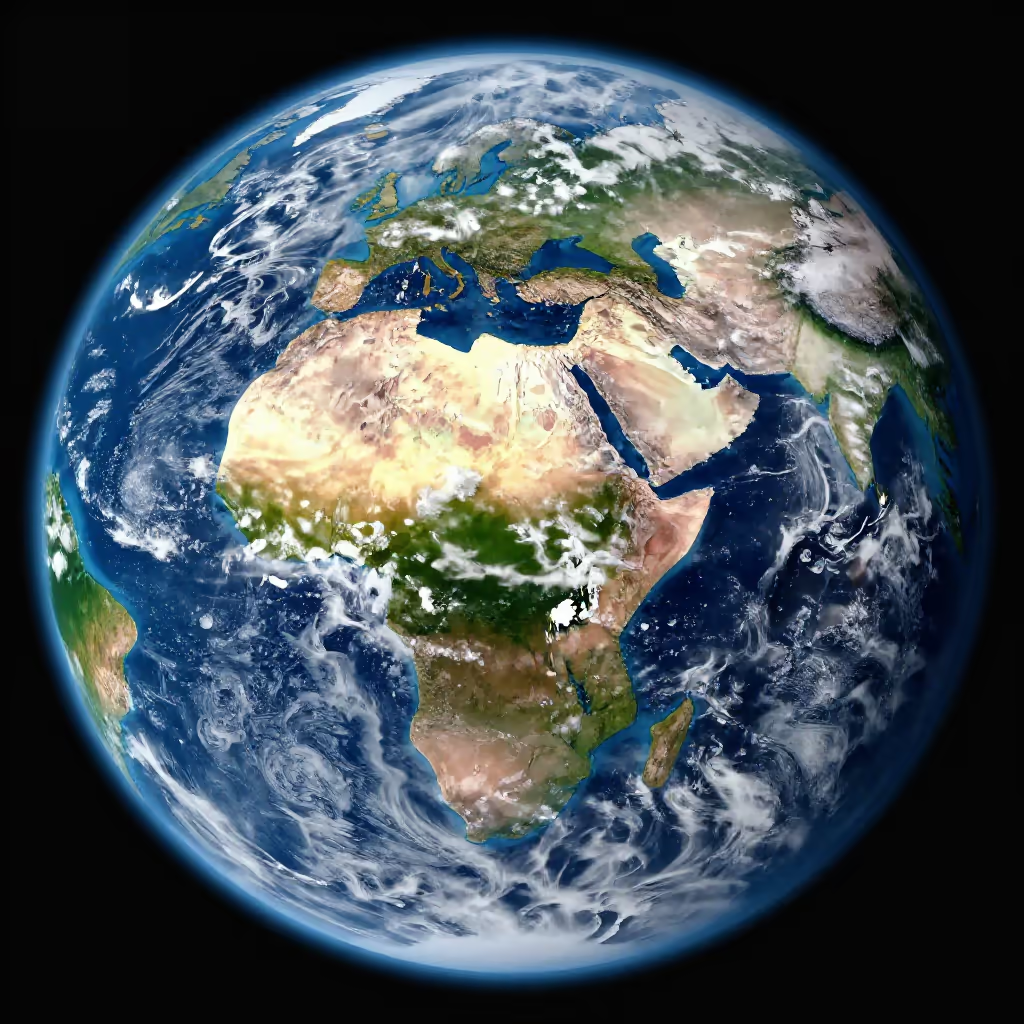
die Welt
world
The planet Earth with all its countries, seas, and living beings.
EXAMPLE
Sie möchte nach dem Studium um die Welt reisen.
She wants to travel around the world after her studies.
world
Loading your saved state.
world
The planet Earth with all its countries, seas, and living beings.
Sie möchte nach dem Studium um die Welt reisen.
She wants to travel around the world after her studies.

the world
All people as a whole; the public.
Die ganze Welt schaute bei der Eröffnungsfeier der Olympischen Spiele zu.
The whole world watched the opening ceremony of the Olympic Games.
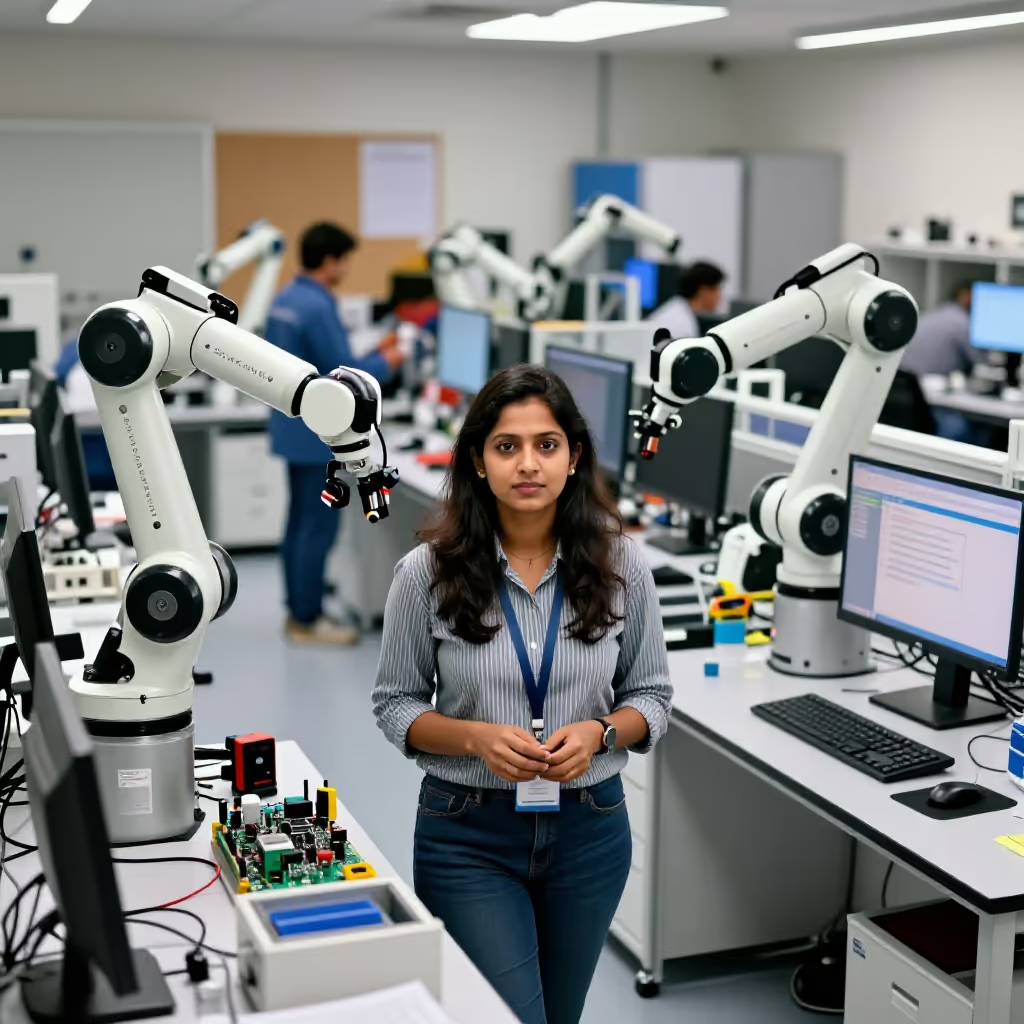
world / sphere
A specific area of life, sphere, or field of expertise.
Er kennt sich gut in der Welt der Finanzen aus.
He knows his way around the world of finance.

world
Used metaphorically to describe something that is of the greatest importance to someone.
Ihre Kinder bedeuten ihr die Welt.
Her children mean the world to her.

to be born
A fixed expression meaning 'to be born'.
Mein kleiner Bruder ist vor fünf Jahren zur Welt gekommen.
My little brother was born five years ago.
'Welt' (world) is a very productive word and forms many important nouns. Examples include 'Weltreise' (trip around the world), 'Weltmeister' (world champion), or 'Weltall' (universe/space).
Deutschland wurde 2014 Fußball-Weltmeister.
Germany became football world champion in 2014.
When 'Welt' means the planet Earth, it is often used in fixed expressions. Typical examples are 'um die Welt reisen' (to travel around the world), 'auf der ganzen Welt' (all over the world), and 'in aller Welt' (in the whole world/around the world).
Dieses Produkt wird auf der ganzen Welt verkauft.
This product is sold all over the world.
When 'Welt' describes a specific field, it is almost always followed by a specification with the genitive or with 'von' (of). This structure ('die Welt der/des...' or 'die Welt von...') is a clear signal for this meaning.
Sie ist eine Expertin in der Welt der klassischen Musik.
She is an expert in the world of classical music.
In the metaphorical meaning, 'Welt' follows a fixed pattern: 'Etwas bedeutet jemandem die Welt' (something means the world to someone). The person for whom something is important is always in the dative.
Seine Familie bedeutet ihm die Welt.
His family means the world to him.
The expression 'zur Welt kommen' is a fixed phrase for 'geboren werden' (to be born). Another fixed expression is 'etwas zur Welt bringen', which means 'to give birth to a child'.
Meine Nichte ist gestern gesund zur Welt gekommen.
My niece was born healthy yesterday.
The expressions 'die ganze Welt' (the whole world) or 'alle Welt' (everyone/the whole world) are often used as hyperbole (exaggeration). They then do not literally mean all people on Earth, but simply 'very many people' or 'the public'.
Alle Welt spricht über den neuen Film.
Everyone is talking about the new film.
Earth / soil
Welt and Erde can both refer to the planet with its countries and living beings. Erde places more emphasis on the physical planet, while Welt often emphasizes the global or human perspective. Erde usually fits scientific statements, while Welt is often used for global topics.
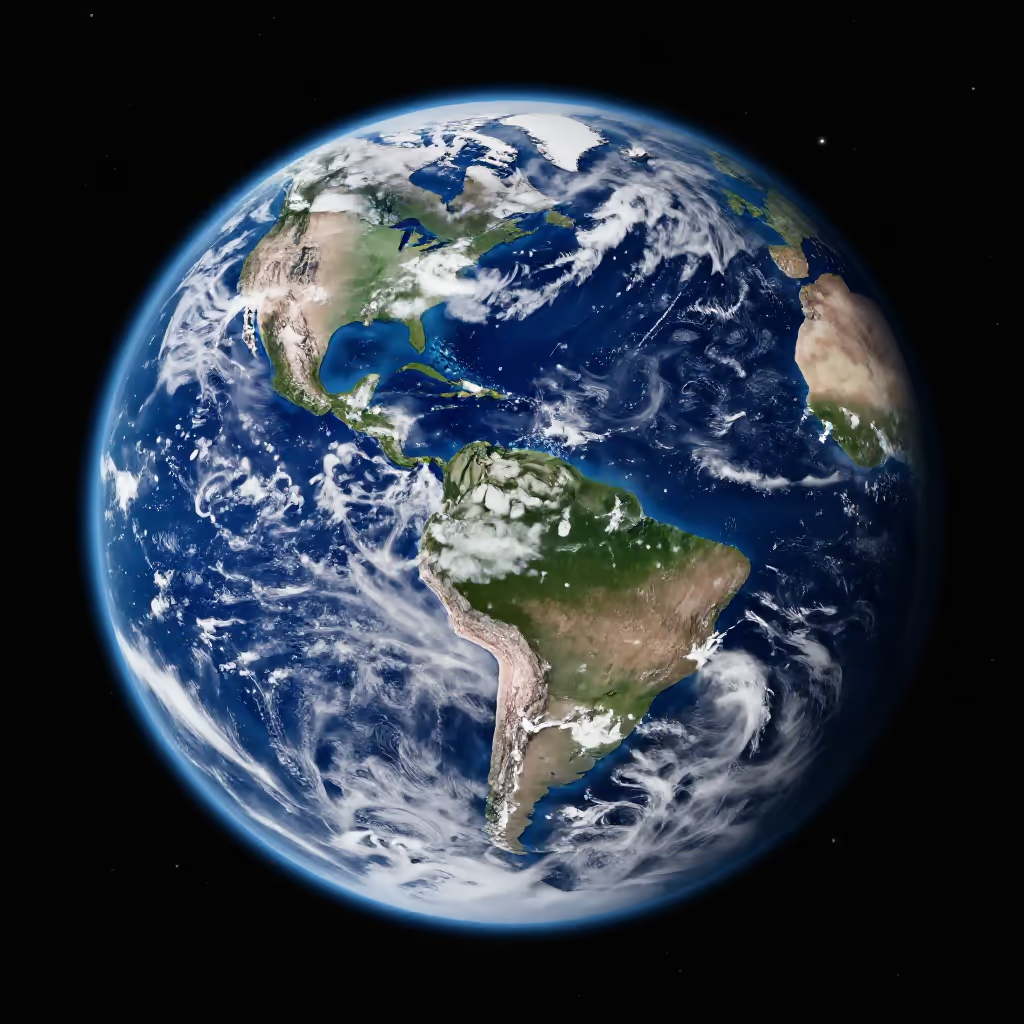
Die ganze Welt muss gemeinsam gegen den Klimawandel handeln.
The whole world must work together to combat climate change.
Die Erde bewegt sich auf ihrer Bahn um die Sonne.
The Earth moves in its orbit around the sun.