

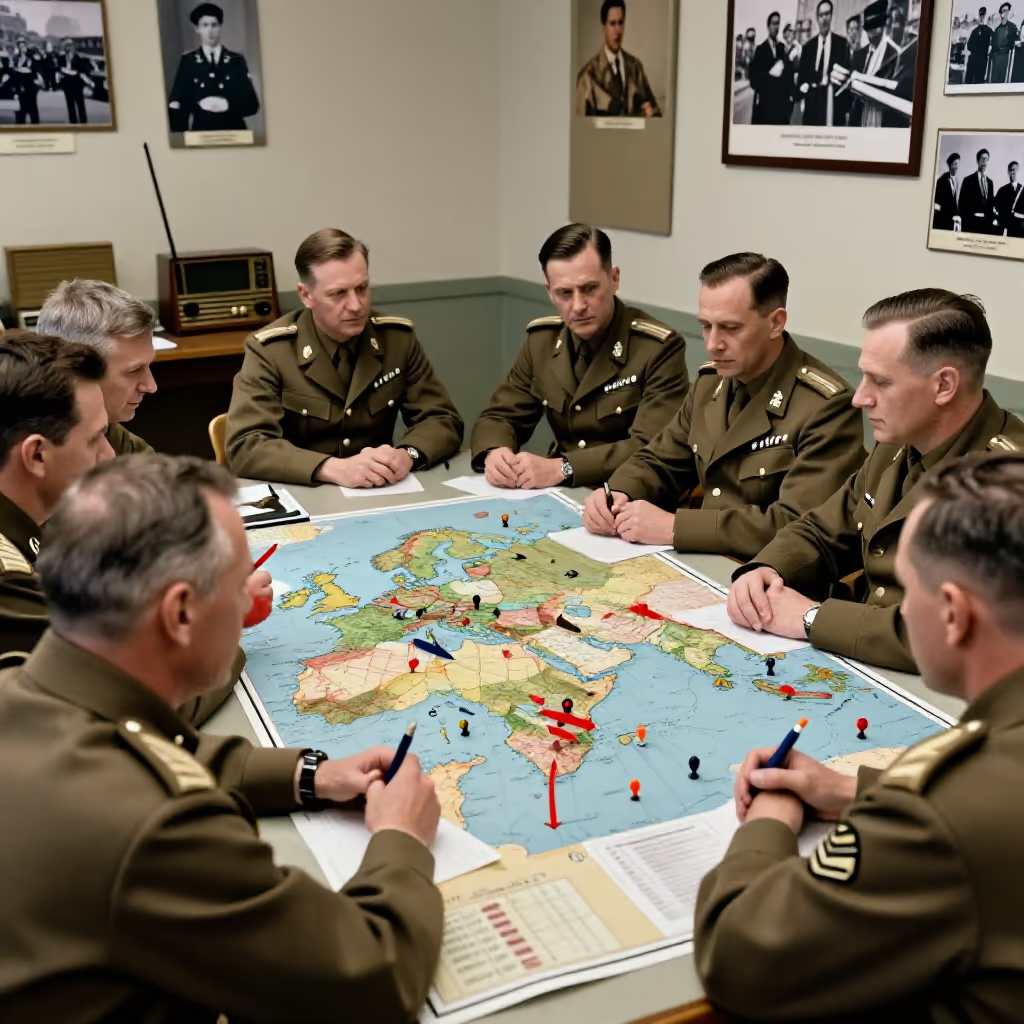
A war that involves many countries on several continents. Specifically the First World War (1914–1918) or the Second World War (1939–1945).
example
Sein Großvater kämpfte als Soldat im Zweiten Weltkrieg.
His grandfather fought as a soldier in the Second World War.
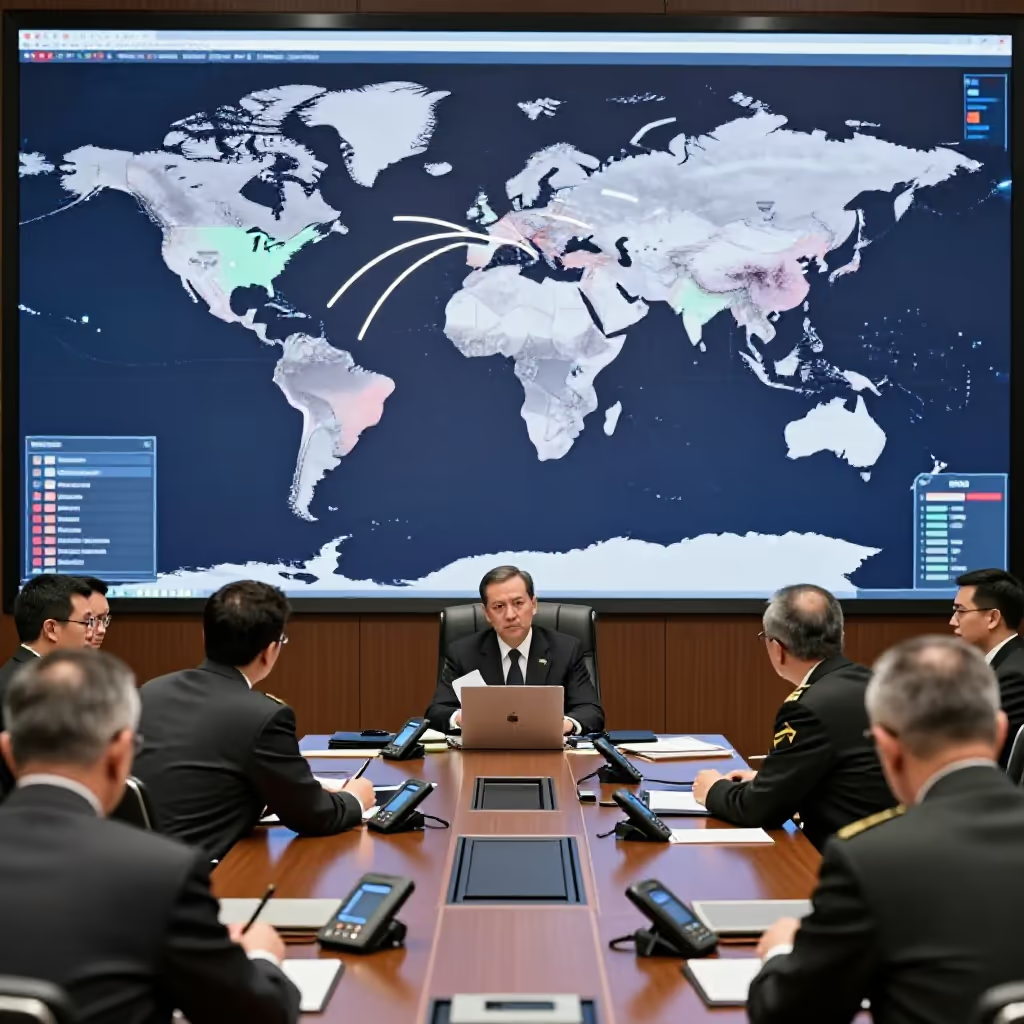
Usage tips
Compound word
The word is very logically composed of 'Welt' (world) and 'Krieg' (war). So it literally describes a war that affects the whole world, or at least large parts of it.
EXAMPLE
Ein Weltkrieg hat globale Auswirkungen auf Politik und Wirtschaft.
A world war has global effects on politics and the economy.
Context clue
Whether a historical or a future war is meant can be recognized from the context. The past tense (e.g., 'kämpfte' — fought, 'war' — was) and the ordinal numbers 'Erster' (First) or 'Zweiter' (Second) point to the historical wars. Words like 'Gefahr' (danger), 'warnen' (to warn), or 'neu' (new) point to a future conflict.
EXAMPLE
Mein Urgroßvater war im Ersten Weltkrieg.
My great-grandfather was in the First World War.
Specific naming
When talking about the historical conflicts, the ordinal numbers are almost always used: 'der Erste Weltkrieg' (the First World War) and 'der Zweite Weltkrieg' (the Second World War). These names are fixed terms.
EXAMPLE
Die Zeit nach dem Ersten Weltkrieg war von politischer Instabilität geprägt.
The period after the First World War was marked by political instability.
Sentence structure with 'in'
To talk about events or people in connection with a world war, the preposition 'in' is used with the dative: 'im Ersten Weltkrieg' (in the First World War).
EXAMPLE
Viele Städte wurden im Zweiten Weltkrieg zerstört.
Many cities were destroyed in the Second World War.
Compare with
near_synonym · confusable
Weltkrieg vs Krieg
war
'der Krieg' and 'der Weltkrieg' both refer to armed conflicts. 'der Krieg' is the general term and can mean many different conflicts, for example between two countries or groups. 'der Weltkrieg' is much more specific: it involves many countries on several continents. Often it refers to the First or Second World War. Learners may confuse the words because every world war is a war. But not every war is a world war. If you are speaking generally about an armed conflict, use 'Krieg'. 'Weltkrieg' only fits when the conflict is global.
Weltkrieg
In der Schule lernen wir gerade über den Zweiten Weltkrieg.
At school, we are currently learning about the Second World War.
Krieg
Viele Familien mussten wegen des Krieges ihre Heimat verlassen.
Many families had to leave their homeland because of the war.