

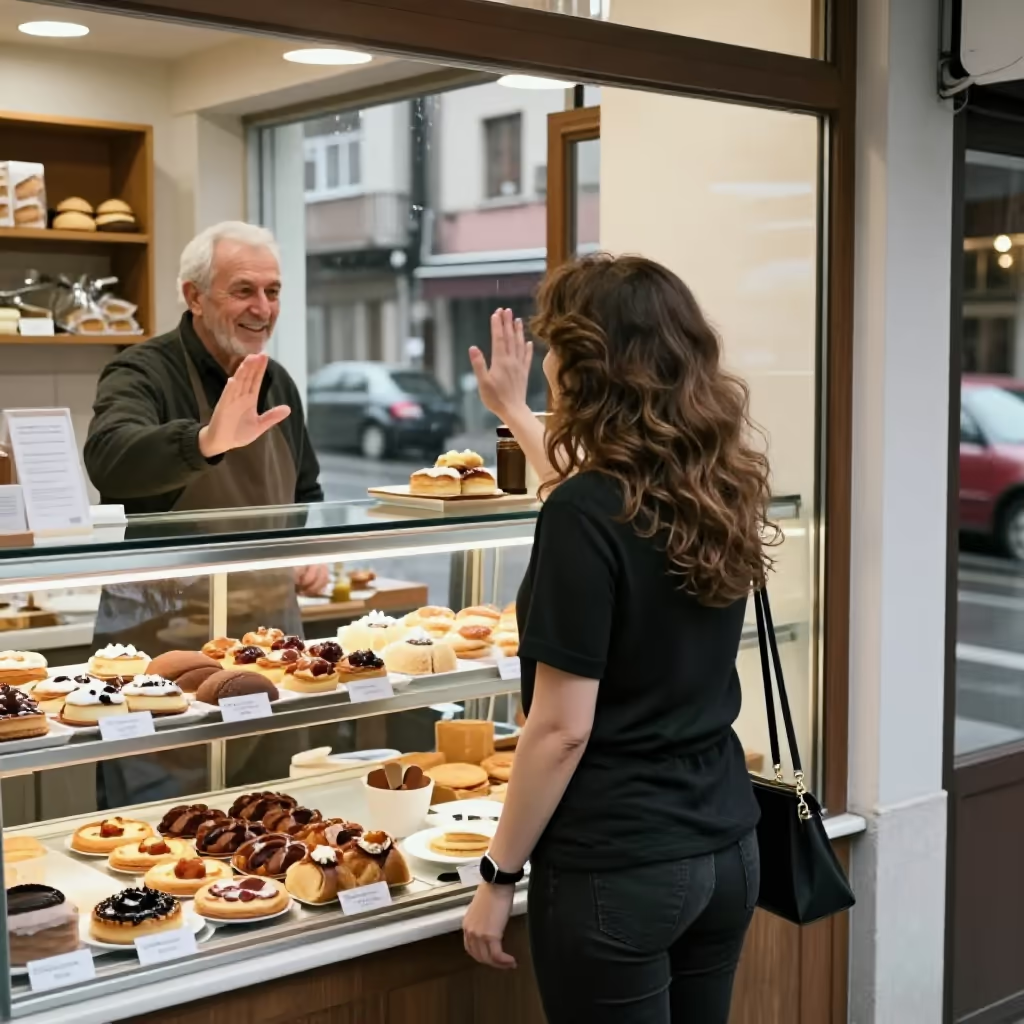
wiederkommen
to come back
To return to a place where one has already been.
EXAMPLE
Es hat uns hier so gut gefallen, wir kommen nächstes Jahr bestimmt wieder.
We liked it here so much that we'll definitely come back next year.
to come back / recur
Loading your saved state.
to come back
To return to a place where one has already been.
Es hat uns hier so gut gefallen, wir kommen nächstes Jahr bestimmt wieder.
We liked it here so much that we'll definitely come back next year.

to recur
To appear or happen again, often referring to feelings, illnesses, or recurring events.
Immer wenn es kalt wird, kommen meine Gelenkschmerzen wieder.
Whenever it gets cold, my joint pain comes back.
'Wiederkommen' (to come back / recur) is a separable verb. The prefix 'wieder' goes at the end in a main clause. In subordinate clauses and in the infinitive with 'zu', the verb stays together.
Ich komme morgen wieder.
I'll come back tomorrow.
Since 'wiederkommen' (to come back / recur) describes movement or a change of state, the perfect tense is always formed with the auxiliary verb 'sein' (to be).
Bist du schon einmal in diese Stadt wiedergekommen?
Have you ever come back to this city?
If the subject is a person, it is usually about returning to a place. If the subject is a feeling, an illness, or an abstract concept, it means 'to appear again' or 'to recur'.
Meine Tante ist nach langer Zeit wiedergekommen.
My aunt came back after a long time.
to repeat / retrieve
Wiederholen refers to an action being carried out again; reflexively, it can also describe a pattern occurring again. Wiederkommen, by contrast, emphasizes that a feeling, illness, or event returns after an interruption. With events, the meanings can overlap.

Nach einer kurzen Pause kommt das bekannteste Lied der Band am Ende wieder.
After a short break, the band's best-known song comes back at the end.
Bei jedem Konzert wiederholt die Band am Ende ihr bekanntestes Lied.
At every concert, the band repeats its best-known song at the end.