

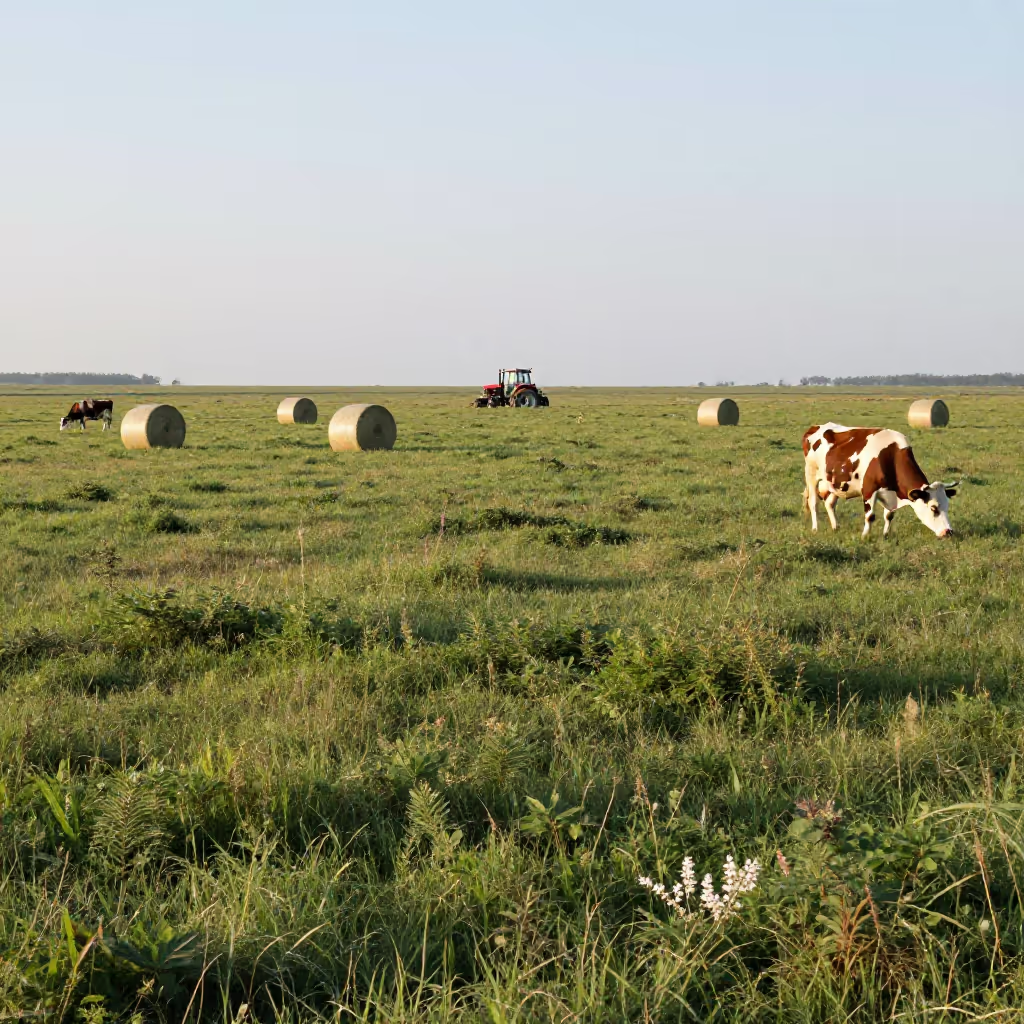
die Wiese
meadow
An area covered with grass and herbs, usually used agriculturally to produce hay or as pasture for animals.
EXAMPLE
Die Kühe grasten friedlich auf der saftig grünen Wiese.
The cows grazed peacefully in the lush green meadow.
meadow
Loading your saved state.
meadow
An area covered with grass and herbs, usually used agriculturally to produce hay or as pasture for animals.
Die Kühe grasten friedlich auf der saftig grünen Wiese.
The cows grazed peacefully in the lush green meadow.
Pay attention to the preposition 'auf' and the case. 'Auf der Wiese' (in/on the meadow, dative) describes a location, while 'auf die Wiese' (onto the meadow, accusative) describes movement toward it.
Die Kinder spielen auf der Wiese.
The children are playing in the meadow.
Common activities in a meadow are 'auf der Wiese liegen' (to lie in the meadow), 'ein Picknick machen' (to have a picnic), or 'Blumen pflücken' (to pick flowers). It is often described as a 'grüne Wiese' (green meadow) or 'blühende Wiese' (flowering meadow).
Im Sommer machen wir oft ein Picknick auf der Wiese am Fluss.
In the summer, we often have a picnic in the meadow by the river.
The idiom 'auf der grünen Wiese bauen' means to construct a building on a previously undeveloped plot of land, usually on the outskirts of a city.
Die neue Fabrik wurde auf der grünen Wiese gebaut.
The new factory was built on a greenfield site.
pasture / willow
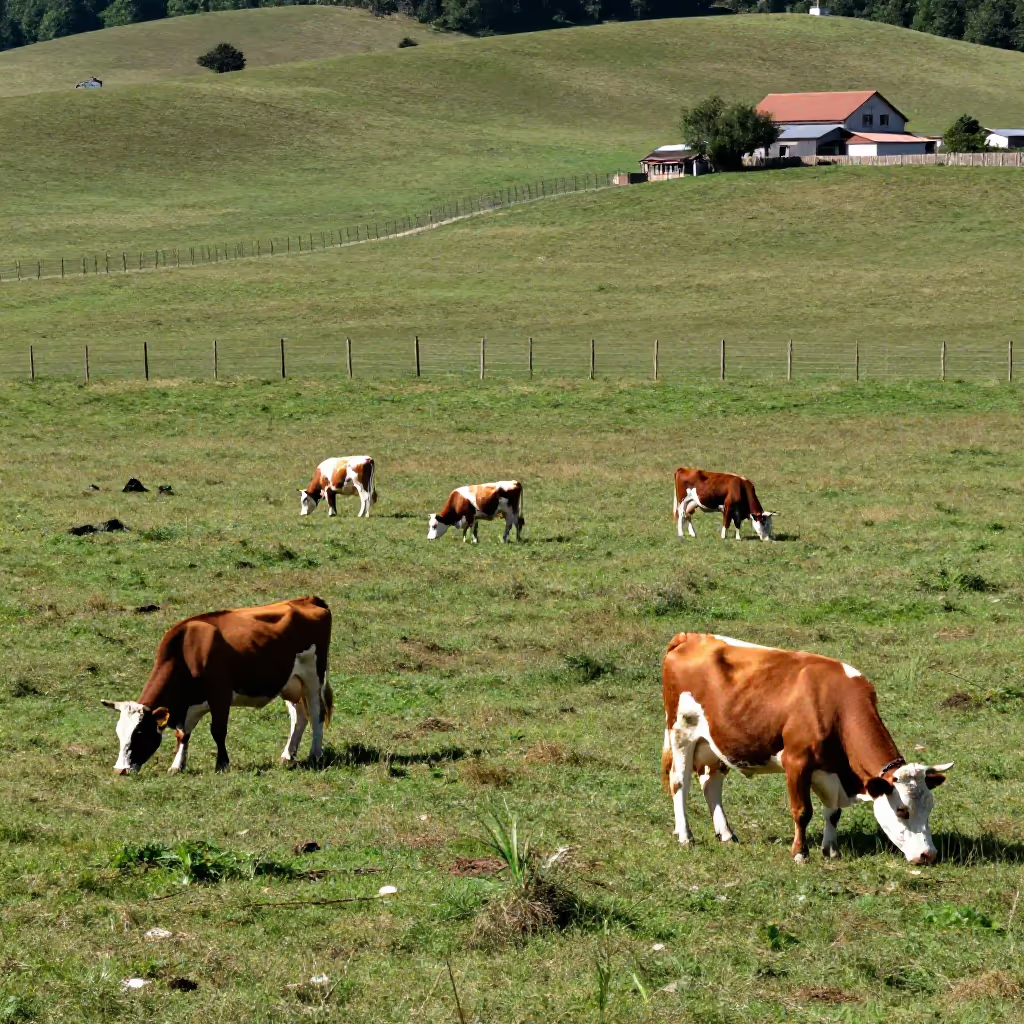
Wiese and Weide can both refer to a grass-covered area. Wiese mainly describes the area itself, while Weide emphasizes its use for animals to graze. Wiese is the better choice for hay or a general grassy area, while Weide is more appropriate when animals are grazing.
Der Bauer mähte die Wiese im Sommer, um Heu für den Winter zu gewinnen.
The farmer mowed the meadow in summer to produce hay for the winter.
Der Bauer ließ die Kühe im Sommer auf der Weide grasen.
The farmer let the cows graze in the pasture in summer.