

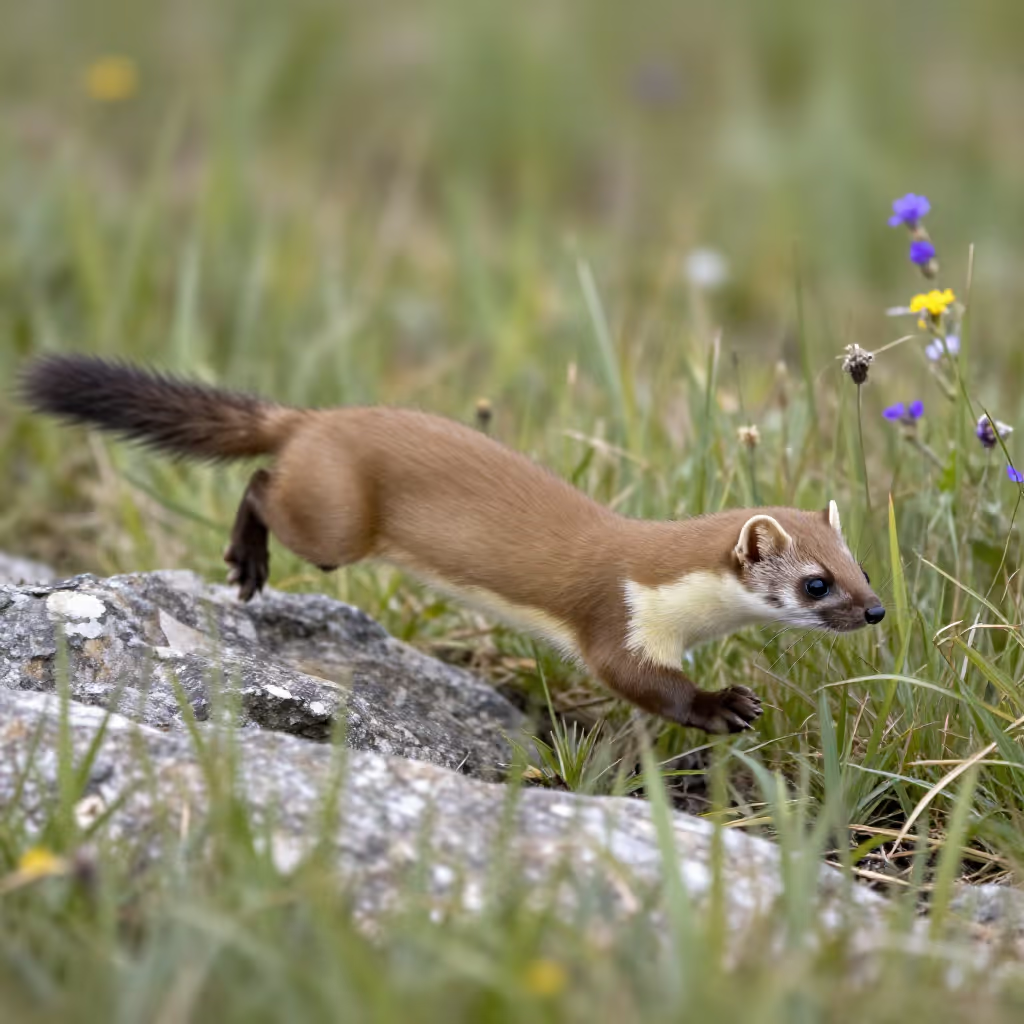
das Wiesel
weasel
A small, slender predator from the marten family, known for its speed and agility.
EXAMPLE
Ein Wiesel huschte flink über den Feldweg.
A weasel darted swiftly across the dirt road.
weasel
Loading your saved state.
weasel
A small, slender predator from the marten family, known for its speed and agility.
Ein Wiesel huschte flink über den Feldweg.
A weasel darted swiftly across the dirt road.
The agility and speed of the weasel have led to a fixed comparison in German. When someone is very quick and agile, you say they are 'flink wie ein Wiesel' (quick as a weasel).
Der Fußballspieler war flink wie ein Wiesel und umspielte alle Gegner.
The soccer player was quick as a weasel and dribbled past all the opponents.
The quick, gliding movements of a weasel are often described with specific verbs. Typical ones here are 'huschen' (to dart) or 'flitzen' (to zip along).
Wir sahen, wie ein Wiesel über die Straße huschte.
We saw a weasel dart across the road.
The qualities of the weasel—quick, slender, and agile—are often transferred metaphorically to people to describe their mobility or build.
Mit seiner schlanken Figur passte er durch die engste Lücke.
With his slender figure, he fit through the narrowest gap.