

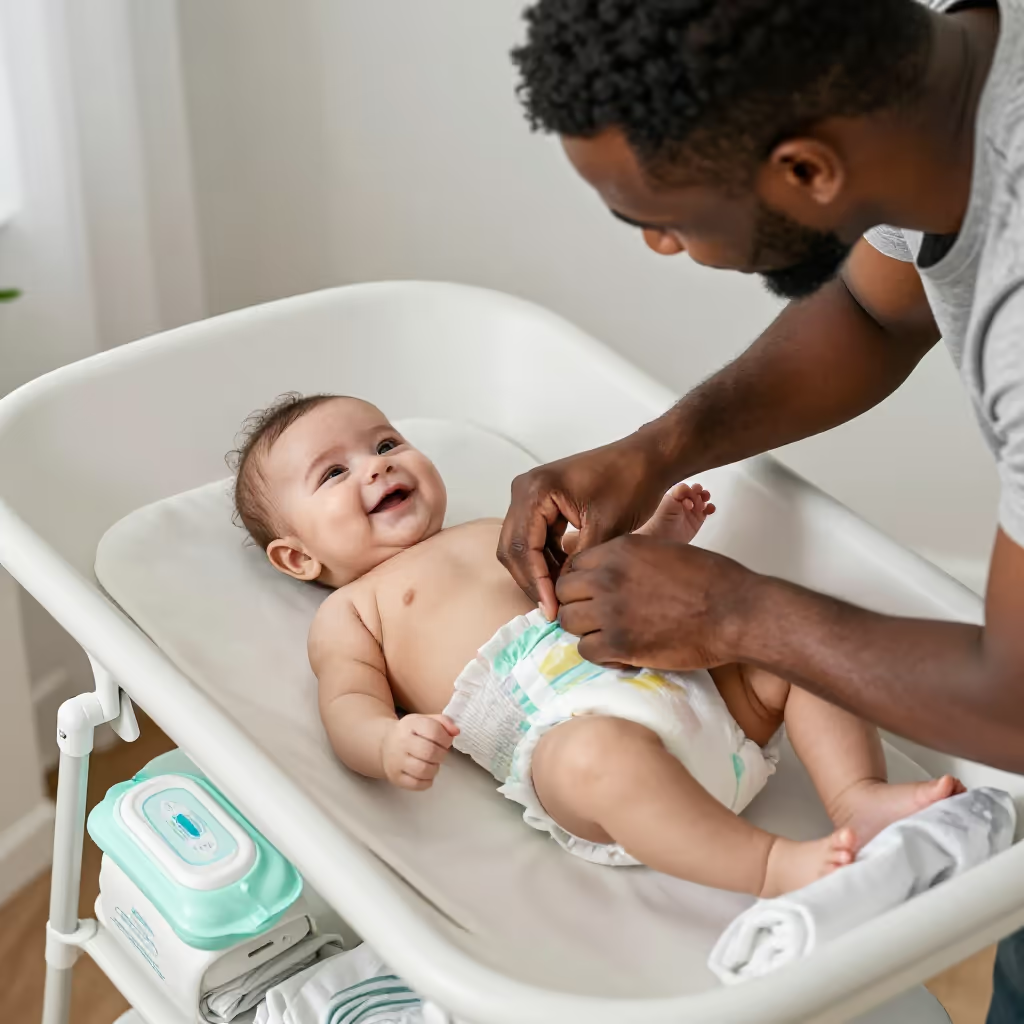
die Windel
diaper
An absorbent hygiene product worn mainly by babies and toddlers to catch urine and stool.
EXAMPLE
Das Baby braucht eine frische Windel.
The baby needs a fresh diaper.
diaper
Loading your saved state.
diaper
An absorbent hygiene product worn mainly by babies and toddlers to catch urine and stool.
Das Baby braucht eine frische Windel.
The baby needs a fresh diaper.
The most common action connected with diapers is changing them. Typical expressions are 'die Windel wechseln' (to change the diaper), 'eine frische Windel anziehen' (to put on a fresh diaper), or 'eine volle Windel haben' (to have a full diaper).
Ich muss schnell die Windel von meinem Sohn wechseln.
I need to quickly change my son's diaper.
When you change someone's diaper, the person is in the dative. The diaper itself is the accusative object.
Kannst du bitte dem Baby die Windel wechseln?
Could you please change the baby's diaper?
The verb 'wickeln' is often used as a synonym for 'die Windeln wechseln' (to change diapers). The expression 'das Baby wickeln' means to put a fresh diaper on the baby.
Ich habe das Baby gerade frisch gewickelt.
I just changed the baby's diaper.