


wir
we
First-person plural personal pronoun in the nominative. It refers to a group that includes the speaker.
EXAMPLE
Morgen fahren wir zu unseren Großeltern.
Tomorrow we are going to our grandparents.
we
Loading your saved state.
we
First-person plural personal pronoun in the nominative. It refers to a group that includes the speaker.
Morgen fahren wir zu unseren Großeltern.
Tomorrow we are going to our grandparents.
we
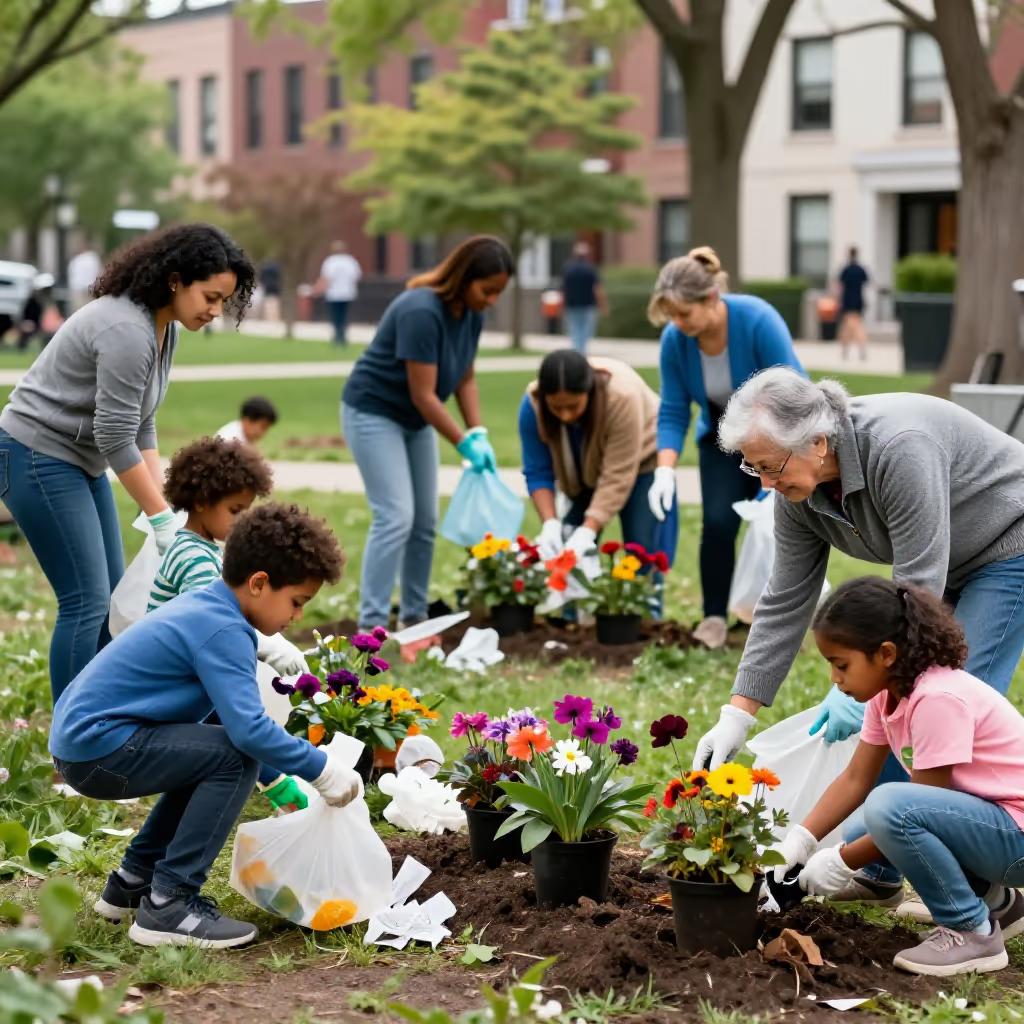
Used to make a general statement about a large group (e.g. society, humanity) or to create a sense of community (inclusive we).
Wir müssen als Gesellschaft besser auf die Umwelt achten.
We as a society need to take better care of the environment.
we
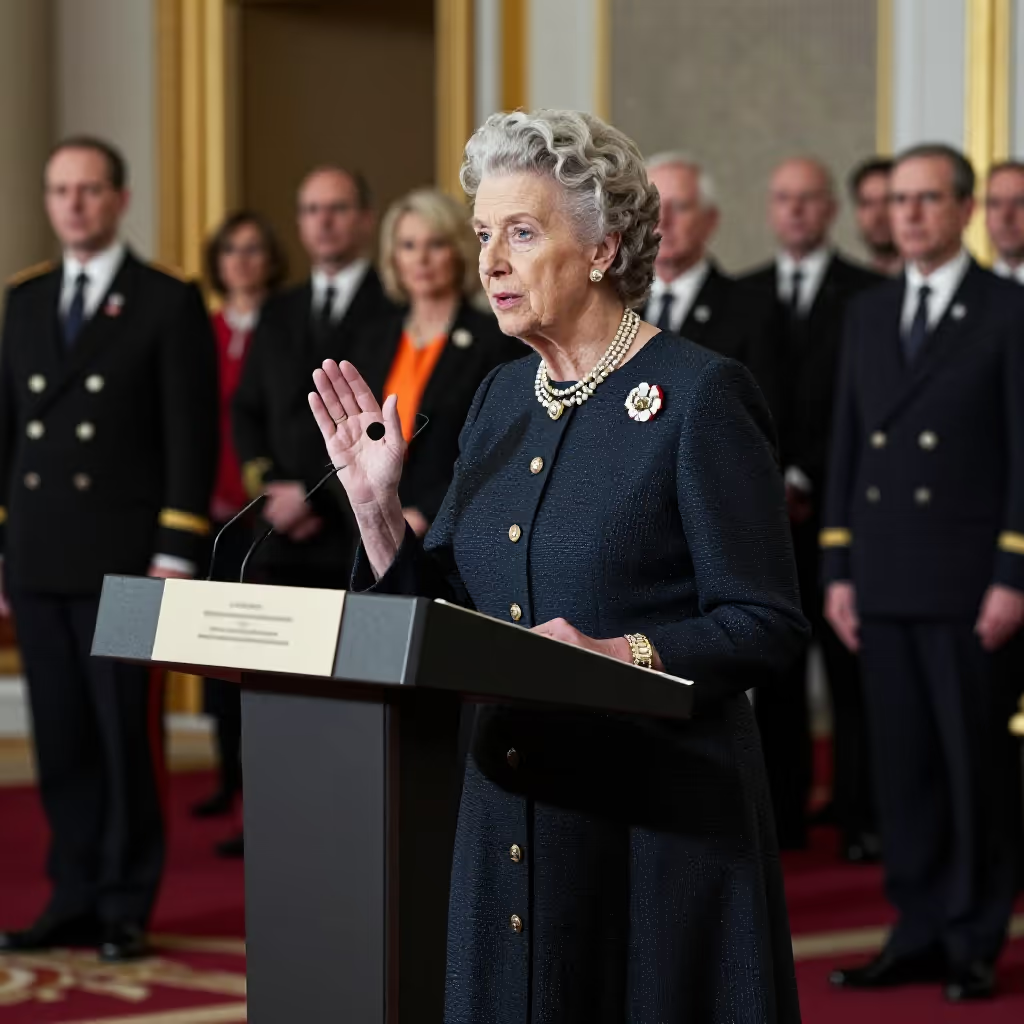
Used by a single person to refer to themselves, typically by monarchs (royal we) or by authors in academic texts (authorial we).
In diesem Artikel zeigen wir, dass die bisherige Annahme falsch ist.
In this article, we show that the previous assumption is false.
When 'wir' (we) is the subject in a sentence, the conjugated verb almost always ends in '-en'. 'Wir' always refers to a group that includes the person speaking.
Wir lernen zusammen Deutsch.
We are learning German together.
In speeches or general statements, 'wir' (we) is often used to include a large group (e.g. the citizens of a country, humanity). It creates a sense of community and shared responsibility.
Wir müssen mehr für den Klimaschutz tun.
We need to do more for climate protection.
In scientific and academic texts, a single author often uses 'wir' (we) instead of 'ich' (I). This sounds less personal and is meant to include the reader in the argument.
Wie wir im nächsten Abschnitt zeigen werden, ist diese Hypothese korrekt.
As we will show in the next section, this hypothesis is correct.
I
A single author can refer to themselves with ich or wir. Ich sounds personal and directly identifies the speaker. Wir is possible as an authorial plural, especially in academic texts, and creates more distance even though only one person is writing.

In diesem wissenschaftlichen Artikel untersuchen wir die Folgen des Klimawandels.
In this academic article, we examine the consequences of climate change.
In diesem Artikel untersuche ich die Folgen des Klimawandels.
In this article, I examine the consequences of climate change.