

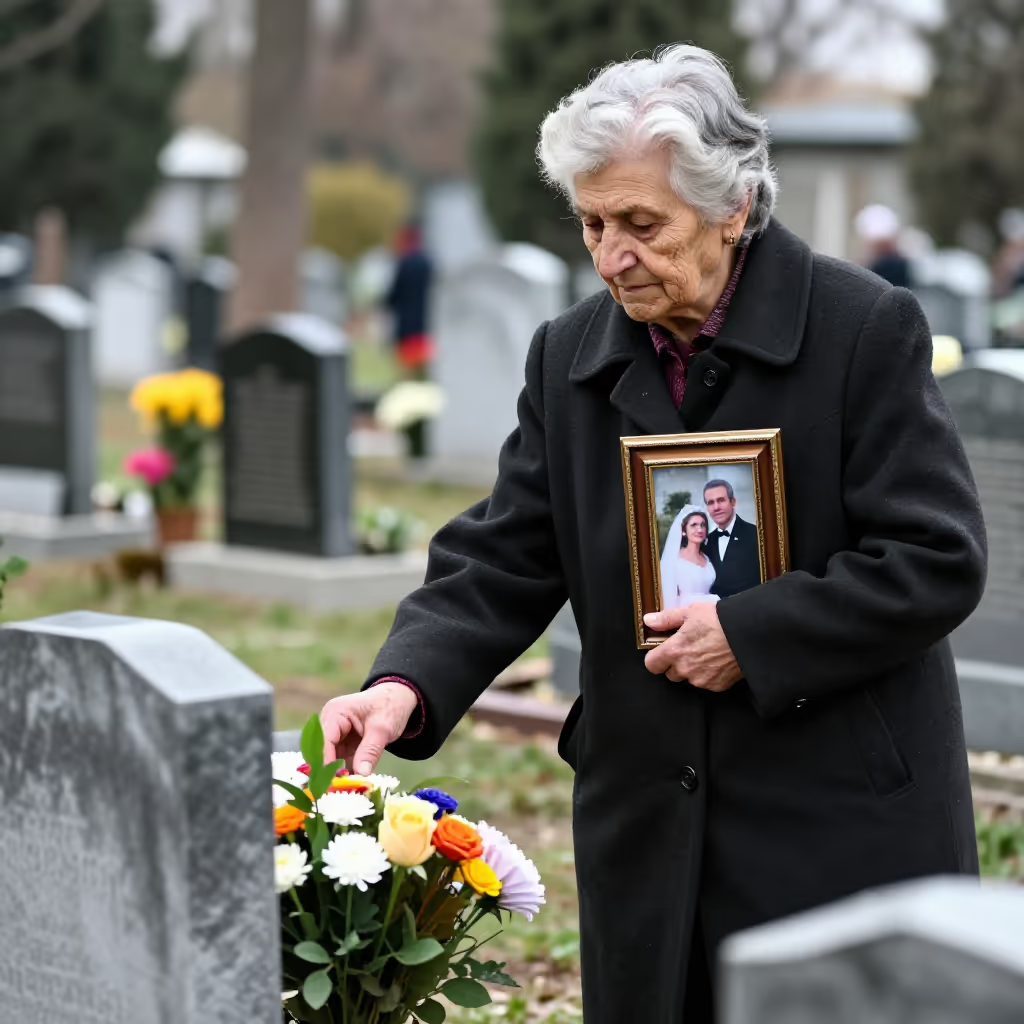
A woman whose husband has died and who has not remarried. The male counterpart is 'der Witwer' (widower).
example
Nach dem Tod ihres Mannes lebte sie viele Jahre als Witwe in dem kleinen Haus am See.
After her husband's death, she lived for many years as a widow in the small house by the lake.
Usage tips
Word family
The word belongs to a small word family. The male form is 'der Witwer' (widower). The related adjective is 'verwitwet' (widowed).
EXAMPLE
Seit dem Tod seiner Frau ist er Witwer.
Since his wife's death, he has been a widower.
Sentence structure and usage
To describe the state of being a widow, German often uses the verbs 'sein' (to be) or 'bleiben' (to remain). The process is expressed with the verb 'werden' (to become).
EXAMPLE
Sie wurde schon mit 40 Jahren Witwe.
She became a widow at just 40.
Use without an article
When 'Witwe' (widow) describes a person's status or role in predicative use, it often appears without an article.
EXAMPLE
Ihre Großmutter war lange Zeit Witwe.
Her grandmother was a widow for a long time.
Compare with
confusable
Witwe vs Waise
orphan
'Witwe' and 'Waise' both have to do with a death in the family, but they refer to different people. A 'Witwe' is a woman whose husband has died. A 'Waise' is a child whose parents or one parent has died. Learners may confuse the words because both describe a person after a loss and sound similar. The relationship is important: 'Witwe' is about marriage, while 'Waise' is about parents and a child.
Witwe
Nach dem Tod ihres Mannes lebt die Witwe allein in der alten Wohnung.
After her husband's death, the widow lives alone in the old apartment.
Waise
Die Waise wächst seit zwei Jahren bei ihrer Tante auf.
The orphan has been growing up with her aunt for two years.