

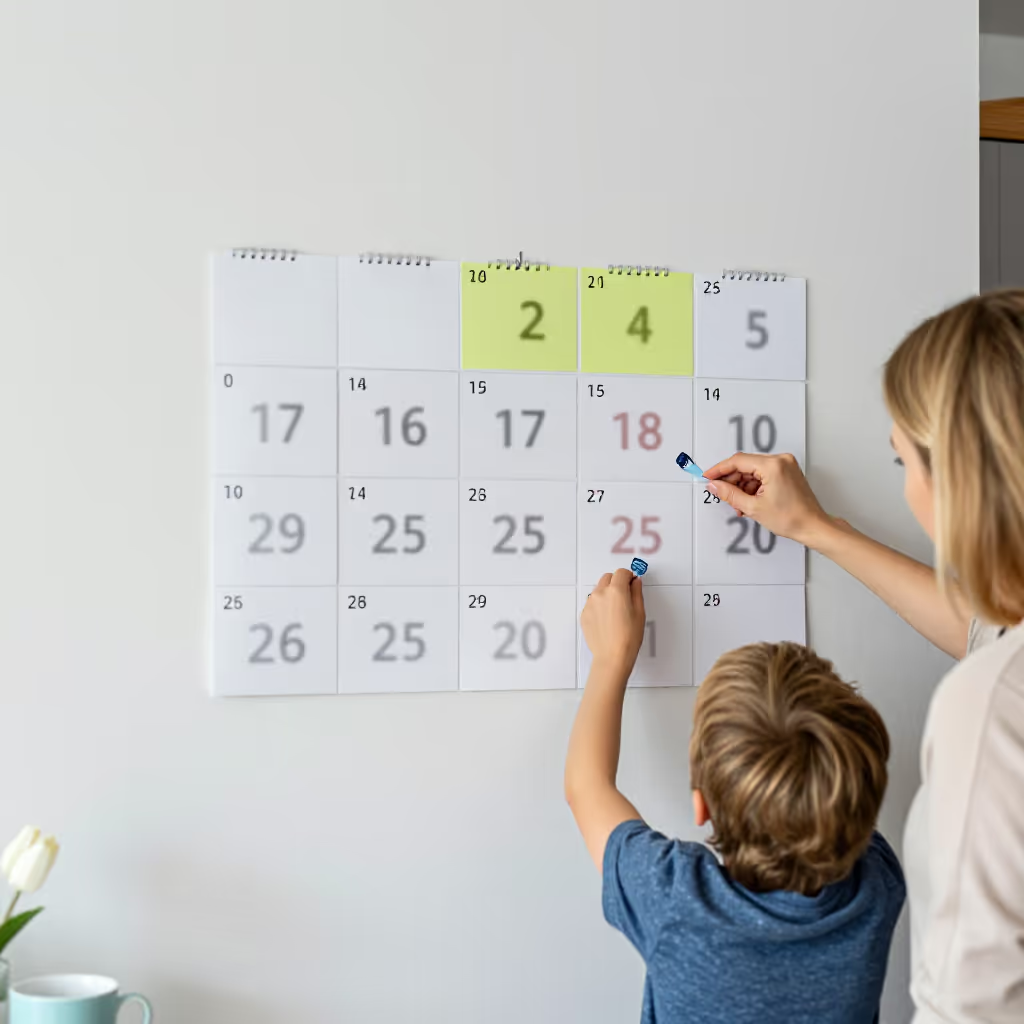
die Woche
week
A period of seven consecutive days, usually from Monday to Sunday.
EXAMPLE
Nächste Woche fahre ich in den Urlaub.
Next week I’m going on vacation.
week
Loading your saved state.
week
A period of seven consecutive days, usually from Monday to Sunday.
Nächste Woche fahre ich in den Urlaub.
Next week I’m going on vacation.

workweek
Refers to the working days within a week, usually from Monday to Friday.
Ich habe eine anstrengende Woche mit vielen Terminen vor mir.
I have a stressful workweek with many appointments ahead of me.
With time expressions using 'Woche' (week), the adjectives 'diese' (this), 'nächste' (next), and 'letzte' (last) are used without a preposition. These expressions are in the accusative and function like an adverb in the sentence.
Letzte Woche war ich krank.
I was sick last week.
Prepositions are used to describe periods of time. 'In einer Woche' means a point in time in the future, 'vor einer Woche' means a point in time in the past, and 'seit einer Woche' means a duration that continues up to now.
In einer Woche beginnen die Ferien.
The holidays begin in a week.
To name a point in time within the week, people often use the combinations 'Anfang der Woche' (at the beginning of the week), 'Mitte der Woche' (in the middle of the week), and 'Ende der Woche' (at the end of the week).
Wir haben Anfang der Woche einen wichtigen Termin.
We have an important appointment at the beginning of the week.
The expression 'unter der Woche' refers to the working days from Monday to Friday. It is often used in contrast to 'am Wochenende' (on the weekend).
Unter der Woche habe ich wenig Zeit, aber am Wochenende können wir uns treffen.
During the week I have little time, but we can meet on the weekend.