

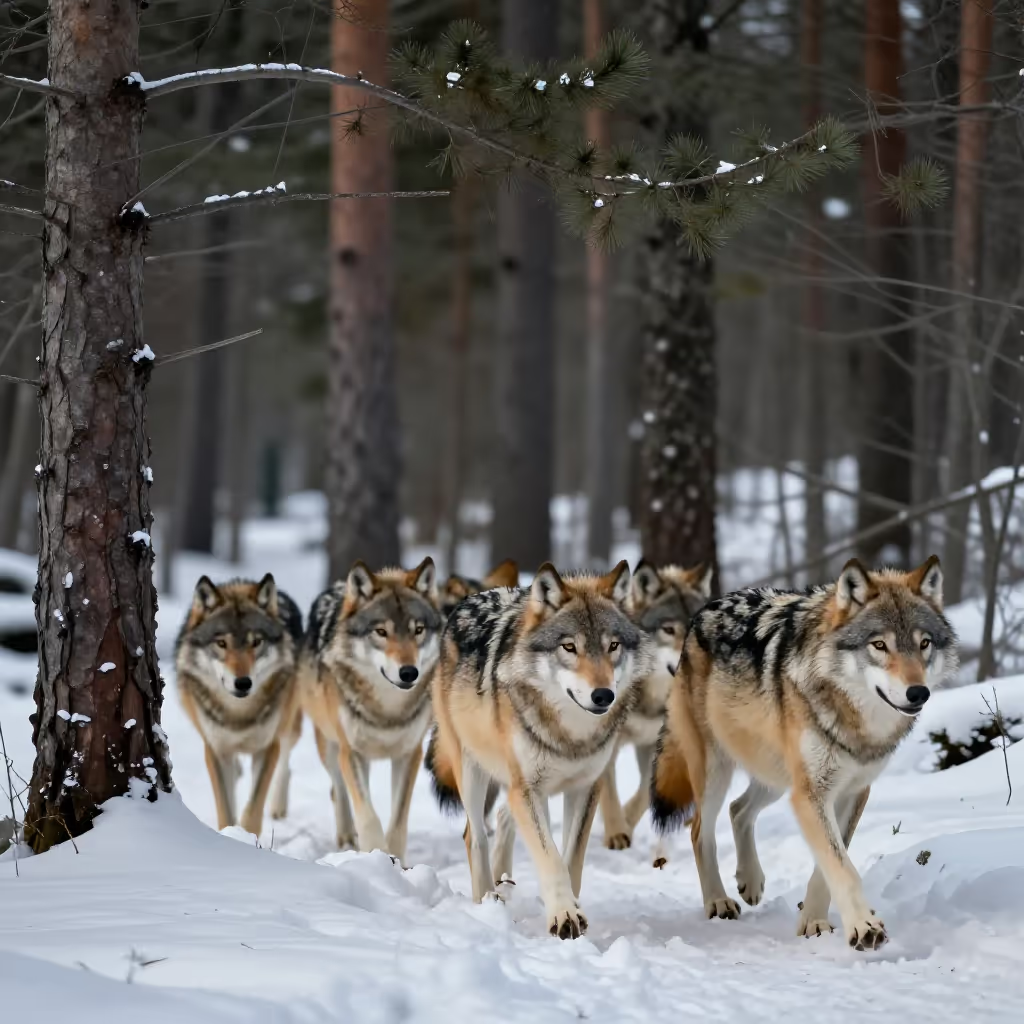
der Wolf
wolf
A large, wild predator from the dog family that usually lives in packs.
EXAMPLE
In den deutschen Wäldern gibt es wieder einige Wolfsrudel.
There are once again some wolf packs in German forests.
wolf
Loading your saved state.
wolf
A large, wild predator from the dog family that usually lives in packs.
In den deutschen Wäldern gibt es wieder einige Wolfsrudel.
There are once again some wolf packs in German forests.

to do endlessly
A colloquial expression that means doing something for a very long time, intensively, and usually in vain (e.g. 'sich einen Wolf laufen' — to walk/run endlessly, 'sich einen Wolf suchen' — to search endlessly, 'sich einen Wolf reden' — to talk oneself hoarse).
Ich hab mir gestern einen Wolf gesucht, aber meine Schlüssel sind einfach weg.
I searched endlessly yesterday, but my keys are simply gone.

wolf in sheep's clothing
An expression for a person who seems harmless and friendly but actually has bad intentions.
Der nette Berater entpuppte sich als Wolf im Schafspelz, der nur unser Geld wollte.
The nice adviser turned out to be a wolf in sheep's clothing who only wanted our money.

chafing / intertrigo
In medicine, a skin inflammation in body folds caused by friction and sweat (intertrigo).
Durch das lange Wandern in nasser Kleidung hat er sich einen Wolf gelaufen.
From hiking for so long in wet clothes, he developed severe chafing.
The colloquial expression 'sich einen Wolf laufen' can mean two things: either that you walk or run for a very long distance, or that you have developed a skin inflammation from friction. Only the broader conversational context makes clear which meaning is intended.
Ich habe die ganze Stadt nach einem passenden Geschenk abgesucht und mir einen Wolf gelaufen.
I searched the whole city for a suitable present and walked endlessly.
The idiom 'sich einen Wolf ...' expresses that someone does something for an excessively long time or in vain. The person is in the dative, and the verb at the end describes the action.
Ich kann dir das noch zehnmal erklären und mir dabei einen Wolf reden, du musst es schon selbst versuchen.
I can explain it to you ten more times and talk myself hoarse doing it, but you really have to try it yourself.
The 'Wolf im Schafspelz' (wolf in sheep's clothing) is a fixed expression for a person with bad intentions who presents themselves as harmless. It is often used with verbs such as 'sein' (to be) or 'sich entpuppen als' (to turn out to be).
Pass auf bei diesem Verkäufer, er ist ein Wolf im Schafspelz.
Watch out with this salesman; he's a wolf in sheep's clothing.
The wolf is a central figure in many German fairy tales, such as 'Rotkäppchen' (Little Red Riding Hood) or 'Der Wolf und die sieben Geißlein' (The Wolf and the Seven Young Goats). There, he is usually portrayed as evil and cunning, which has strongly shaped his image in the culture.
Kinder kennen den Wolf oft als den Bösewicht aus dem Märchen.
Children often know the wolf as the villain from fairy tales.
In its literal meaning, the wolf is often described in connection with its social behavior. Typical expressions are 'ein einsamer Wolf' (a lone wolf) for a loner, or that wolves 'im Rudel jagen' (hunt in packs).
Er geht am liebsten allein seinen Weg, er ist ein einsamer Wolf.
He prefers to go his own way alone; he's a lone wolf.