

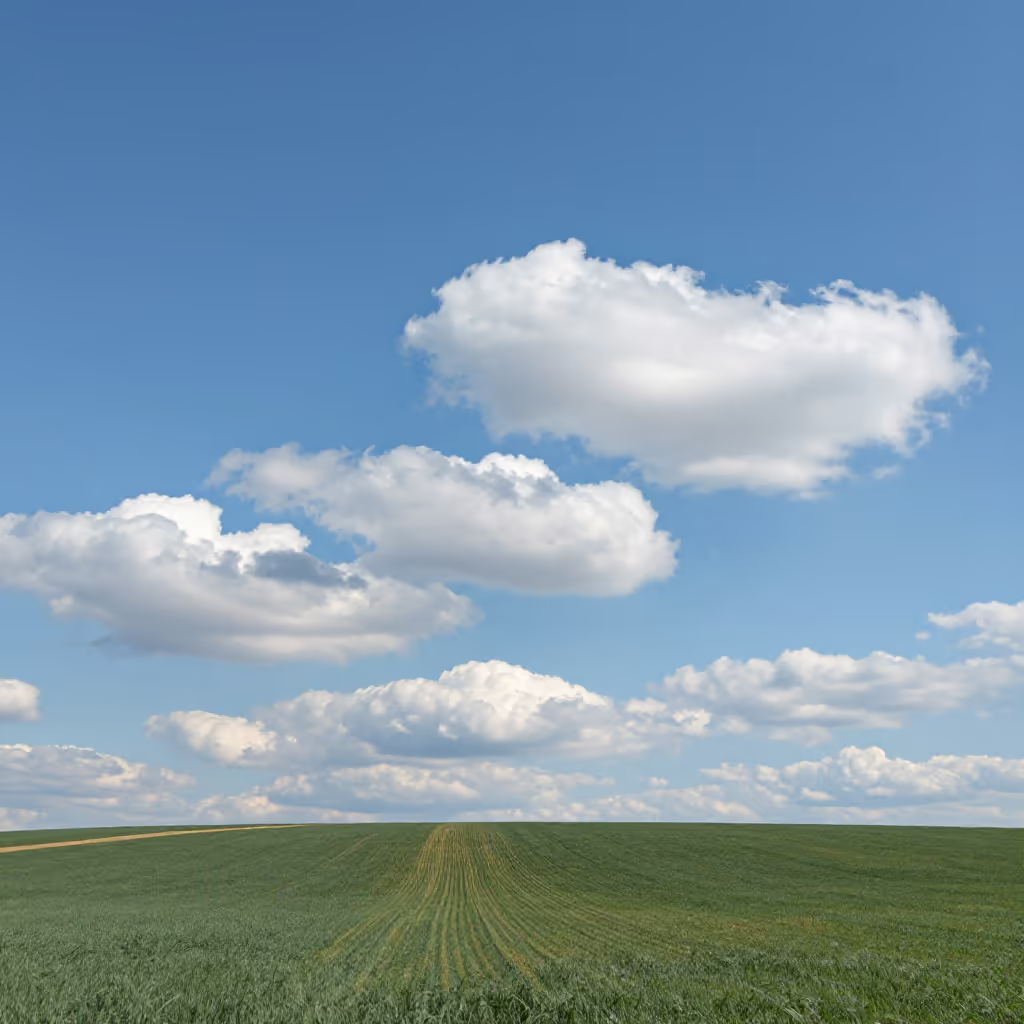
die Wolke
cloud
A visible accumulation of very small water droplets or ice crystals in the atmosphere.
EXAMPLE
Eine dunkle Wolke zog am Himmel auf und es begann zu regnen.
A dark cloud appeared in the sky, and it began to rain.
cloud
Loading your saved state.
cloud
A visible accumulation of very small water droplets or ice crystals in the atmosphere.
Eine dunkle Wolke zog am Himmel auf und es begann zu regnen.
A dark cloud appeared in the sky, and it began to rain.

cloud
A large, dense mass of smoke, dust, gas, or vapor.
Nach der Sprengung stieg eine riesige Staubwolke in die Luft.
After the explosion, a huge cloud of dust rose into the air.

cloud
Colloquial for the 'cloud'; a network of servers on the internet used for storing and processing data.
Ich lade meine Fotos immer direkt in die Wolke hoch.
I always upload my photos directly to the cloud.
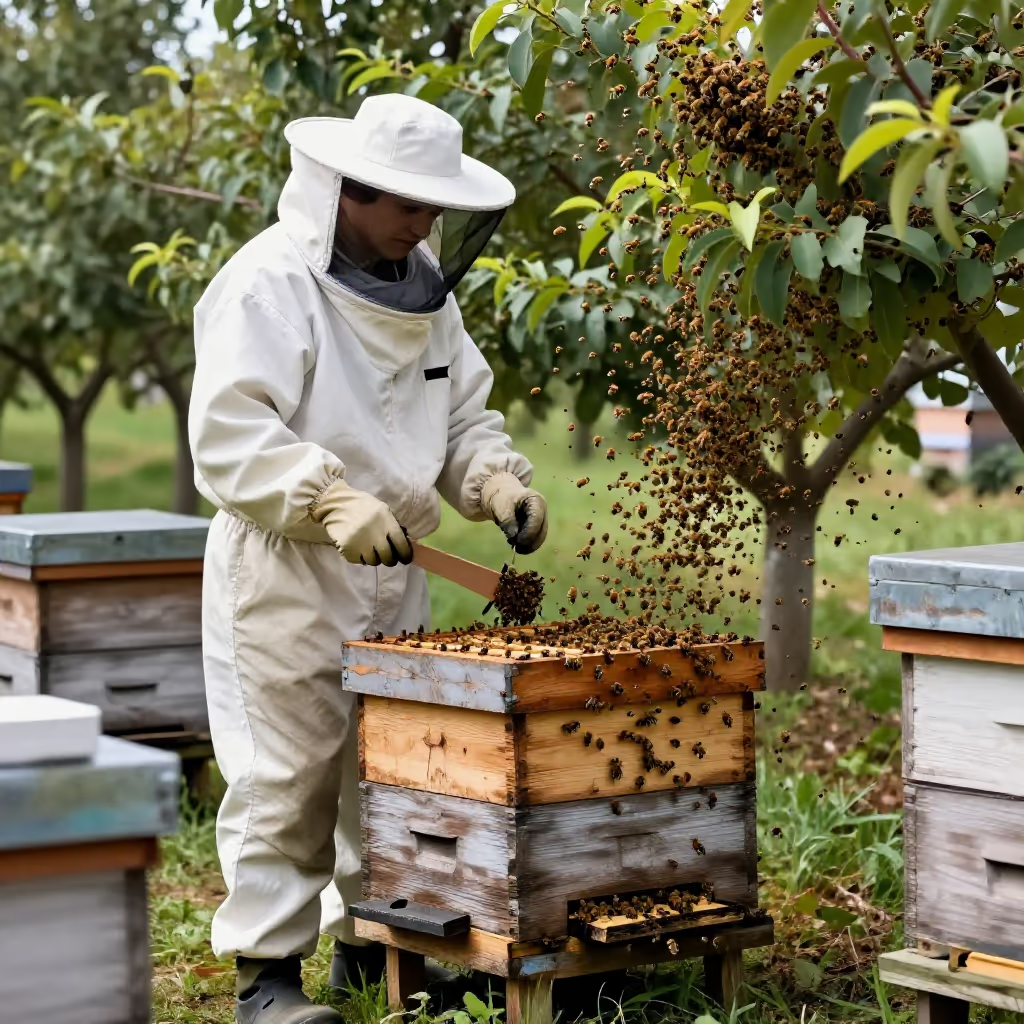
cloud / swarm
In a figurative sense, a large swarm of insects or a dense accumulation of something.
Am Abend wurden wir von einer Wolke aus Mücken angegriffen.
In the evening, we were attacked by a cloud of mosquitoes.
The idiom 'auf Wolke sieben schweben' (to be floating on cloud nine) means to be very happy or newly in love. The number seven always remains unchanged in German.
Seit sie den neuen Job hat, schwebt sie auf Wolke sieben.
Since she got the new job, she has been on cloud nine.
In connection with the weather, 'Wolke' (cloud) is often combined with certain verbs. Typical formulations are 'Wolken ziehen auf' (clouds are gathering), 'der Himmel ist voller Wolken' (the sky is full of clouds), or 'die Sonne kommt hinter den Wolken hervor' (the sun comes out from behind the clouds).
Am Horizont ziehen bereits dunkle Gewitterwolken auf.
Dark storm clouds are already gathering on the horizon.
The word 'Wolke' (cloud) is often used as the base word in compounds to describe a dense mass. Examples are 'Rauchwolke' (cloud of smoke), 'Staubwolke' (cloud of dust), or 'Duftwolke' (cloud of fragrance).
Beim Backen entstand eine feine Mehlwolke in der Küche.
While baking, a fine cloud of flour formed in the kitchen.
In the IT context, German distinguishes between direction and location. You upload data 'in die Wolke' (to the cloud; accusative), but the data is then stored 'in der Wolke' (in the cloud; dative).
Kannst du die Dokumente für mich in die Wolke hochladen?
Can you upload the documents to the cloud for me?
To describe a dense swarm, usually of insects, you use the structure 'eine Wolke von' (a cloud of) followed by a noun in the plural.
Wir mussten schnell ins Haus laufen, um der Wolke von Mücken zu entkommen.
We had to run quickly into the house to escape the cloud of mosquitoes.