


die Würde
dignity
The inner worth and claim to respect that every human being has by nature.
EXAMPLE
Die Würde des Menschen ist unantastbar.
Human dignity is inviolable.
dignity
Loading your saved state.
dignity
The inner worth and claim to respect that every human being has by nature.
Die Würde des Menschen ist unantastbar.
Human dignity is inviolable.
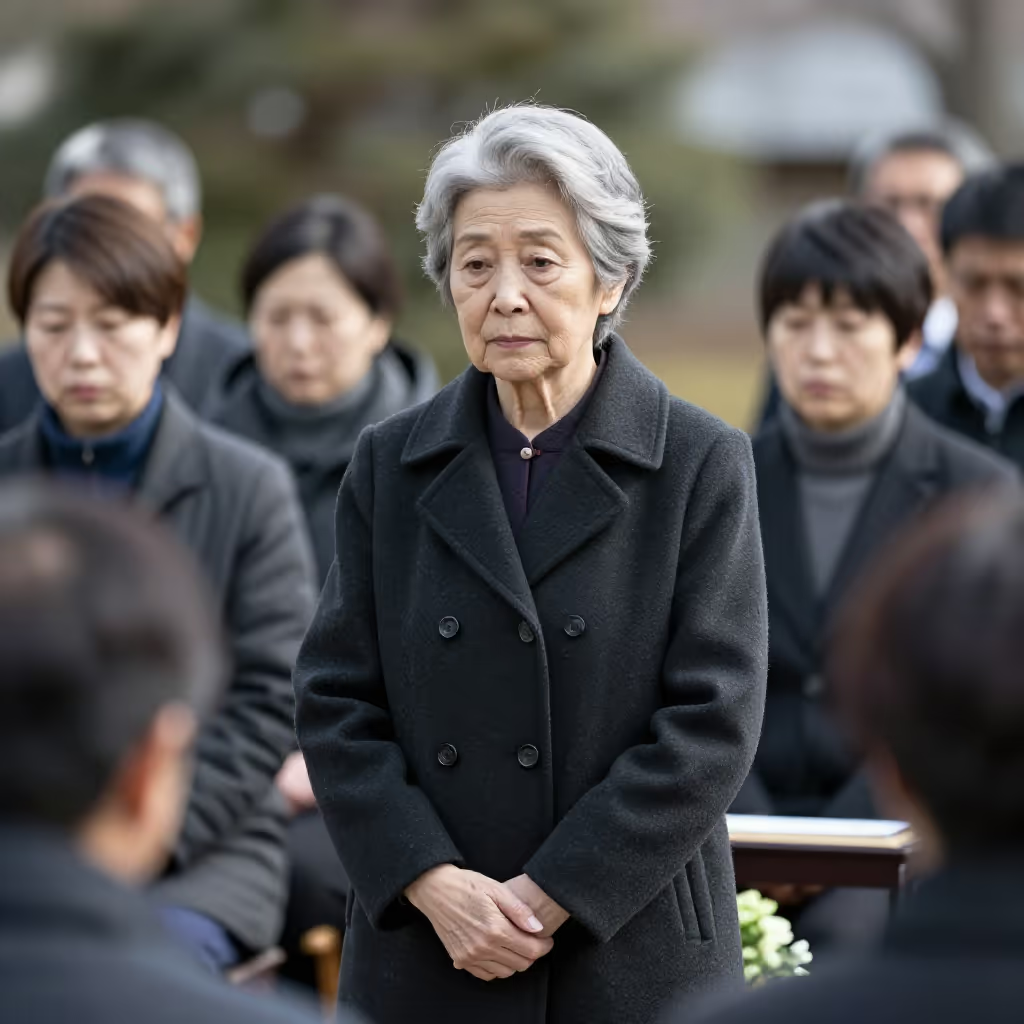
dignity
A calm, serious, and composed manner that evokes respect and esteem.
Sie ertrug die Niederlage mit großer Würde.
She endured the defeat with great dignity.
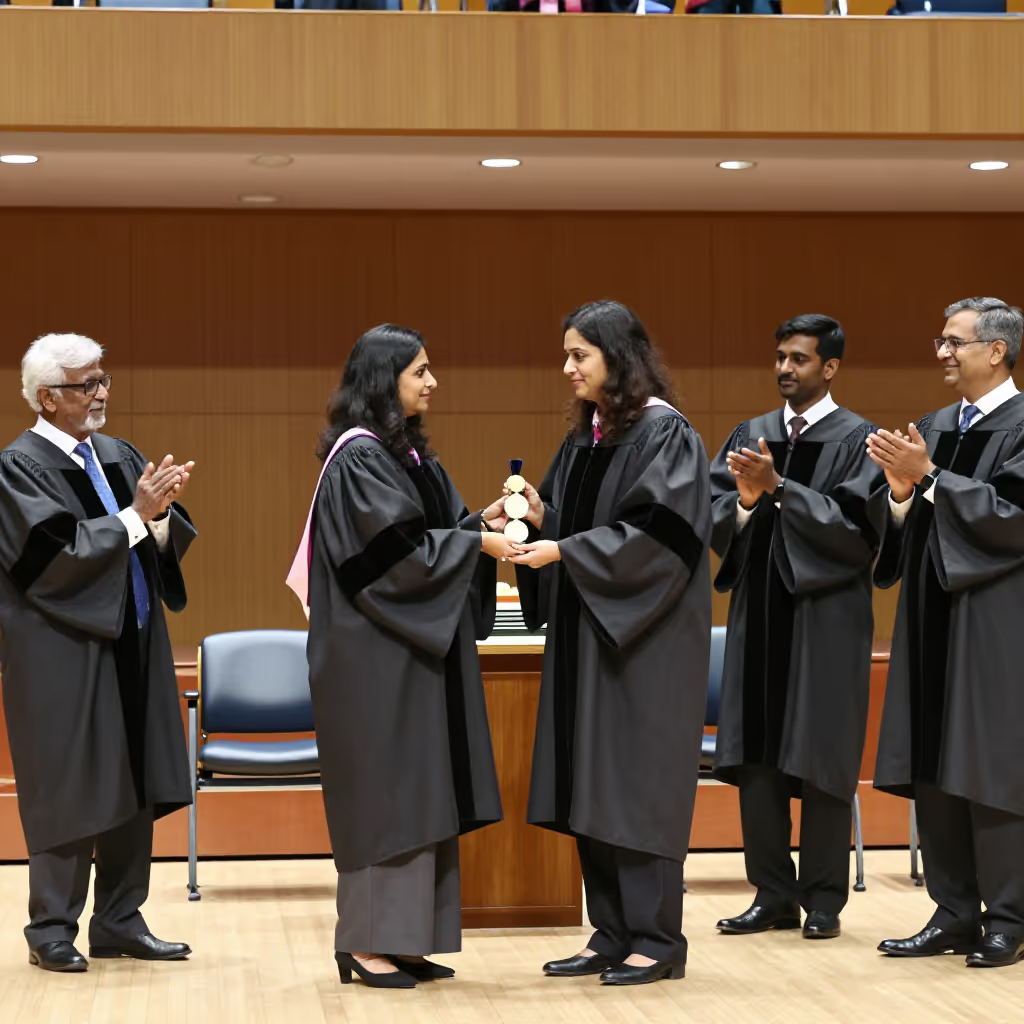
office / rank
A high office, title, or honorable position in society. Often used in the plural.
Er wurde in die Würden eines Professors erhoben.
He was raised to the rank of professor.
The noun 'die Würde' (dignity) is the basis for the adjective 'würdig' (worthy, deserving of something) and the verb 'würdigen' (to honor or recognize someone). All words in the family relate to worth and respect.
Sein Verhalten war eines Königs nicht würdig.
His behavior was not worthy of a king.
The sentence 'Die Würde des Menschen ist unantastbar' (Human dignity is inviolable) is the first article of the German Basic Law. It is a central value in German society and is often quoted.
In der Debatte wurde oft auf die Würde des Menschen verwiesen.
In the debate, human dignity was often referred to.
In connection with a person's inner worth, 'Würde' (dignity) is often used with verbs such as 'wahren' (to preserve), 'achten' (to respect), or 'verletzen' (to violate).
Es ist wichtig, auch in schwierigen Situationen die Würde des anderen zu achten.
It is important to respect the other person's dignity even in difficult situations.
When it is about a manner or bearing, 'Würde' (dignity) is often combined with verbs of enduring or showing. Typical expressions are 'seine Würde bewahren' (to preserve one's dignity) or something 'mit Würde tragen' (to bear something with dignity).
Trotz der falschen Anschuldigungen bewahrte er seine Würde.
Despite the false accusations, he preserved his dignity.
In the meaning of a high office or title, 'Würde' (office / rank) is often used in the plural ('Würden'). It is a formal and rather rare usage.
Er bekleidete im Laufe seines Lebens viele öffentliche Würden.
Over the course of his life, he held many public offices.
honor
Die Ehre concerns the standing and respect a person receives in society. Die Würde, by contrast, refers to the inner worth that every human being possesses. For questions of good reputation, Ehre is the better choice; for the fundamental right to be treated with respect, Würde is more appropriate.

Auch während der Befragung muss seine Würde geachtet werden.
His dignity must be respected even during the questioning.
Die falsche Anschuldigung hat seine Ehre schwer beschädigt.
The false accusation seriously damaged his honor.