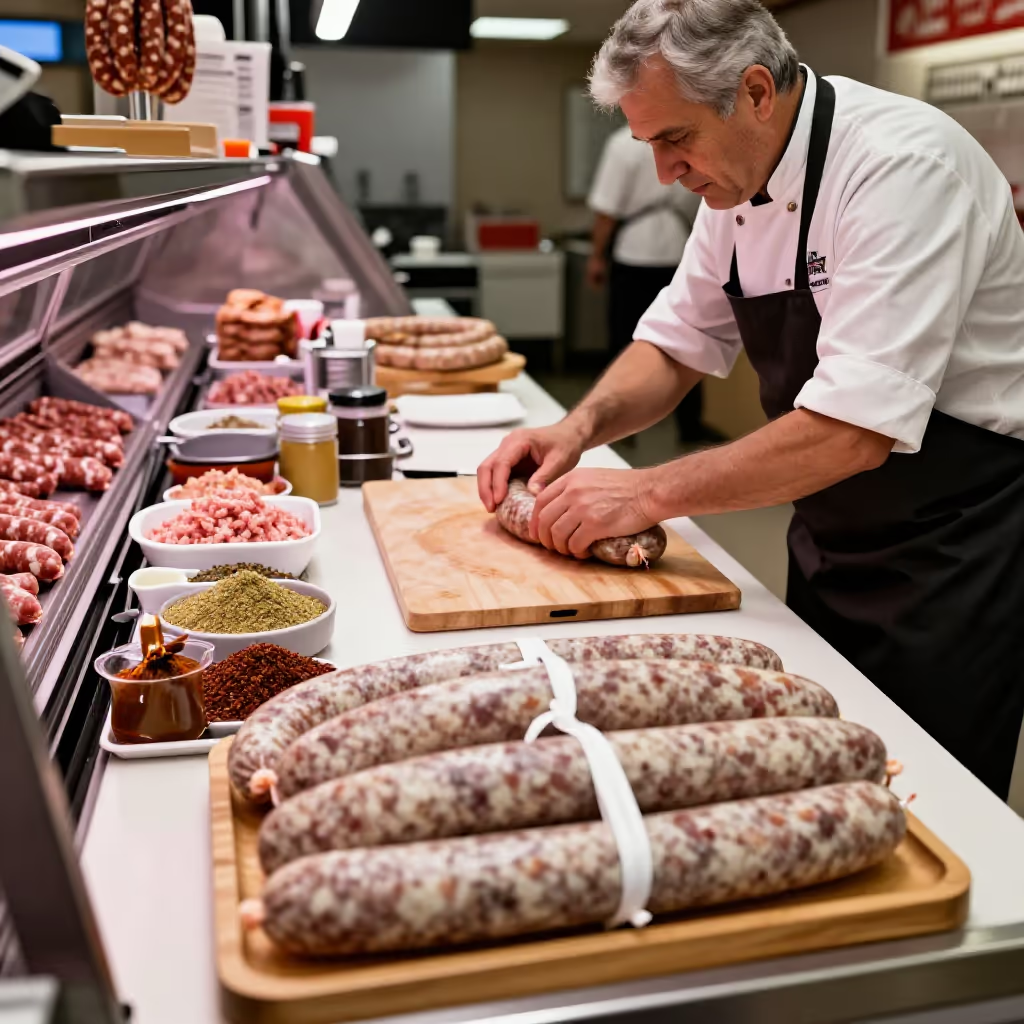
die Wurst
sausage
A food made from minced meat, bacon, spices, and other ingredients, usually filled into an intestine or casing.
Zum Abendbrot gibt es heute Brot mit Käse und Wurst.
For supper today, we're having bread with cheese and sausage.

sausage
Loading your saved state.
sausage
A food made from minced meat, bacon, spices, and other ingredients, usually filled into an intestine or casing.
Zum Abendbrot gibt es heute Brot mit Käse und Wurst.
For supper today, we're having bread with cheese and sausage.

The word 'Wurst' (sausage) is the basic building block for the names of countless German types of sausage. Words like 'Bratwurst' (bratwurst/grilled sausage), 'Leberwurst' (liver sausage), or 'Blutwurst' (blood sausage) refer to specific types and are easy to recognize.
Beim Grillen essen die Deutschen am liebsten Bratwurst.
When grilling, Germans like to eat bratwurst best.
The idioms with 'Wurst' (sausage) are very common, but they clearly belong to colloquial language. In formal situations or in written language, you should avoid them.
Er sagte zu seinem Chef nicht: „Das ist mir Wurst“, sondern: „Das ist für mich nicht entscheidend.“
He did not say to his boss, 'Das ist mir Wurst' (I don't care), but rather, 'That is not decisive for me.'
The expression 'das ist mir Wurst' (I don't care) is formed with a dative pronoun or noun. It expresses which person something is unimportant to.
Ob wir heute oder morgen fahren, ist mir völlig Wurst.
Whether we go today or tomorrow, I really don't care.
The expression 'es geht um die Wurst' (it's now or never/everything is at stake) is a fixed phrase. The 'es' at the beginning is a fixed component and cannot be changed.
Im Finale der Weltmeisterschaft geht es für beide Teams um die Wurst.
In the World Cup final, it's now or never for both teams.
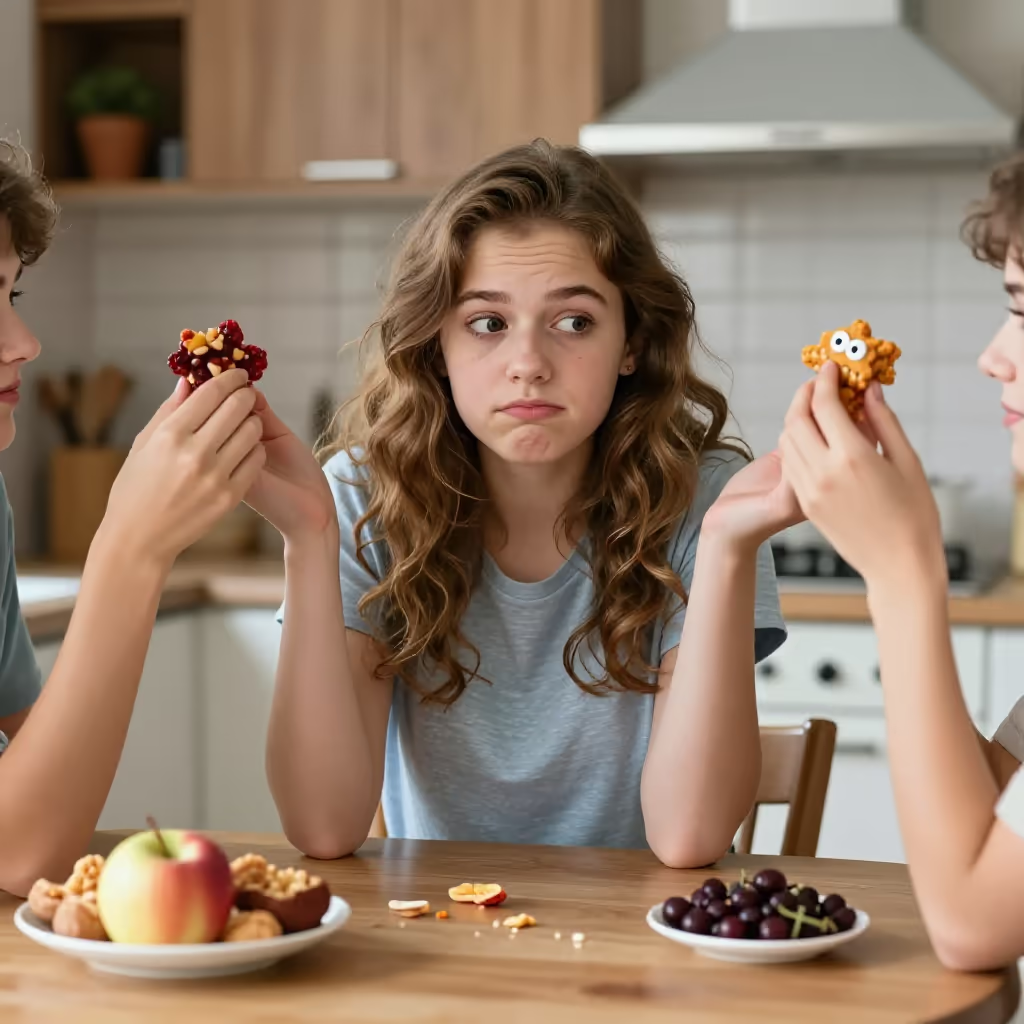
The expression 'die beleidigte Leberwurst spielen' (to act offended/sulky) is always used with the verb 'spielen' (to play). It describes the behavior of a person who is offended for no reason or in an exaggerated way.
Nur weil du beim Spiel verloren hast, musst du nicht gleich die beleidigte Leberwurst spielen.
Just because you lost the game, you don't have to act offended right away.
indifferent / no matter
'egal' and 'Wurst' can both express that something does not matter. 'egal' is the normal word and fits almost all everyday situations. 'Das ist mir Wurst' (I don't care) is a fixed colloquial expression and sounds more casual, sometimes also a bit rough. They can be confused because the meaning is the same. But the important thing is: in this meaning, 'Wurst' is not used on its own like a normal adjective, but usually in the form 'Das ist mir Wurst'.

Ob wir heute oder morgen einkaufen, ist dem Team völlig Wurst.
Whether we go shopping today or tomorrow makes absolutely no difference to the team.
Mina ist egal, ob wir im Restaurant Pizza oder Suppe bestellen.
Mina doesn't care whether we order pizza or soup at the restaurant.