

zaubern
to conjure
To perform magical actions or tricks in order to seemingly cause something supernatural to happen.
EXAMPLE
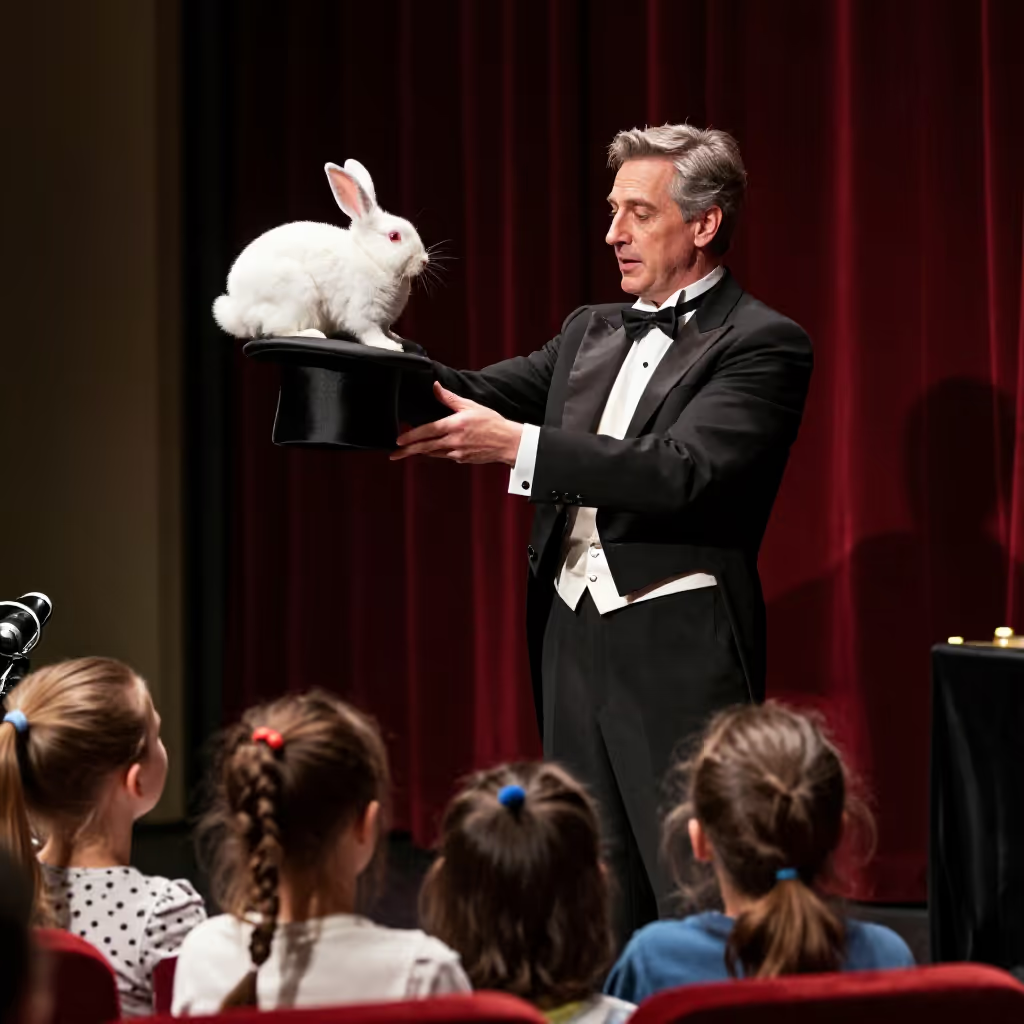
Der Magier zauberte ein Kaninchen aus seinem Zylinder.
The magician conjured a rabbit out of his top hat.
to conjure / create
Loading your saved state.
to conjure
To perform magical actions or tricks in order to seemingly cause something supernatural to happen.
Der Magier zauberte ein Kaninchen aus seinem Zylinder.
The magician conjured a rabbit out of his top hat.

to create
To make or produce something quickly, effortlessly, and impressively, as if by magic.
Obwohl kaum noch etwas im Kühlschrank war, hat sie ein fantastisches Abendessen gezaubert.
Even though there was hardly anything left in the fridge, she created a fantastic dinner.
The verb 'zaubern' (to conjure) belongs to the word family of 'der Zauber' (magic) and 'der Zauberer' (the magician, the person who does magic). If you know these words, the meaning is easier to understand.
Die Kinder waren vom Zauber des Moments fasziniert.
The children were fascinated by the magic of the moment.
In the literal meaning, the origin of what is conjured is often given with the preposition 'aus' (out of/from) and the dative. The structure is: [something] aus [something] zaubern.
Der Zauberer zauberte eine Münze aus dem Ohr des Kindes.
The magician conjured a coin out of the child's ear.
In the figurative sense, 'zaubern' (to create as if by magic) is often used for creative or quick achievements. Typical phrases are 'ein Lächeln ins Gesicht zaubern' (to put a smile on someone's face) or 'ein köstliches Essen zaubern' (to whip up a delicious meal).
Mit ein paar einfachen Zutaten zauberte er eine leckere Suppe.
With a few simple ingredients, he created a tasty soup.