

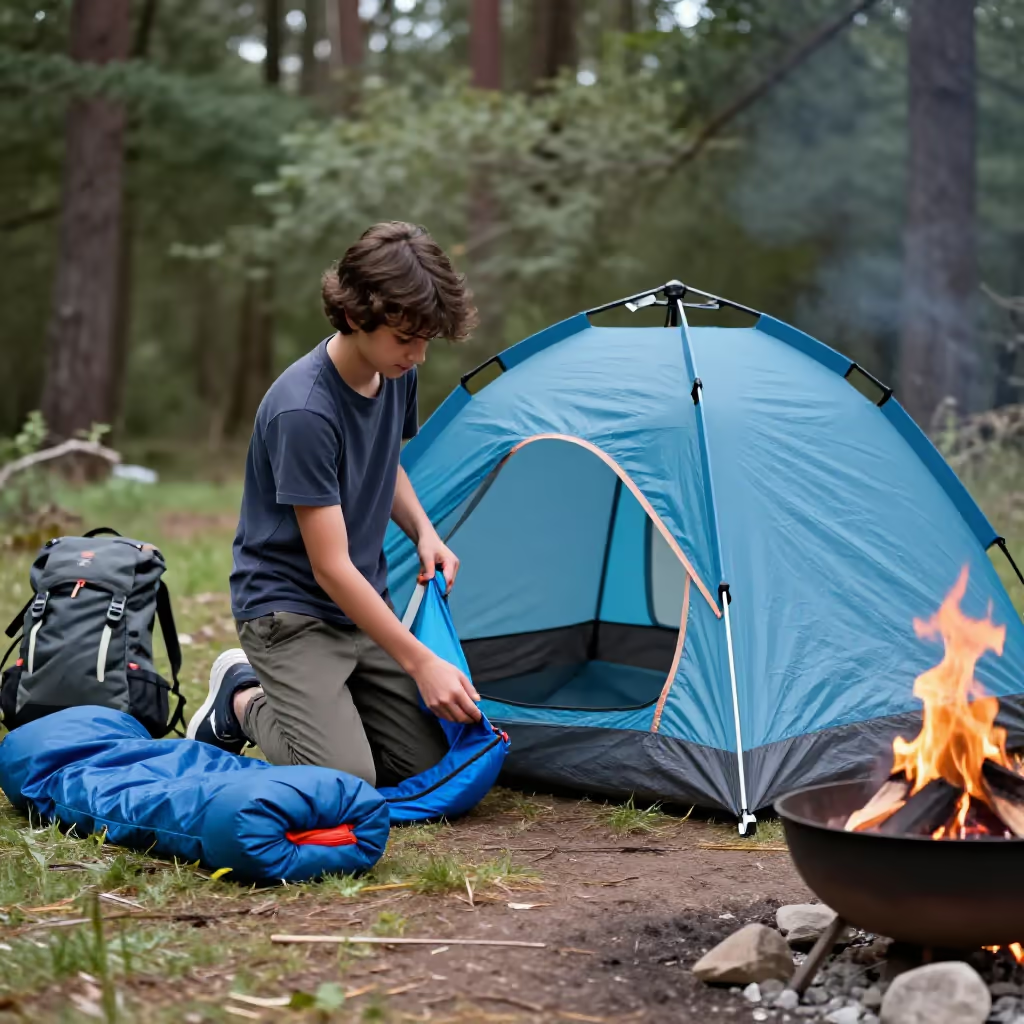
das Zelt
tent
A portable shelter made of fabric or plastic, held up by poles and used especially for camping.
EXAMPLE
Wir bauten unser Zelt direkt am Seeufer auf.
We set up our tent right on the lakeshore.
tent
Loading your saved state.
tent
A portable shelter made of fabric or plastic, held up by poles and used especially for camping.
Wir bauten unser Zelt direkt am Seeufer auf.
We set up our tent right on the lakeshore.
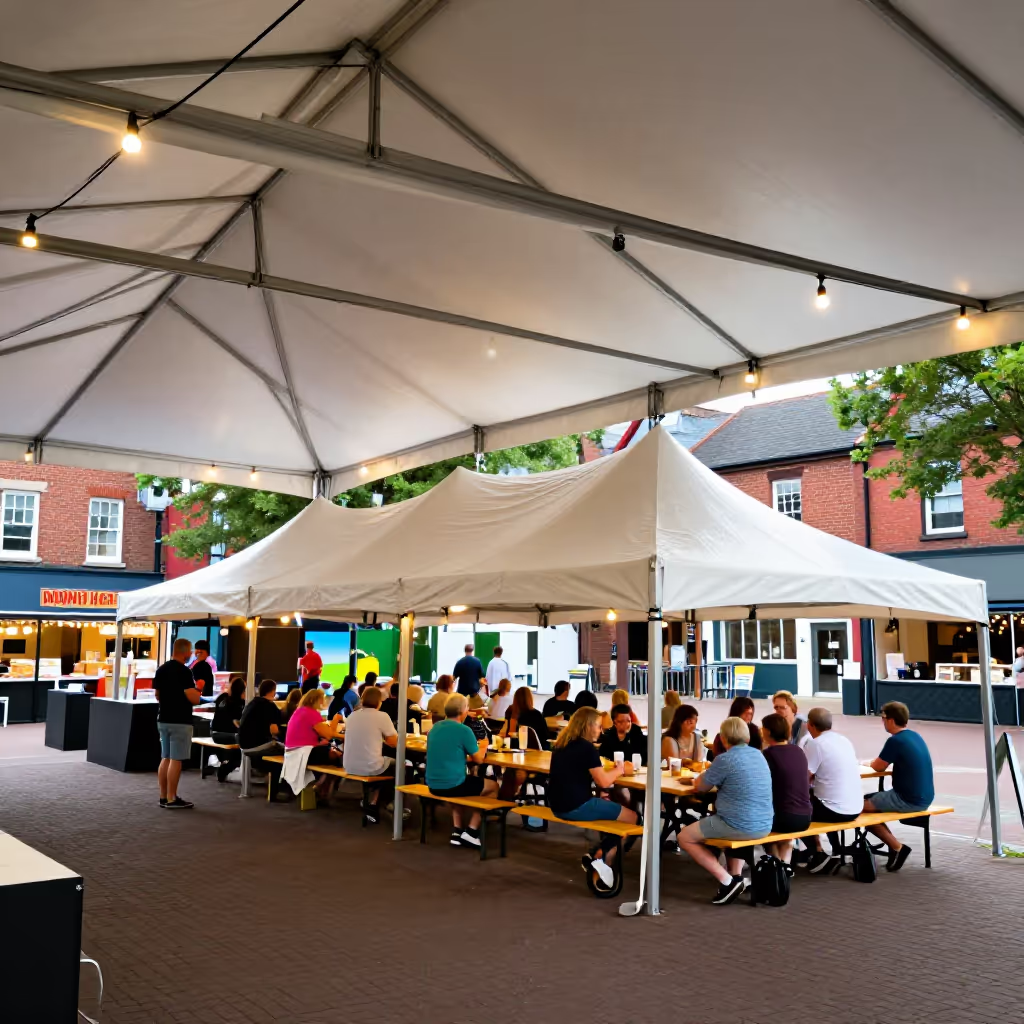
marquee / tent
A large, tent-like structure used for events such as festivals, circus performances, or trade fairs.
Auf dem Oktoberfest wird in riesigen Zelten gefeiert.
At Oktoberfest, people celebrate in huge tents.

to pull up stakes
To leave a place where one has lived or worked for a while in order to go somewhere else.
Nach fünf Jahren in der Stadt hat er dort seine Zelte abgebrochen und ist aufs Land gezogen.
After five years in the city, he pulled up stakes there and moved to the countryside.
Certain verbs are firmly associated with a tent: You can 'aufbauen' or 'aufschlagen' a tent (set up/pitch a tent), and at the end 'abbauen' it again (take it down). The activity of sleeping in a tent is called 'zelten' (to camp).
Wir haben unser Zelt neben dem Fluss aufgeschlagen.
We pitched our tent next to the river.
To express movement into the tent, you use the preposition 'in' with the accusative: 'ins Zelt gehen' (to go into the tent). To describe a location or state, you use 'in' with the dative: 'im Zelt schlafen' (to sleep in the tent).
Als es anfing zu regnen, sind wir schnell ins Zelt gekrochen.
When it started to rain, we quickly crawled into the tent.
Context and adjectives reveal whether a small camping tent or a large festival tent is meant. Words like 'Fest' (festival), 'Zirkus' (circus), 'Veranstaltung' (event), 'riesig' (huge), or 'groß' (large) point to the second meaning.
Im großen Zelt auf dem Marktplatz findet heute Abend ein Konzert statt.
A concert is taking place this evening in the large tent on the market square.
The idiom 'seine Zelte abbrechen' (to pull up stakes) is a fixed unit. The possessive pronoun 'seine' is adjusted to the person: 'ich breche meine Zelte ab' (I pull up stakes), 'sie bricht ihre Zelte ab' (she pulls up stakes).
Ich glaube, es ist Zeit für mich, hier meine Zelte abzubrechen und eine neue Stelle zu suchen.
I think it's time for me to pull up stakes here and look for a new job.
pavilion
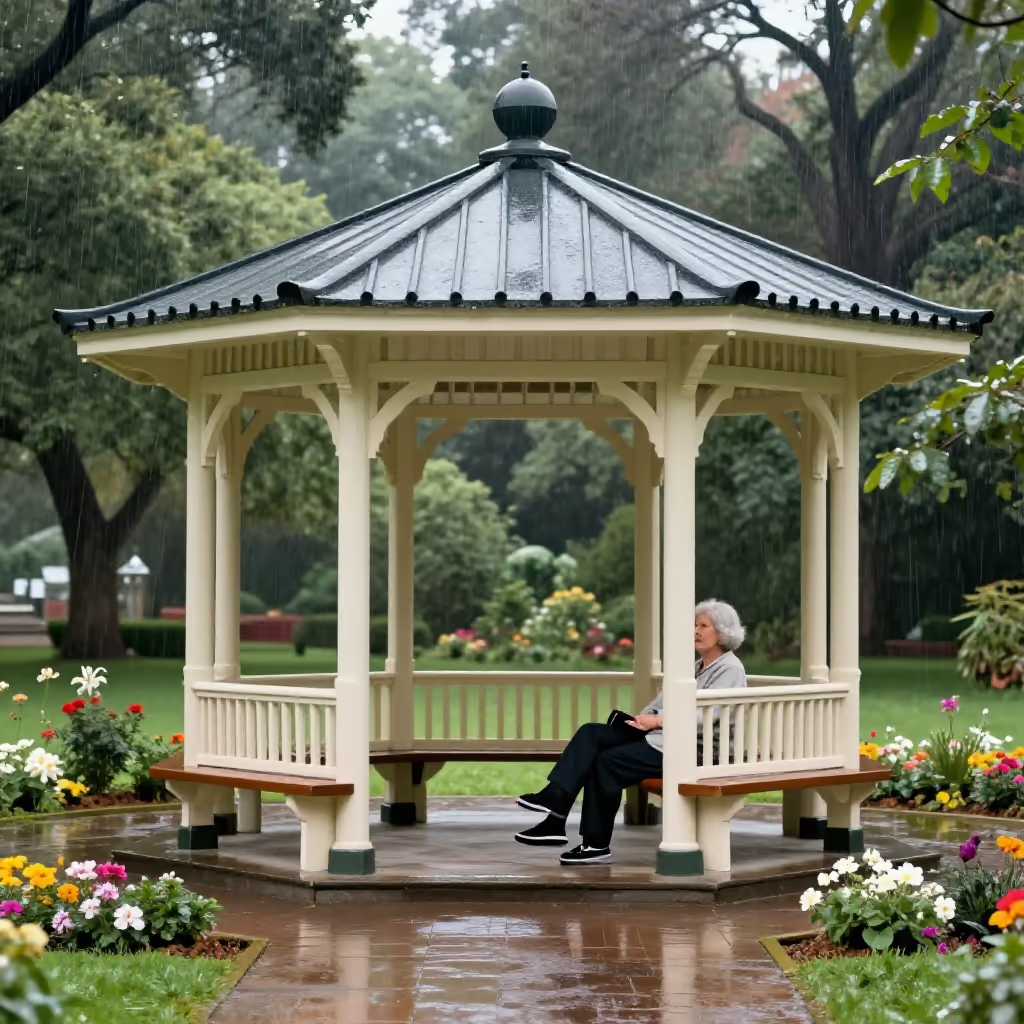
A tent and a pavilion can both provide shelter at an event. A tent is a larger fabric structure supported by poles; a pavilion is a small, often open or lightweight building. Zelt is appropriate for a large event space, while Pavillon is more suitable for an open shelter.
Für die Feier mit zweihundert Gästen stellt der Verein ein großes Zelt auf.
For the celebration with two hundred guests, the club is putting up a large tent.
Für den kleinen Getränkestand bei der Feier stellt der Verein einen offenen Pavillon auf.
For the small refreshment stand at the celebration, the club is putting up an open pavilion.