


die Zeugin
witness
A woman who has observed an event (often an accident or a crime) and can testify about it in court or to the police.
Die Zeugin konnte den Fluchtwagen genau beschreiben.
The witness was able to describe the getaway car precisely.
witness
Loading your saved state.
witness
A woman who has observed an event (often an accident or a crime) and can testify about it in court or to the police.
Die Zeugin konnte den Fluchtwagen genau beschreiben.
The witness was able to describe the getaway car precisely.

'Die Zeugin' is the female form of 'der Zeuge' (male witness). Both words belong to the verb 'bezeugen' (to attest / to confirm) and the noun 'das Zeugnis' (testimony or a certificate/report card).
Der Zeuge und die Zeugin machten unterschiedliche Aussagen.
The male witness and the female witness gave different statements.
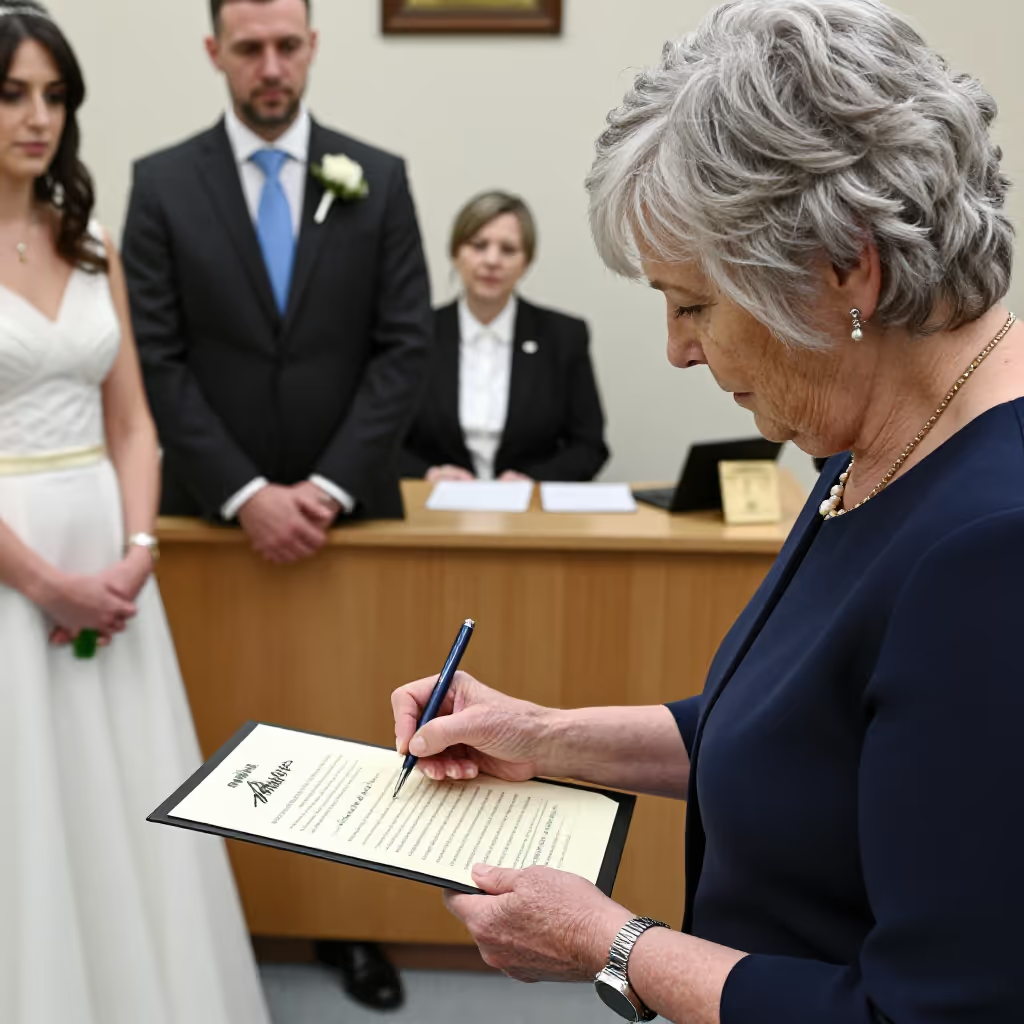
You can recognize the meaning from the context: words like 'Polizei' (police), 'Gericht' (court), or 'Unfall' (accident) point to the witness of a crime or incident. Words like 'Hochzeit' (wedding), 'Standesamt' (registry office), or 'unterschreiben' (to sign) point to the witness at a formal act.
Die Polizei befragt eine Zeugin des Banküberfalls.
The police are questioning a witness to the bank robbery.
In a legal context, a witness is often 'vernommen' (questioned/examined) or 'vorgeladen' (summoned). Her oral or written information is called 'die Aussage' (the statement/testimony).
Die Zeugin wurde vom Richter zu den Ereignissen vernommen.
The witness was questioned by the judge about the events.
At formal acts such as a wedding, the typical phrase is 'Zeugin sein' (to be a witness). The witness's task is to confirm the event with her signature.
Meine beste Freundin wird bei meiner Hochzeit meine Zeugin sein.
My best friend will be my witness at my wedding.