


die Zigarette
cigarette
A small roll of finely cut and dried tobacco that is wrapped in thin paper and used for smoking.
EXAMPLE
Er raucht nach jeder Mahlzeit eine Zigarette.
He smokes a cigarette after every meal.
cigarette
Loading your saved state.
cigarette
A small roll of finely cut and dried tobacco that is wrapped in thin paper and used for smoking.
Er raucht nach jeder Mahlzeit eine Zigarette.
He smokes a cigarette after every meal.
The word 'Zigarette' (cigarette) comes from French, and the ending '-ette' is a diminutive form. So a cigarette is literally a 'small cigar'.
Er raucht lieber Zigarren, keine Zigaretten.
He prefers smoking cigars, not cigarettes.
Common verbs describe the whole process: you light a cigarette, smoke it, and put it out at the end.
Kannst du mir Feuer geben, um meine Zigarette anzuzünden?
Can you give me a light so I can light my cigarette?
The colloquial phrase 'eine rauchen gehen' means to take a break in order to smoke a cigarette. It is often used as a suggestion or announcement.
Ich gehe kurz vor die Tür eine rauchen.
I’m just going outside for a smoke.
Cigarettes are often bought or mentioned in specific quantities. Typical units are 'eine Schachtel Zigaretten' (a pack of cigarettes, usually about 20) or 'eine Stange Zigaretten' (a carton of cigarettes, usually 10 packs).
Könntest du mir vom Supermarkt eine Schachtel Zigaretten mitbringen?
Could you bring me a pack of cigarettes from the supermarket?
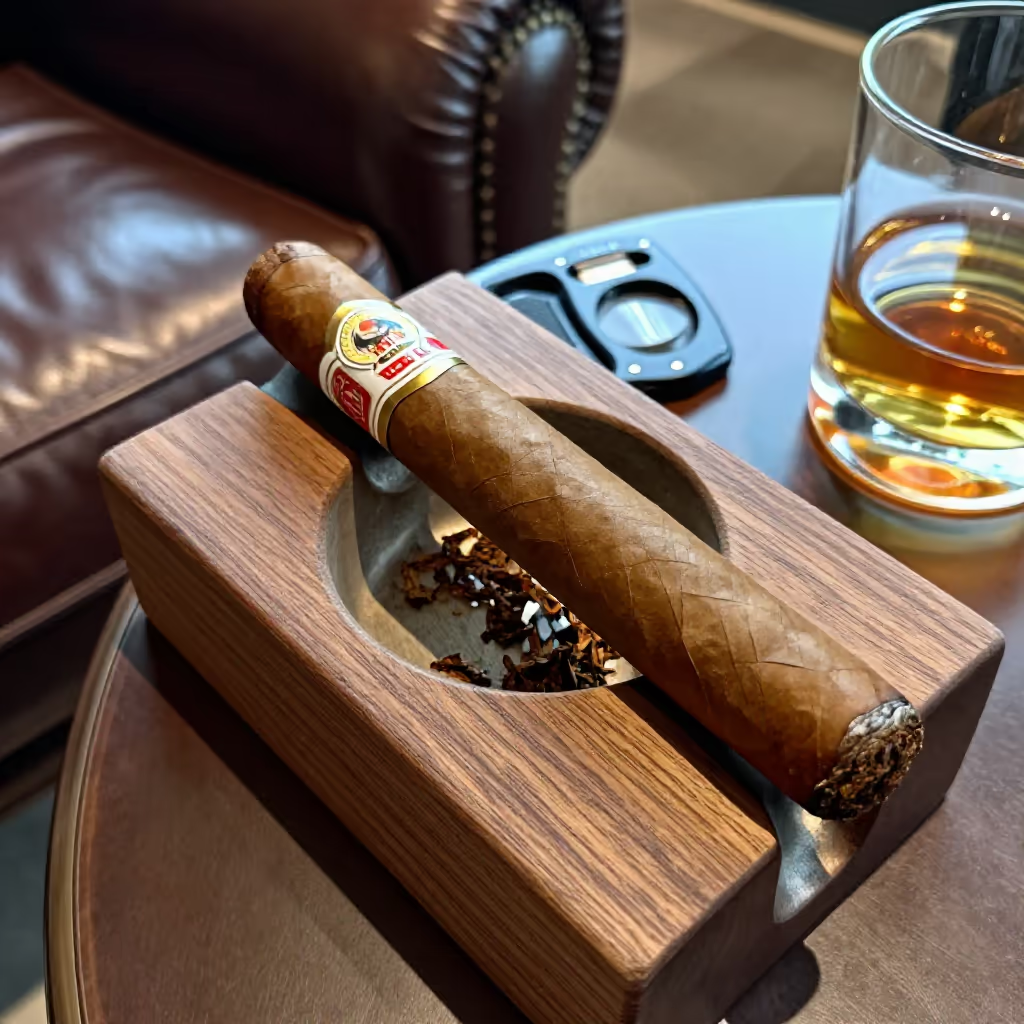
cigar
Both words refer to rolled tobacco for smoking. A Zigarette is normally a thin roll of finely cut tobacco wrapped in paper, whereas a Zigarre is thicker and made from tobacco leaves. Use „Zigarette“ for the small paper roll and „Zigarre“ for the thicker roll made from leaves.
Vor dem Essen nahm er eine Zigarette aus der dünnen Papierpackung.
Before the meal, he took a cigarette out of the thin paper pack.
Nach dem Essen rauchte er eine dicke Zigarre aus gerollten Tabakblättern.
After the meal, he smoked a thick cigar made from rolled tobacco leaves.