

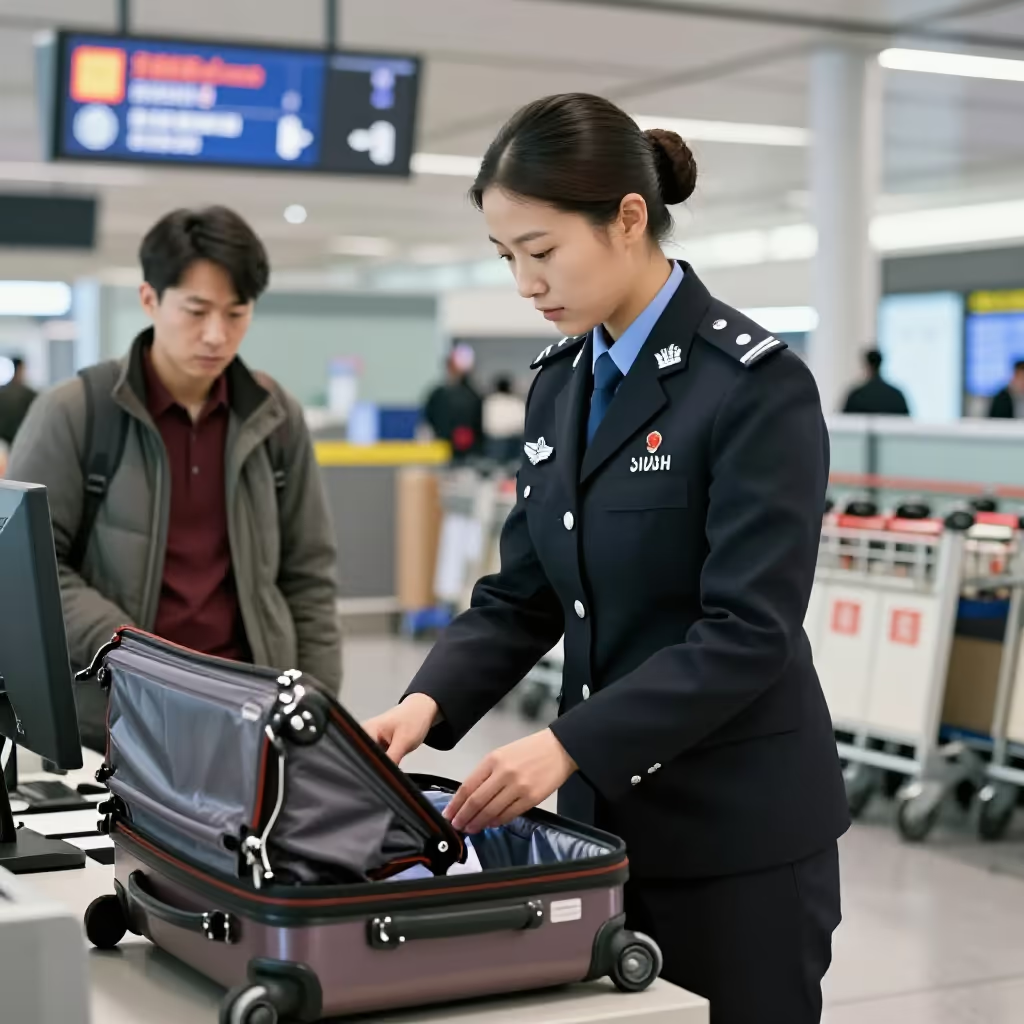
An officer of the customs authority who is responsible for checking goods, people, and vehicles at national borders.
example
Der Zöllner kontrollierte den Pass und fragte nach mitgebrachten Waren.
The customs officer checked the passport and asked about goods being brought in.

Usage tips
Word family
The word 'Zöllner' (customs officer) derives directly from 'der Zoll' (customs duty). 'Zoll' is a fee that must be paid when transporting goods across a border. A 'Zöllner' is therefore the person who checks and collects customs duties.
EXAMPLE
Am Flughafen mussten wir durch die Zollkontrolle, aber die Zöllner waren sehr freundlich.
At the airport we had to go through customs control, but the customs officers were very friendly.
Typical verbs
In the modern context, a 'Zöllner' (customs officer) is often associated with verbs such as 'kontrollieren' (to check), 'prüfen' (to inspect), 'durchsuchen' (to search), or 'fragen' (to ask). These describe typical activities at the border.
EXAMPLE
Der Zöllner prüfte unsere Ausweise und das Gepäck.
The customs officer checked our IDs and the luggage.
Context clue
You will find this historical meaning as a tax collector almost exclusively in religious (e.g. biblical) or historical texts. In everyday language, it always means the customs officer at the border.
EXAMPLE
Im Neuen Testament wird oft von den Pharisäern und den Zöllnern gesprochen.
In the New Testament, the Pharisees and the tax collectors are often mentioned.