


To become visible, show itself, or emerge. Often refers to qualities, problems, or facts that were previously hidden.
example
Erst bei genauerer Untersuchung traten die wahren Probleme zutage.
Only upon closer examination did the real problems come to light.
Usage tips
Word structure
The adverb 'zutage' is an old form of 'zu Tage'. It literally means 'into the light of day' and is used to express that something hidden becomes visible.
EXAMPLE
Bei den Bauarbeiten kamen alte Münzen zutage.
Old coins came to light during the construction work.
Fixed combinations
'Zutage' almost never stands alone; instead, it is part of fixed verb combinations. The most common are 'zutage treten' (something becomes visible) and 'zutage fördern' (someone makes something visible).
EXAMPLE
Sein wahres Talent trat erst spät zutage.
His true talent came to light only late in life.
Elevated style
The expression 'zutage' belongs to elevated written language. It is rarely used in normal everyday conversation.
EXAMPLE
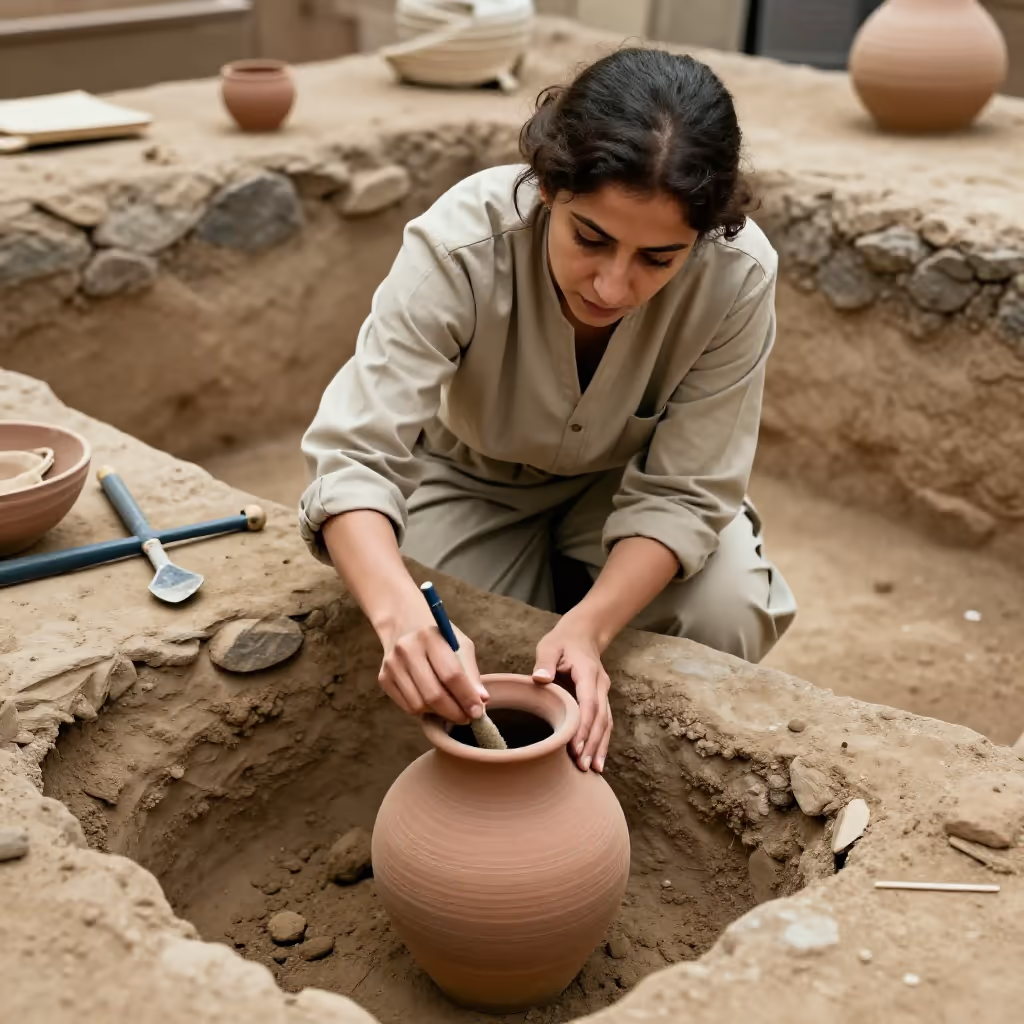
Die Ausgrabungen brachten eine römische Villa zutage.
The excavations brought a Roman villa to light.
Context clue
The exact meaning depends on the verb: 'zutage treten' is passive and means that something appears by itself. 'zutage fördern' is active and means that someone deliberately uncovers something.
EXAMPLE
Nach dem Regen traten Risse in der Mauer zutage.
After the rain, cracks in the wall came to light.
Compare with
near_synonym · confusable
zutage vs hervor
out / forth
'hervor' and 'zutage' can both express that something hidden becomes visible. 'hervor' is more suitable for a concrete movement: something comes out of a hiding place, from inside, or from behind something toward the front. 'zutage' is often used in fixed expressions like 'zutage treten' (to come to light) or 'zutage fördern' (to bring to light). It sounds somewhat more elevated and fits especially well when facts, problems, or old things become visible. The words can be confused because both have to do with 'zum Vorschein kommen' (to appear / come to light). As a practical rule: for a visible movement, you are more likely to say 'hervor'; for discovered facts or excavations, you are more likely to use 'zutage'.
zutage
Bei der Untersuchung traten neue Probleme zutage.
New problems came to light during the investigation.
hervor
Aus der alten Tasche kam plötzlich ein Schlüssel hervor.