


Describes a person who knows and uses two languages at a native-speaker or very high level.
example
Da ihre Eltern aus verschiedenen Ländern kommen, ist sie zweisprachig aufgewachsen.
Because her parents come from different countries, she grew up bilingual.
Usage tips
Word structure
The adjective is clearly structured: it consists of the number 'zwei' (two), the noun 'Sprache' (language), and the adjective ending '-ig'. So it literally means 'with two languages'.
EXAMPLE
Ein dreisprachiges Kind lernt noch schneller.
A trilingual child learns even faster.
Word family
The related noun is 'die Zweisprachigkeit' (bilingualism). It describes the ability or condition of speaking two languages.
EXAMPLE
Die Zweisprachigkeit hat viele Vorteile im Berufsleben.
Bilingualism has many advantages in professional life.
Typical collocations (people)
When referring to people, 'zweisprachig' is often used with certain verbs. Typical combinations are 'zweisprachig sein' (to be bilingual), 'zweisprachig aufwachsen' (to grow up bilingual), and 'jemanden zweisprachig erziehen' (to raise someone bilingually).
EXAMPLE
Die Eltern erziehen ihre Kinder bewusst zweisprachig.
The parents are deliberately raising their children bilingually.
Typical collocations (things)
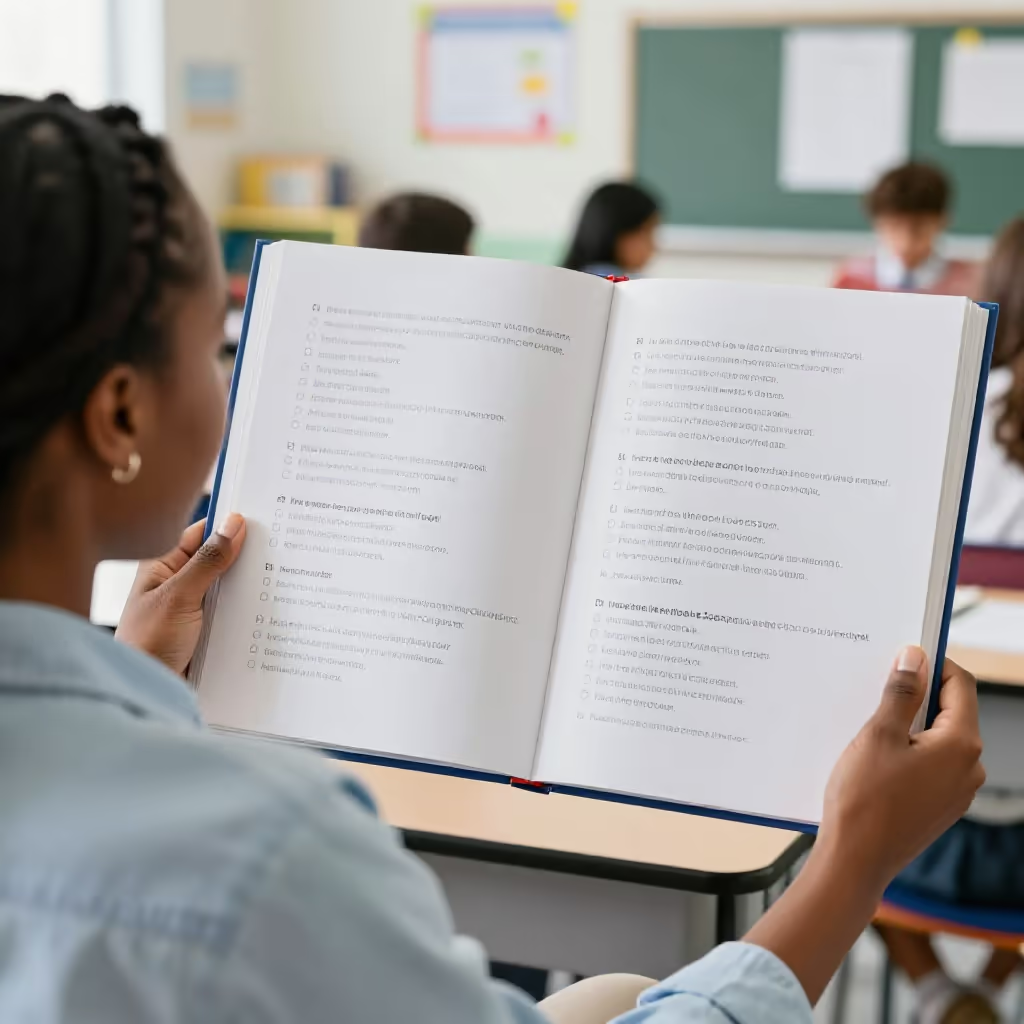
When referring to things, 'zweisprachig' often describes texts, places, or services. Common nouns are 'zweisprachiger Unterricht' (bilingual instruction), 'ein zweisprachiges Buch' (a bilingual book), or 'eine zweisprachige Stadt' (a bilingual city).
EXAMPLE
In dieser Region sind alle Straßenschilder zweisprachig.