
A difficult situation or dilemma in which you have to choose between two unpleasant or disadvantageous options.
example
Ich stecke in einer Zwickmühle: Sage ich die Wahrheit und verletze ihn, oder lüge ich und habe ein schlechtes Gewissen?
I'm in a dilemma: Do I tell the truth and hurt him, or do I lie and have a guilty conscience?
Usage tips
Compound word
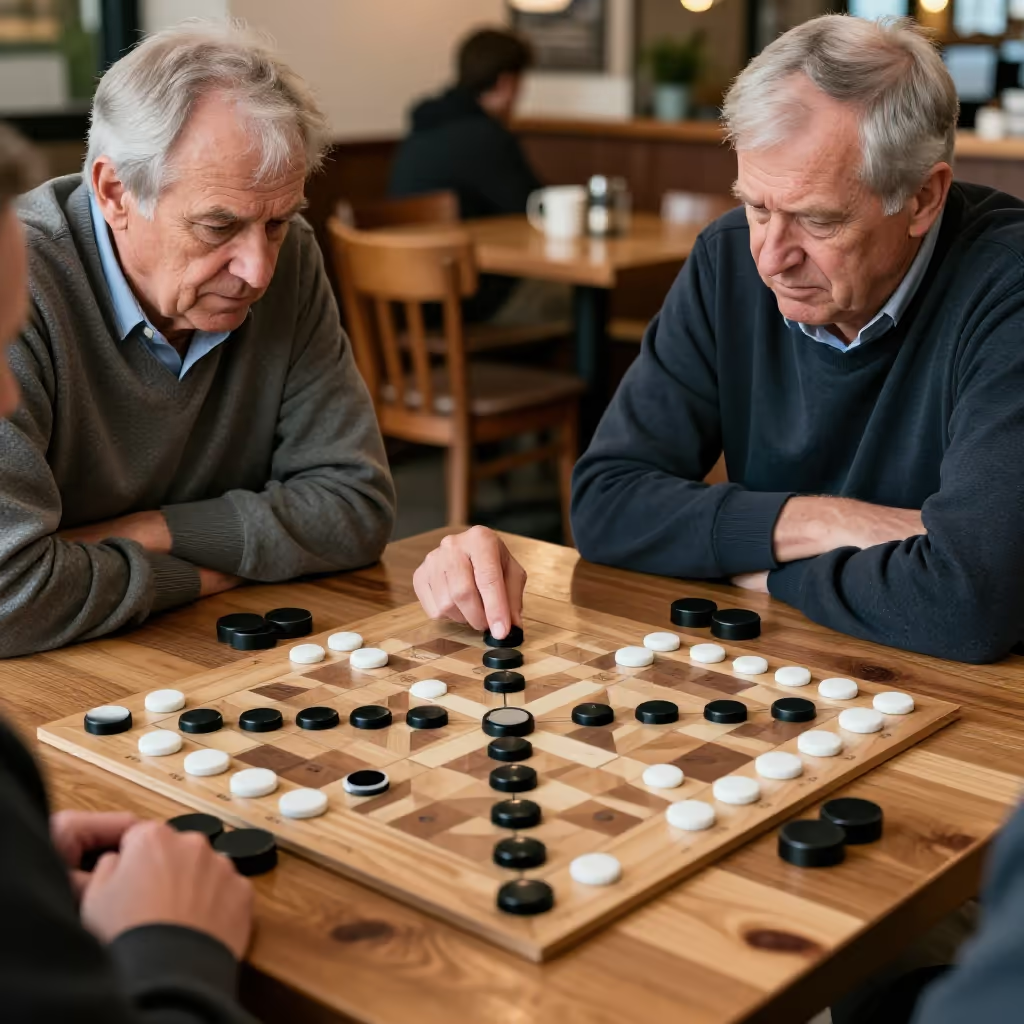
The word is made up of 'zwicken' (to pinch) and 'Mühle' (mill, or the board game 'Mühle' / Nine Men's Morris). The image of a mill that 'pinches' or traps you from two sides perfectly describes the feeling of being caught in a dilemma.
EXAMPLE
Egal, wie ich mich entscheide, ich sitze in der Zwickmühle.
No matter how I decide, I'm stuck in a dilemma.
Typical collocations
When describing a dilemma, the most common phrases are 'in einer Zwickmühle stecken' (to be stuck in a dilemma) or 'in einer Zwickmühle sein/sitzen' (to be in a dilemma).
EXAMPLE
Er steckt in einer Zwickmühle: Entweder er verliert seinen Job oder seine Freunde.
He is stuck in a dilemma: either he loses his job or his friends.
Context clue
The meaning 'Dilemma' (dilemma) is by far the most common in everyday language. The original meaning from the game Nine Men's Morris is only understood if people are actually talking about the board game.
EXAMPLE
Wenn ein Politiker von einer Zwickmühle spricht, meint er ein politisches Dilemma.
When a politician speaks of a 'Zwickmühle' (dilemma), he means a political dilemma.
Compare with
near_synonym · confusable
Zwickmühle vs Falle
trap
'die Falle' and 'die Zwickmühle' both describe difficult situations that are hard to get out of. 'die Falle' (trap) fits when someone is deceived or deliberately put into a bad situation. You can also say that someone 'in der Falle sitzt' (is trapped) when there is hardly any way out. 'die Zwickmühle' more often means a dilemma: you have to choose between two bad options. Learners may confuse the words because both describe unpleasant situations. The simple guide is: for deception or being trapped, you are more likely to say 'Falle'; for two bad decisions, 'Zwickmühle' is more appropriate.
Zwickmühle
Meine Kollegin steckt in einer Zwickmühle: Entweder arbeitet sie am Wochenende oder der Bericht wird zu spät fertig.
My colleague is in a dilemma: either she works on the weekend, or the report will be finished too late.
Falle
Der Betrüger stellte dem alten Mann eine Falle und nahm ihm sein Geld weg.
The scammer set a trap for the old man and took his money.