

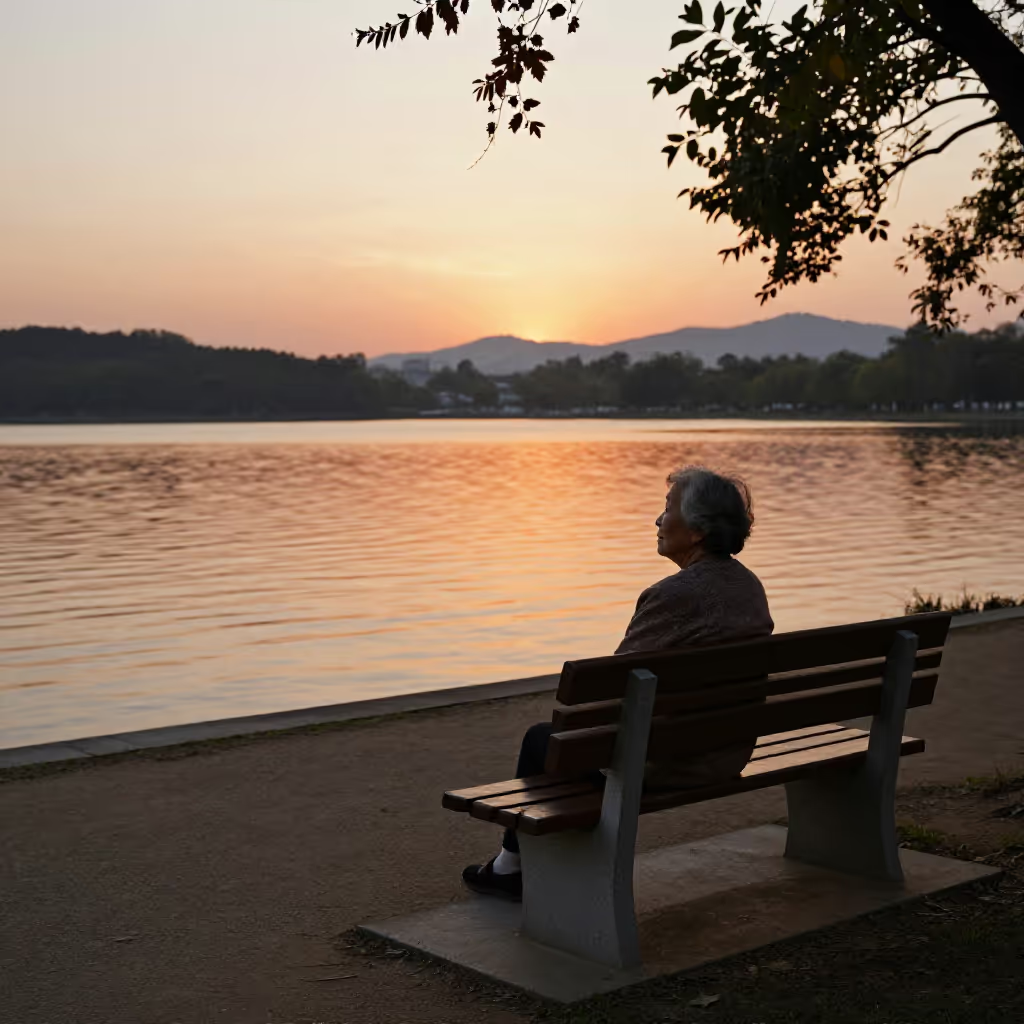
The time in the evening, especially the hours around sunset, which are often perceived as quiet and reflective.
example
Er genoss die Stille der Abendstunde auf seiner Terrasse.
He enjoyed the quiet of the evening hour on his terrace.
Usage tips
Compound word
The word consists of 'der Abend' (the evening) and 'die Stunde' (the hour). The 'n' is a linking element. Literally, then, it is an 'hour of the evening.'
EXAMPLE
In den Abendstunden wurde es merklich kühler.
In the evening hours, it became noticeably cooler.
Register and style
'Abendstunde' (evening hour) is a rather poetic and elevated word. It creates a calm and reflective atmosphere and is often used in literature or in emotional descriptions.
EXAMPLE
Sie saß in den stillen Abendstunden am Fenster und las ein Buch.
She sat by the window during the quiet evening hours and read a book.
Use in the plural
The word is very often used in the plural: 'die Abendstunden' (the evening hours). This describes not just a single hour, but the whole period of the late evening.
EXAMPLE
Wir verbrachten die gemütlichen Abendstunden mit Freunden am Kamin.
We spent the cozy evening hours with friends by the fireplace.
Compare with
near_synonym · confusable
Abendstunde vs Abend
evening
'der Abend' and 'die Abendstunde' both refer to the time at the end of the day. 'der Abend' is the normal, general word for this time of day. 'die Abendstunde' means more of a specific hour or short period in the evening, often quiet and pleasant, for example around sunset. Learners may confuse the words because they are similar in time. In everyday language, people usually say 'Abend'. 'Abendstunde' sounds more poetic or atmospheric.
Abendstunde
Ben sitzt in der stillen Abendstunde auf dem Balkon und hört Musik.
Ben sits on the balcony in the quiet evening hour and listens to music.
Abend
Zu Hause hat die Gruppe den Abend mit einem gemeinsamen Essen beendet.
At home, the group ended the evening with a shared meal.