

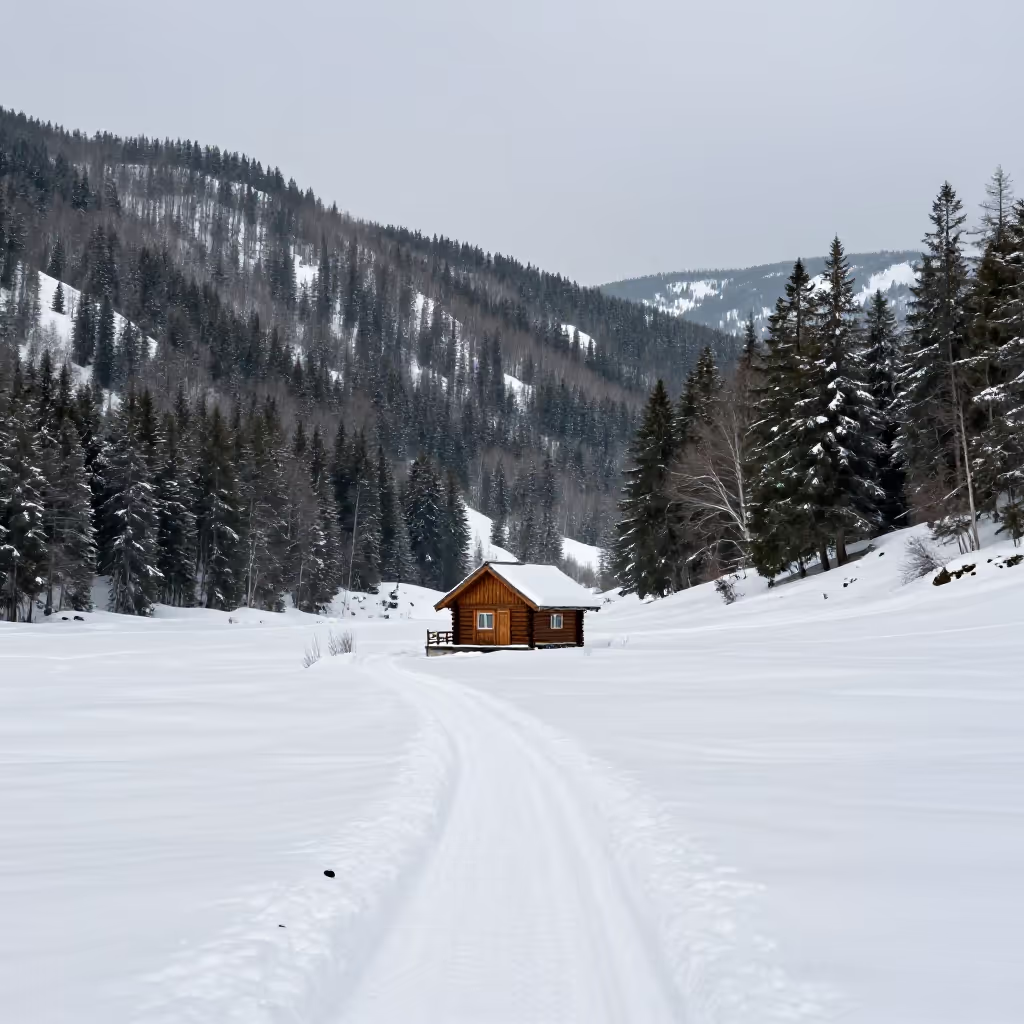
abgelegen
remote
Far away from other places, settlements, or transport routes; isolated.
EXAMPLE
Sie wohnen in einem abgelegenen Dorf in den Bergen.
They live in a remote village in the mountains.
remote
Loading your saved state.
remote
Far away from other places, settlements, or transport routes; isolated.
Sie wohnen in einem abgelegenen Dorf in den Bergen.
They live in a remote village in the mountains.
The word is the adjective form of the old participle of 'abliegen'. It literally describes something that 'abseits liegt' (lies off to the side) and is therefore far away or isolated.
Die Hütte liegt abgelegen im Wald.
The hut is located remotely in the forest.
'Abgelegen' (remote) can stand as an adjective before a noun or after a verb such as 'sein' (to be) or 'liegen' (to be located/lie).
Wir fanden ein abgelegenes Hotel am Meer.
We found a remote hotel by the sea.
This adjective is almost always used to describe places. Typical combinations are: 'ein abgelegenes Dorf' (a remote village), 'eine abgelegene Gegend' (a remote area), 'ein abgelegenes Tal' (a remote valley), or 'ein abgelegenes Haus' (a remote house).
Er träumt von einem Leben in einer abgelegenen Hütte in Kanada.
He dreams of a life in a remote cabin in Canada.
distant
Fern and abgelegen can describe a place that is a great distance away. „Fern“ mainly indicates distance, while „abgelegen“ additionally emphasizes an isolated location with few connections to other places or transport routes. „Fern“ fits a purely geographical distance, while „abgelegen“ fits a hard-to-reach and isolated place.
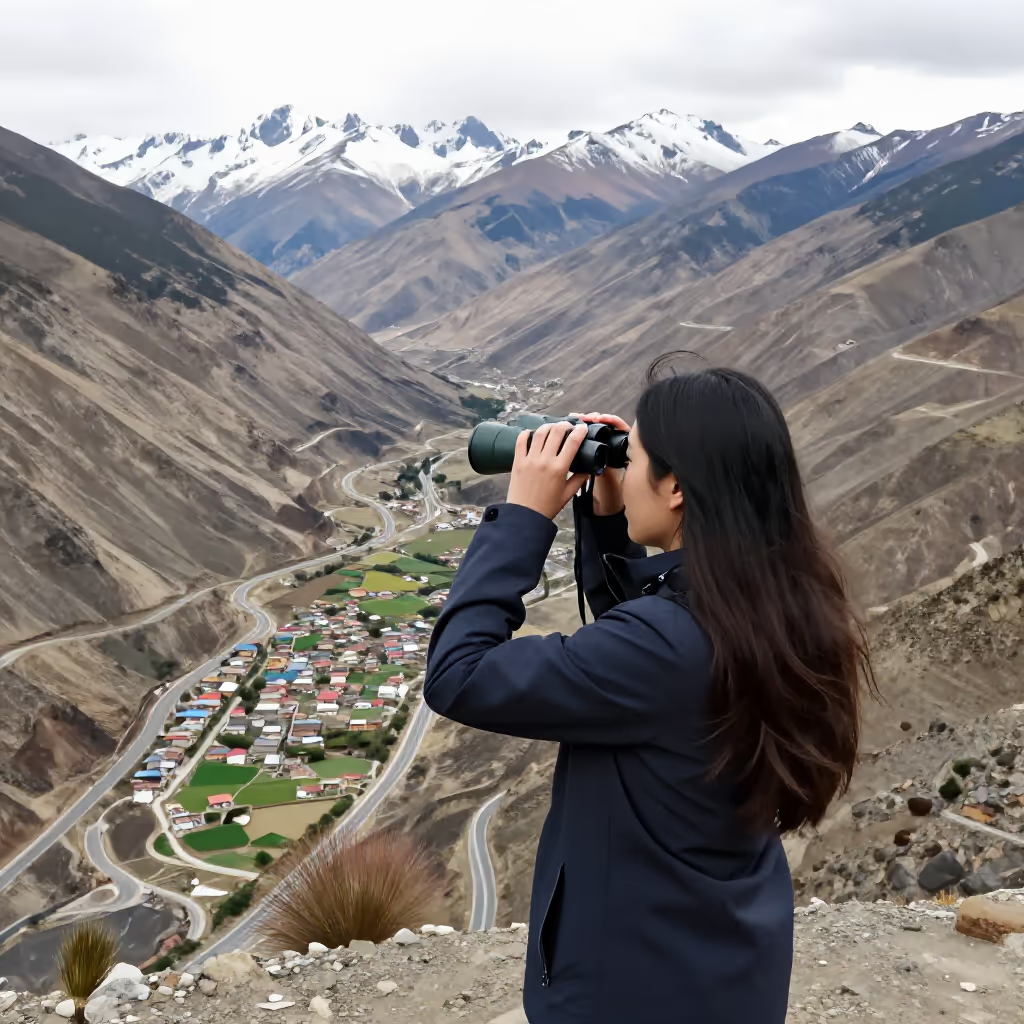
Das Ferienhaus liegt abgelegen und ist nur über einen schmalen Weg erreichbar.
The vacation home is in a remote location and can only be reached by a narrow path.
Das Ferienhaus liegt fern von der Stadt am anderen Ende des Tals.
The vacation home is far from the city, at the other end of the valley.