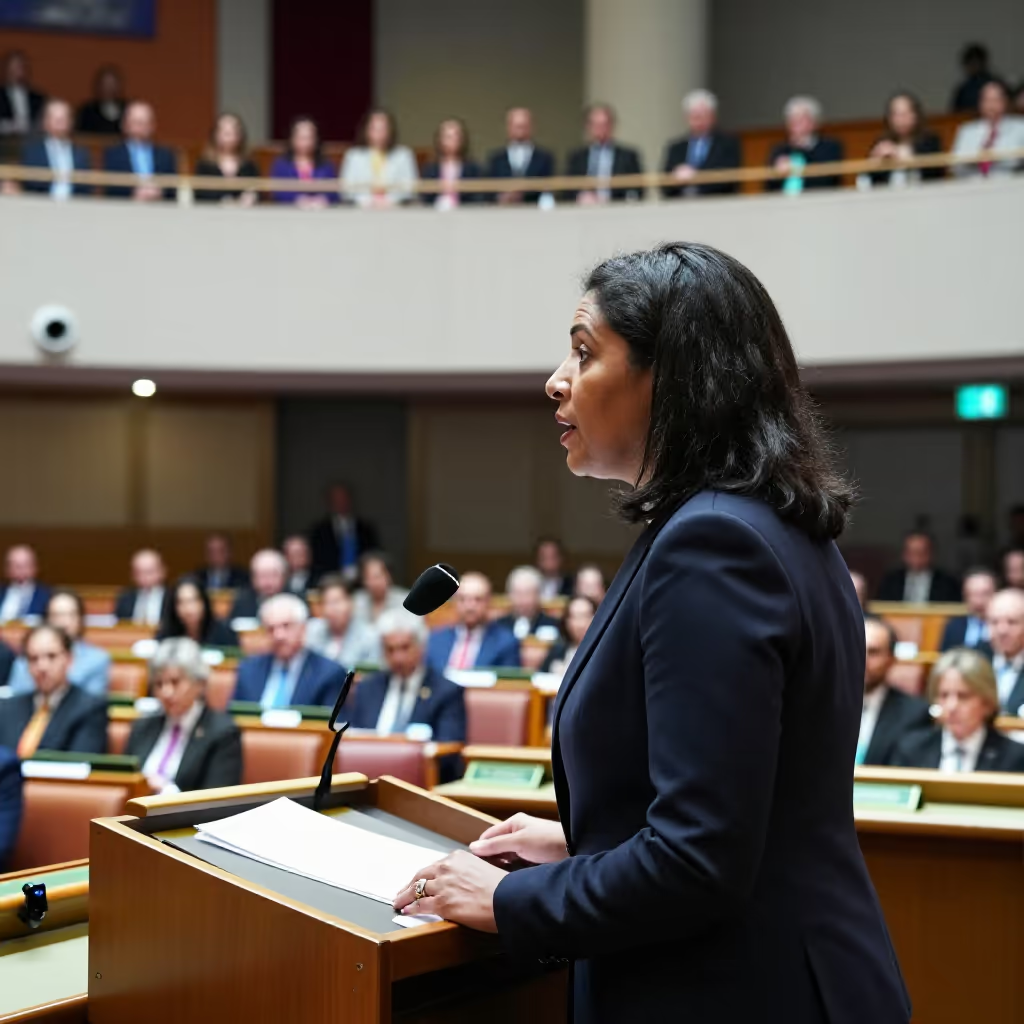
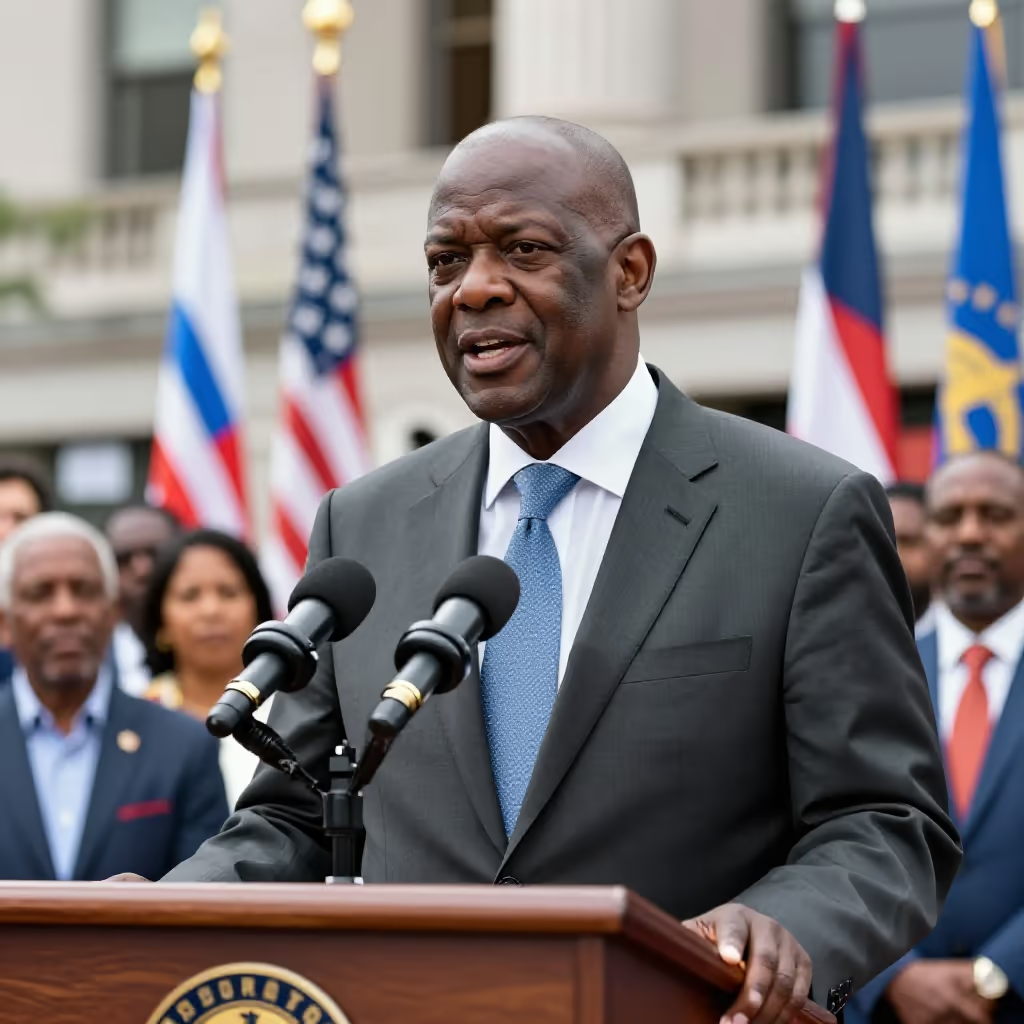
A person who has been elected by citizens to represent their interests in a parliament.
example
Der Abgeordnete hielt eine Rede zum neuen Klimaschutzgesetz.
The representative gave a speech about the new climate protection law.
Usage tips
Word structure
The word 'Abgeordneter' (representative) is derived from the verb 'abordnen' (to delegate/send as a representative), which means 'to send someone as a representative.' An 'Abgeordneter' (representative) is therefore literally a person who has been delegated to represent a group.
EXAMPLE
Die Firma hat einen Experten abgeordnet, um an der Konferenz teilzunehmen.
The company delegated an expert to take part in the conference.
Declension like an adjective
'Abgeordneter' (representative) is a nominalized adjective and is declined like one. After a definite article (der, die, das), it ends in -e in the nominative and in -en in all other cases.
EXAMPLE
Der Abgeordnete diskutiert mit den Bürgern.
The representative is discussing with the citizens.
Typical collocations
In a political context, 'Abgeordneter' (representative) is often used with certain verbs and prepositions. Typical phrases are: 'ein Abgeordneter sein' (to be a representative), 'als Abgeordneter gewählt werden' (to be elected as a representative), or 'für/gegen einen Antrag stimmen' (to vote for/against a motion).
EXAMPLE
Er wurde als Abgeordneter für seinen Wahlkreis in den Landtag gewählt.
He was elected as a representative for his constituency to the state parliament.
Compare with
confusable
Abgeordnete vs Politiker
politician
'der Politiker' and 'der Abgeordnete' both refer to people who can work in politics. However, 'Politiker' is the more general term. It can be a person with a political office, for example a minister or mayor. 'Abgeordneter' is more specific: this person has been elected and represents citizens in a parliament. The words can be confused because many representatives are also politicians. But not every politician is automatically an elected representative.
Abgeordnete
Der Abgeordnete spricht im Parlament über die Probleme der Schulen.
The representative speaks in parliament about the problems facing schools.
Politiker
Der Politiker erklärt im Interview, warum er das neue Gesetz unterstützt.
The politician explains in the interview why he supports the new law.