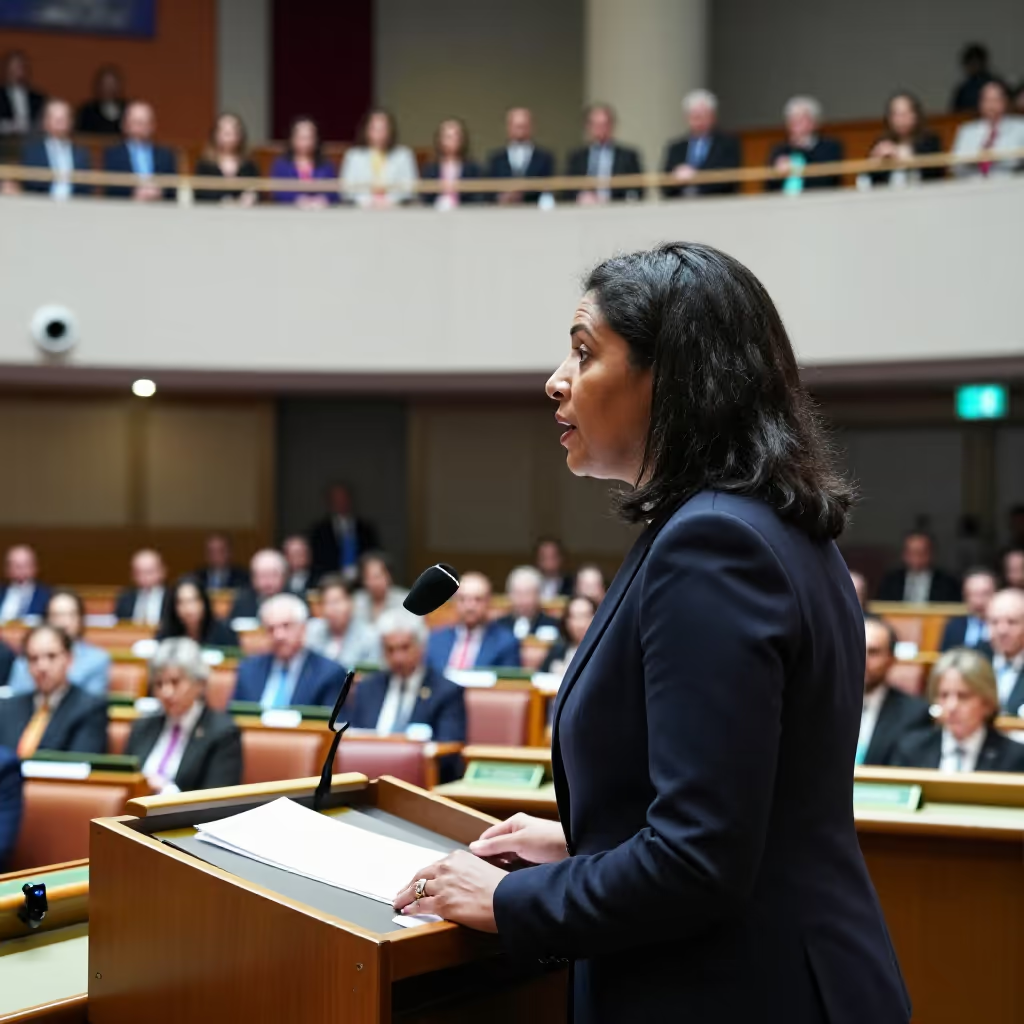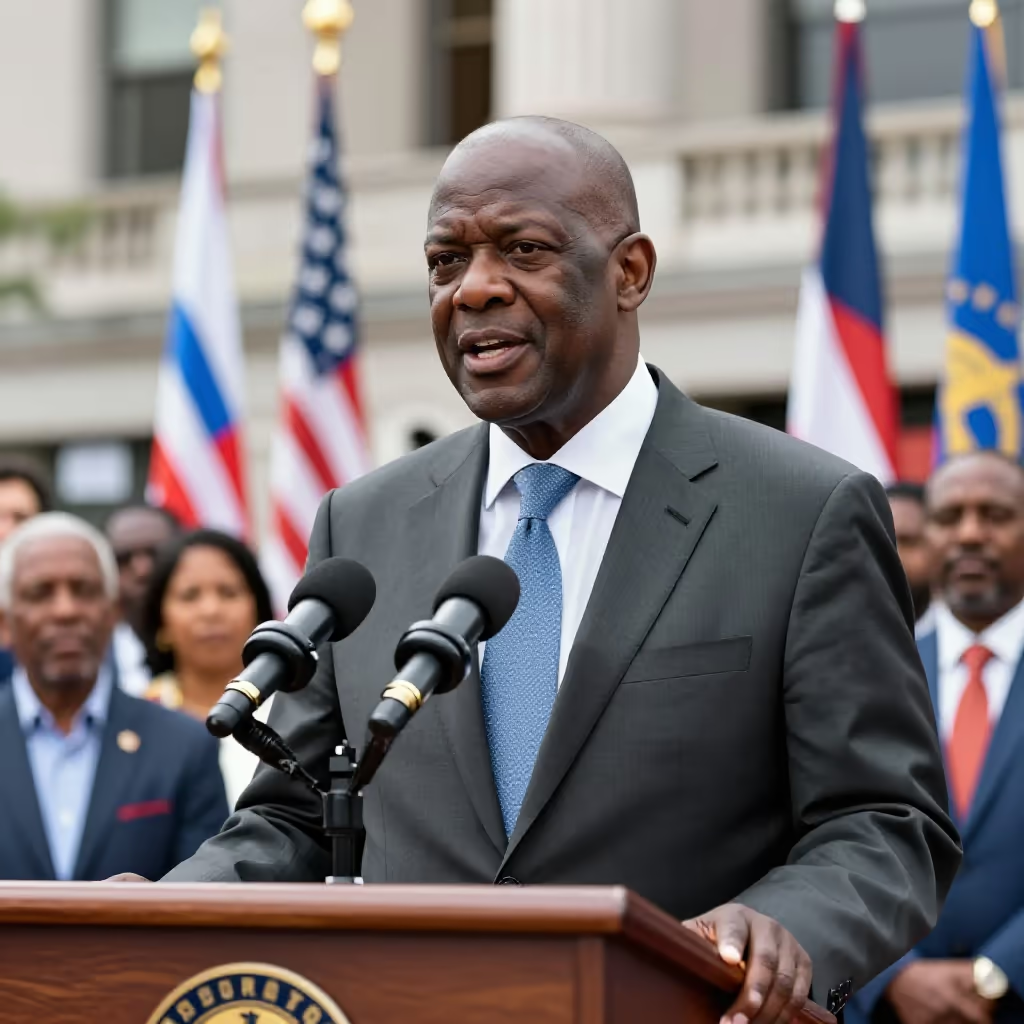
A person who works professionally in politics, typically as the holder of a political office or mandate.
example
Der Politiker sprach im Parlament über die geplante Gesetzesänderung.
The politician spoke in parliament about the planned change to the law.

Usage tips
Word structure
The word 'Politiker' (politician) is derived from the noun 'die Politik' (politics). The ending '-iker' refers to a male person who works in a particular field, similar to 'Physiker' (physicist) or 'Informatiker' (computer scientist).
EXAMPLE
Er interessiert sich sehr für Politik und möchte später Politiker werden.
He is very interested in politics and wants to become a politician later.
Grammar trap: n-declension
'Der Politiker' is a noun of the n-declension. This means that in the accusative, dative, and genitive singular it takes the ending '-n'. This is a common source of mistakes.
EXAMPLE
Die Journalistin stellt dem Politiker eine kritische Frage.
The journalist asks the politician a critical question.
Context clue
The figurative, often negative meaning can be recognized from the context. When a 'Politiker' (politician) is mentioned in a company, club, or family, it usually means a person who acts tactically and to their own advantage.
EXAMPLE
Sei vorsichtig bei ihm, er ist ein schlauer Politiker und denkt nur an seine eigene Karriere.
Be careful with him; he is a clever politician and only thinks about his own career.
Compare with
confusable
Politiker vs Abgeordnete
representative
'der Politiker' and 'der Abgeordnete' both refer to people who can work in politics. However, 'Politiker' is the more general term. It can be a person with a political office, for example a minister or mayor. 'Abgeordneter' is more specific: this person has been elected and represents citizens in a parliament. The words can be confused because many representatives are also politicians. But not every politician is automatically an elected representative.
Politiker
Der Politiker erklärt im Interview, warum er das neue Gesetz unterstützt.
The politician explains in the interview why he supports the new law.
Abgeordnete
Der Abgeordnete spricht im Parlament über die Probleme der Schulen.
The representative speaks in parliament about the problems facing schools.