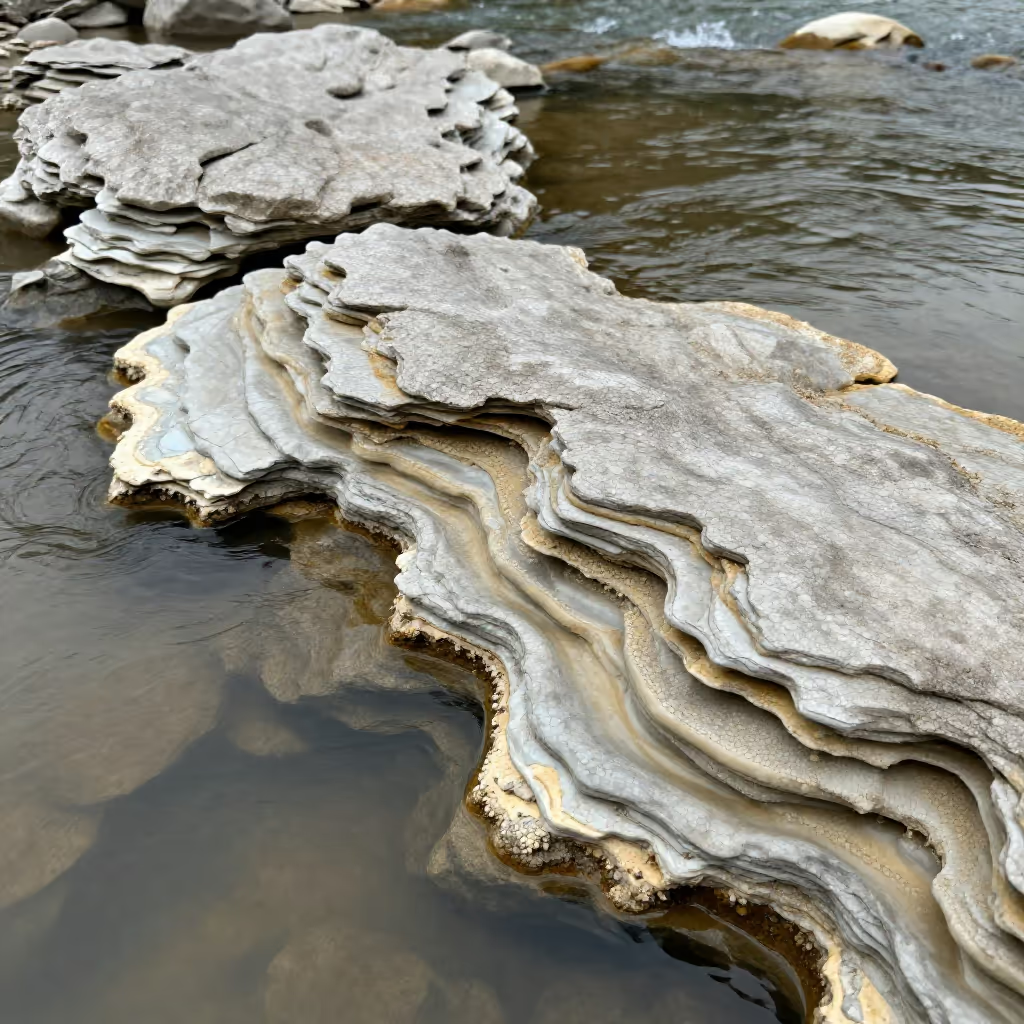
Material that accumulates and settles in one place through natural processes, e.g. through water, wind, or chemical reactions.
example
Am Boden des Weinfasses bildete sich eine dunkle Ablagerung.
A dark deposit formed at the bottom of the wine barrel.

Usage tips
Word structure
The noun 'Ablagerung' (deposit / filing) comes from the verb '(sich) ablagern' (to settle / to be deposited). It describes the result of this process: something has accumulated and settled in one place. The ending '-ung' turns the verb into a noun.
EXAMPLE
Kalk ist eine häufige Ablagerung in Wasserleitungen.
Limescale is a common deposit in water pipes.
Context clue
You can distinguish the two meanings well: if the word refers to natural, chemical, or physical processes, it means the material accumulation. If it is about office work and organization, it means the filing of documents.
EXAMPLE
Die geologischen Ablagerungen in dieser Region sind sehr alt.
The geological deposits in this region are very old.
Typical collocations
In the context of natural or chemical processes, you often find combinations such as 'Ablagerungen von Kalk' (limescale deposits), 'Ablagerungen in den Arterien' (deposits in the arteries), or 'Ablagerungen am Meeresboden' (deposits on the seabed).
EXAMPLE
Der Arzt sprach über die Gefahr von Ablagerungen in den Blutgefäßen.
The doctor talked about the danger of deposits in the blood vessels.
Register
This meaning is very formal and typical of office or administrative language. In everyday language, people would more likely speak of 'Ablage' (filing) or 'Archivierung' (archiving).
EXAMPLE
Die Vorschriften zur Ablagerung von Geschäftsunterlagen sind sehr streng.
The regulations on the filing of business documents are very strict.
Compare with
near_synonym · confusable
Ablagerung vs Stein
stone
'der Stein' and 'die Ablagerung' can both mean something solid that has formed somewhere. This is especially true in the body, for example with a kidney stone or gallstone. 'Ablagerung' is more general: it is material that accumulates and settles in one place. A 'Stein', on the other hand, is a specific hard, often crystalline form of that. Learners may confuse the words because a stone in the body can form through deposits. More naturally: you use 'Stein' when the solid object is already clearly named, and 'Ablagerung' when you want to emphasize the process or the accumulated material.
Ablagerung
Die Ablagerung in der Leitung hat den Wasserfluss langsam schwächer gemacht.
The deposit in the pipe slowly made the water flow weaker.
Stein
Nach der Untersuchung sagte die Ärztin, dass der Stein in der Niere sehr klein ist.
After the examination, the doctor said that the stone in the kidney is very small.