


der Belag
topping
A layer that is placed on something, especially on foods such as bread or pizza.
EXAMPLE
Ich hätte gern ein Brötchen mit Käse als Belag.
I’d like a roll with cheese as the topping.
topping / covering
Loading your saved state.
topping
A layer that is placed on something, especially on foods such as bread or pizza.
Ich hätte gern ein Brötchen mit Käse als Belag.
I’d like a roll with cheese as the topping.
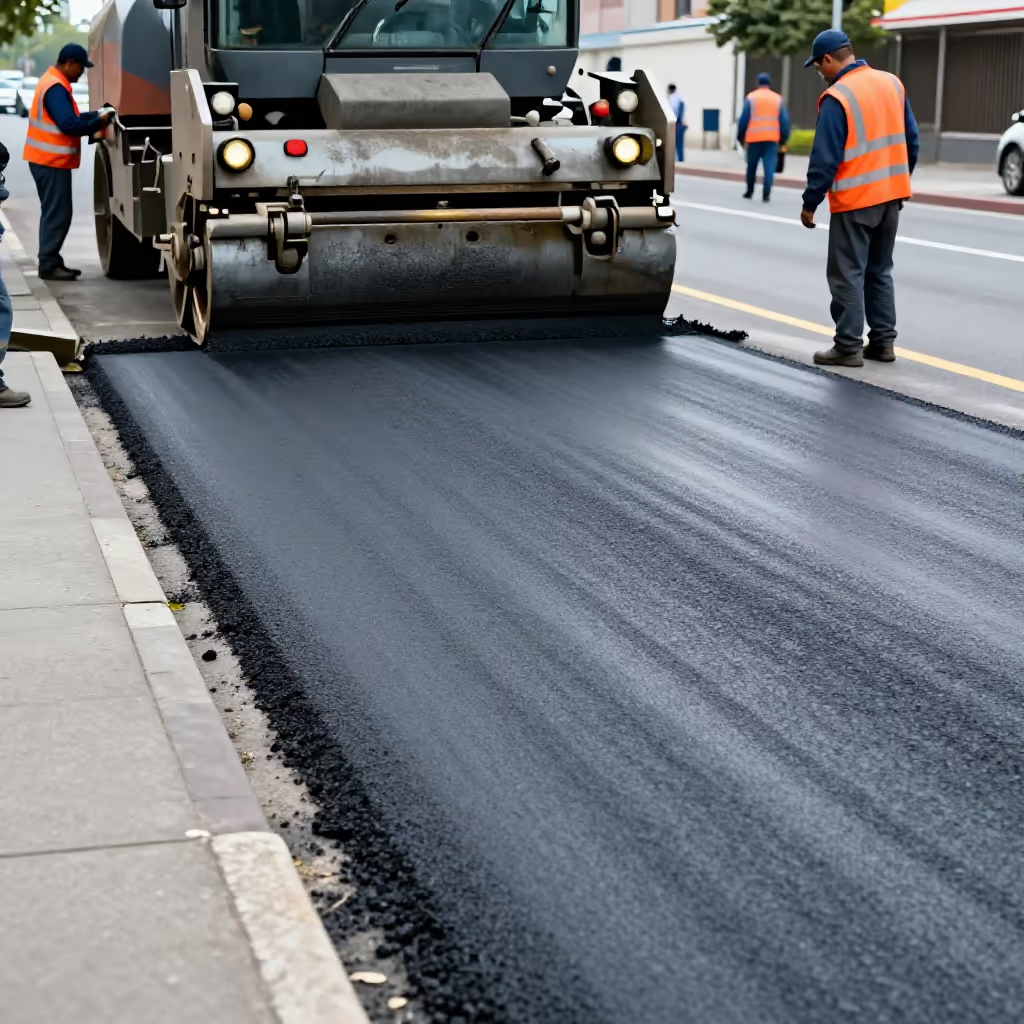
surface / covering
The top layer or surface covering of a road, path, or floor.
Wegen des neuen Belags ist die Autobahn teilweise gesperrt.
Because of the new surface, the highway is partially closed.

coating / plaque
A thin layer that forms on a surface, for example on the tongue as a sign of illness or on the teeth as plaque.
Der Arzt stellte fest, dass der Patient einen weißen Belag auf der Zunge hatte.
The doctor found that the patient had a white coating on his tongue.
The noun 'der Belag' (topping/covering) is derived directly from the verb 'belegen' (to cover, to put something on). 'Belegen' means 'to cover a surface.' So the 'Belag' is the material that covers something.
Bitte belege die Brote mit Käse und Schinken.
Please top the sandwiches with cheese and ham.
The meaning of 'Belag' (topping/covering) is almost always clear from context. If people are talking about food, it means a topping. If it is about roads, it means the surface. In a medical context, it means a layer on the body.
Was für einen Belag möchtest du auf deiner Pizza?
What kind of topping would you like on your pizza?
In a culinary context, typical combinations are 'Belag für Pizza' (topping for pizza), 'Belag auf dem Brot' (topping on the bread), or 'süßer/herzhafter Belag' (sweet/savory topping).
Als Belag für das Sandwich wähle ich Lachs und Frischkäse.
For the sandwich topping, I’ll choose salmon and cream cheese.
When talking about surfaces, people often say 'Straßenbelag' (road surface), 'Fahrbahnbelag' (roadway surface), or 'Bodenbelag' (floor covering). A typical verb is 'den Belag erneuern' (to renew/replace the surface).
Der alte Teppich wird durch einen neuen Bodenbelag aus Holz ersetzt.
The old carpet is being replaced with a new wooden floor covering.
film
Film and Belag can both refer to a thin layer on a surface. A Film is usually very thin and even, whereas a Belag typically forms through deposits or adheres to the surface. The nature of the layer therefore determines which term is more appropriate.
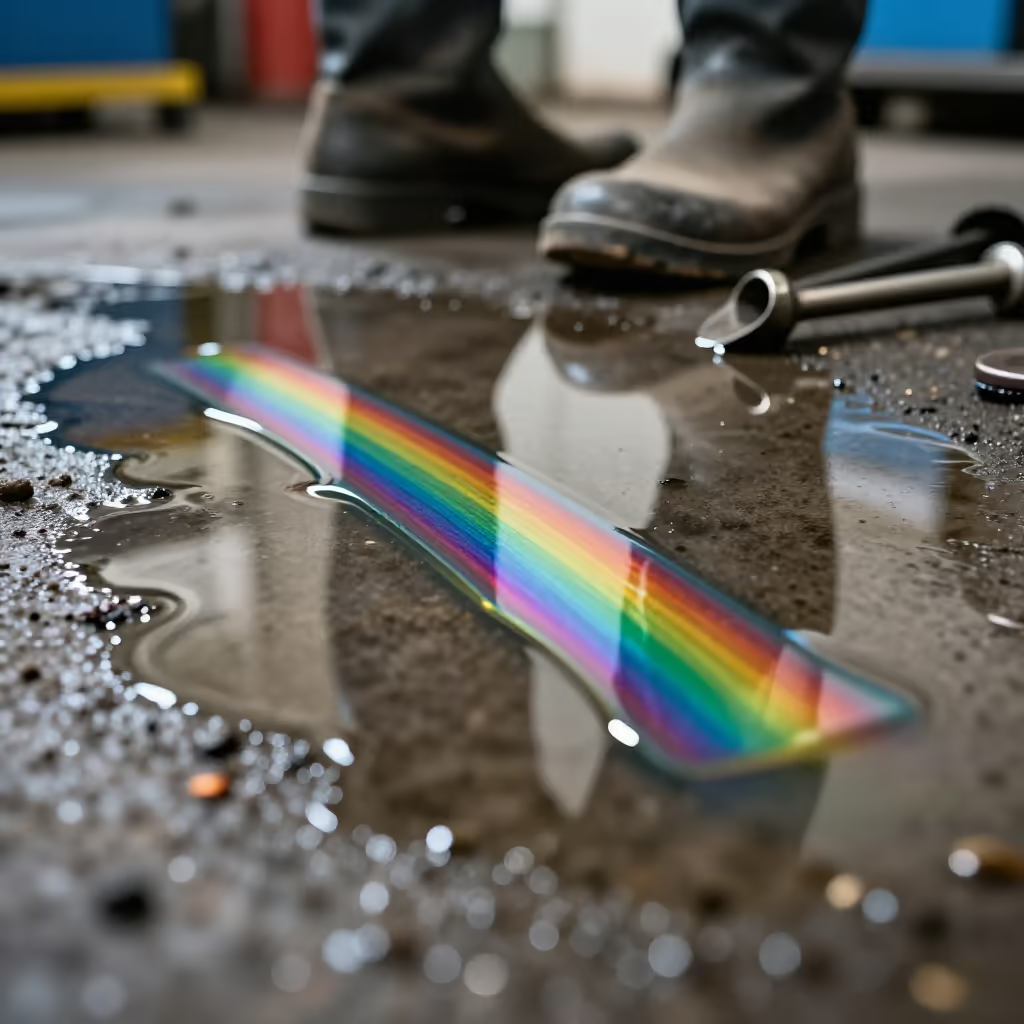
Durch hartes Wasser bildete sich mit der Zeit ein Kalkbelag auf der Scheibe.
Over time, hard water caused limescale deposits to form on the pane.
Nach dem Putzen blieb ein gleichmäßiger Wasserfilm auf der Scheibe.
After cleaning, an even film of water remained on the pane.