

der Abmarsch
departure
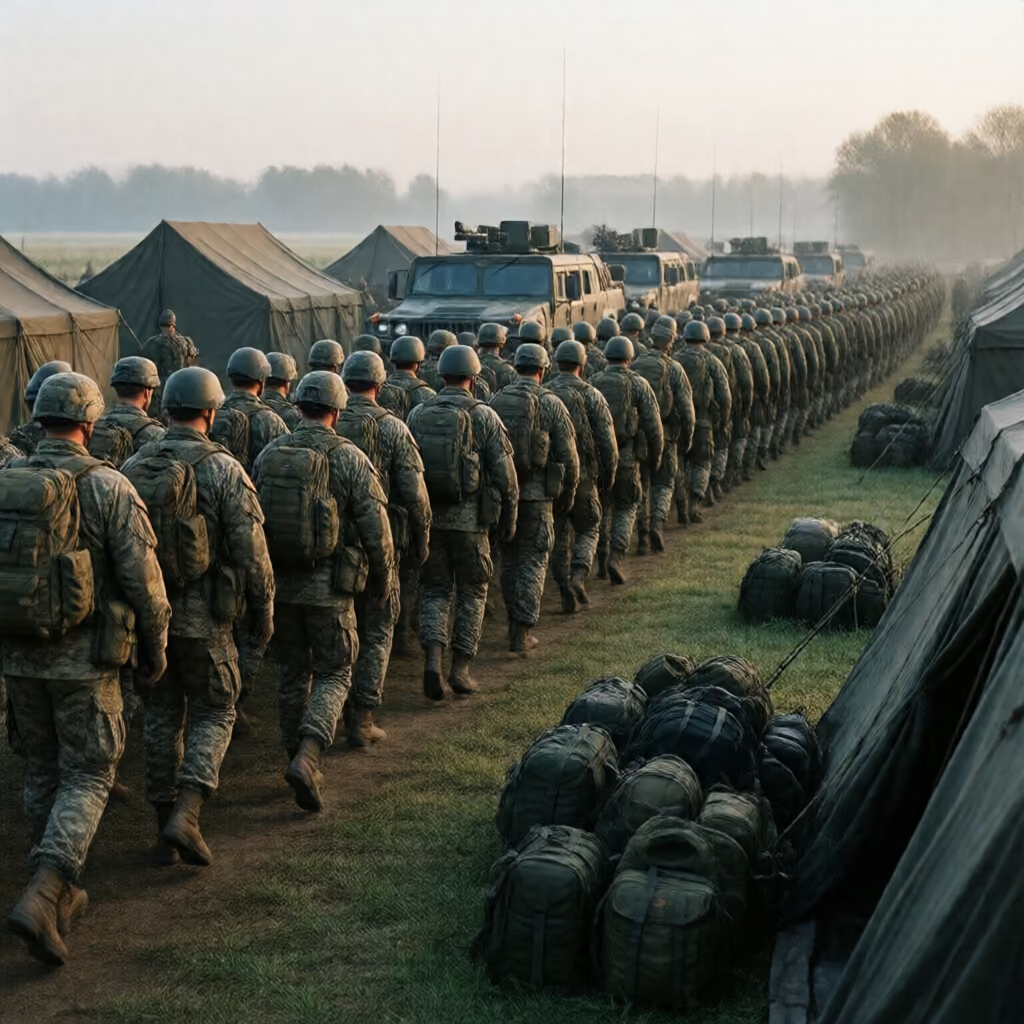
The setting off and marching away of a troop or another organized group.
EXAMPLE
Der Abmarsch der Soldaten aus dem Lager ist für sechs Uhr angesetzt.
The soldiers' departure from the camp is scheduled for six o'clock.
departure
der Abmarsch, die Abmärsche
Loading your saved state.
departure
The setting off and marching away of a troop or another organized group.
Der Abmarsch der Soldaten aus dem Lager ist für sechs Uhr angesetzt.
The soldiers' departure from the camp is scheduled for six o'clock.

departure
Colloquial: setting off and leaving a place.
Vor unserem Abmarsch aus dem Hotel trinken wir noch einen Kaffee.
Before our departure from the hotel, we'll have one more coffee.
| gender | masculine der |
|---|---|
| plural | die Abmärsche |
| genitive | des Abmarsches |
| singular | plural | |
|---|---|---|
| nominative | der Abmarsch | die Abmärsche |
| accusative | den Abmarsch | die Abmärsche |
| dative | dem Abmarsch | den Abmärschen |
| genitive | des Abmarsches | der Abmärsche |
The article changes with the case; it is shown in colour.
In 'Abmarsch' (departure), you can recognize 'ab' (away) and 'Marsch' (march). Here, the element 'ab' indicates movement away from a place.
Beim Abmarsch winkten die Kinder den Wanderern noch lange nach.
As they set off, the children continued waving to the hikers for a long time.
In a military context, 'den Abmarsch befehlen' (to order the departure) and 'den Abmarsch anordnen' (to order the departure) are typical collocations. The group can also be 'zum Abmarsch bereit' (ready to depart).
Die Einheit war zum Abmarsch bereit und wartete auf den Befehl.
The unit was ready to depart and waited for the order.
'Abmarsch!' (Move out!) can stand alone as a direct request to get going. In everyday situations, depending on the tone, it can sound playful or strict; when addressed to other people, it can sound very commanding.
So, Abmarsch! Wir wollen doch pünktlich im Kino sein!
Okay, let's go! We want to get to the cinema on time!