


die Abreise
departure
Leaving a place in order to begin or continue a journey. It is the opposite of arrival.
EXAMPLE
Die Abreise vom Hotel ist für 11 Uhr vormittags geplant.
The departure from the hotel is planned for 11 o'clock in the morning.
departure
Loading your saved state.
departure
Leaving a place in order to begin or continue a journey. It is the opposite of arrival.
Die Abreise vom Hotel ist für 11 Uhr vormittags geplant.
The departure from the hotel is planned for 11 o'clock in the morning.
The word consists of the prefix 'ab-', which indicates separation or moving away, and the noun 'die Reise' (journey/trip). An 'Abreise' (departure) is therefore the moment when you move away from a place in order to begin a journey.
Bitte packen Sie Ihre Koffer rechtzeitig vor der Abreise.
Please pack your suitcases in good time before departure.
'Die Abreise' (departure) is the noun corresponding to the verb 'abreisen' (to depart). The noun describes the action, while the verb expresses the action itself.
Wann reisen Sie morgen ab?
When are you departing tomorrow?
'Abreise' (departure) is often used with prepositions that mark a point in time. Common phrases are 'vor der Abreise' (before departure), 'bei der Abreise' (at departure), and 'nach der Abreise' (after departure).
Vor der Abreise müssen wir noch den Schlüssel abgeben.
Before departure, we still have to hand in the key.
departure / exit
Both words refer to leaving a place at the beginning of a journey. Abfahrt mainly emphasizes the scheduled departure of a train, bus, or ship, while Abreise refers to a person beginning a journey. Abfahrt is used in timetables, whereas Abreise is more common in personal travel plans.
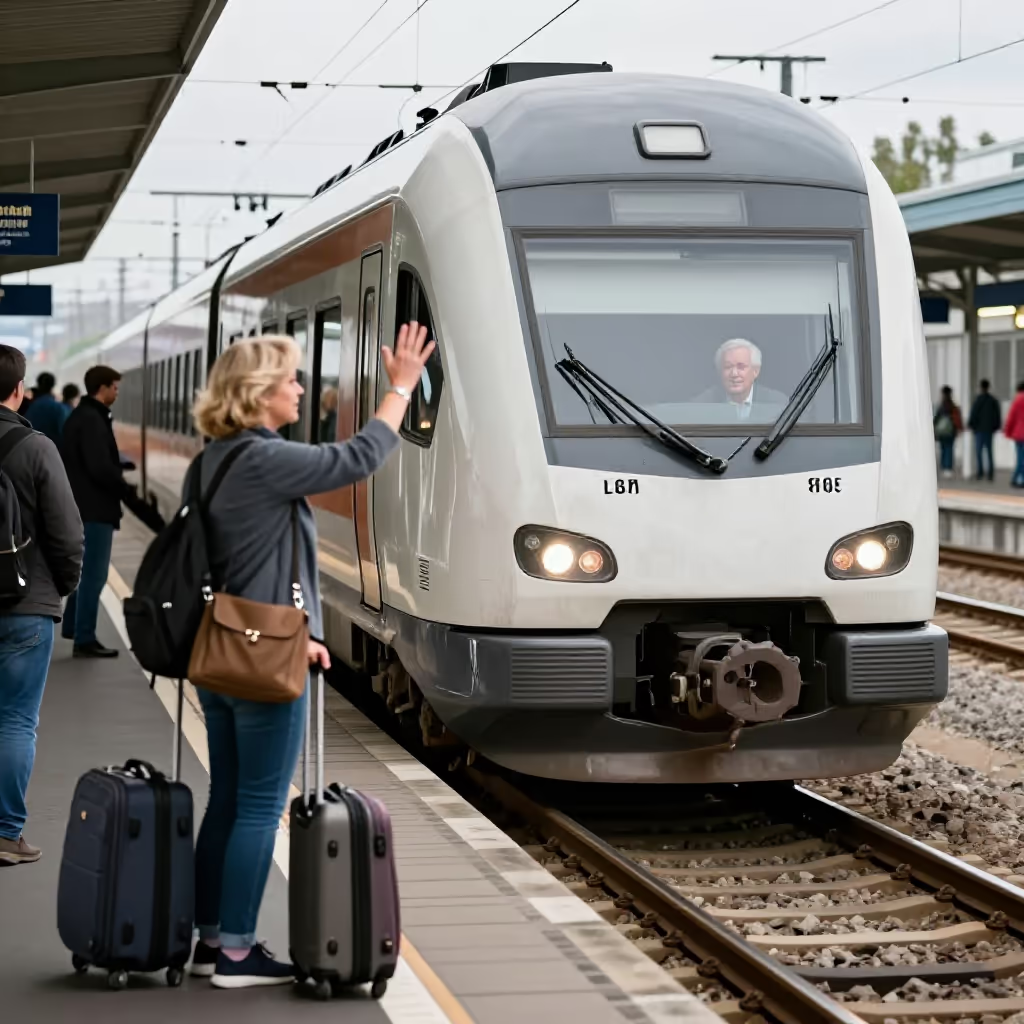
Unsere Abreise nach Hamburg ist für Montagmorgen geplant.
We are scheduled to leave for Hamburg on Monday morning.
Die Abfahrt des Zuges nach Hamburg ist für acht Uhr geplant.
The train to Hamburg is scheduled to depart at eight o'clock.