

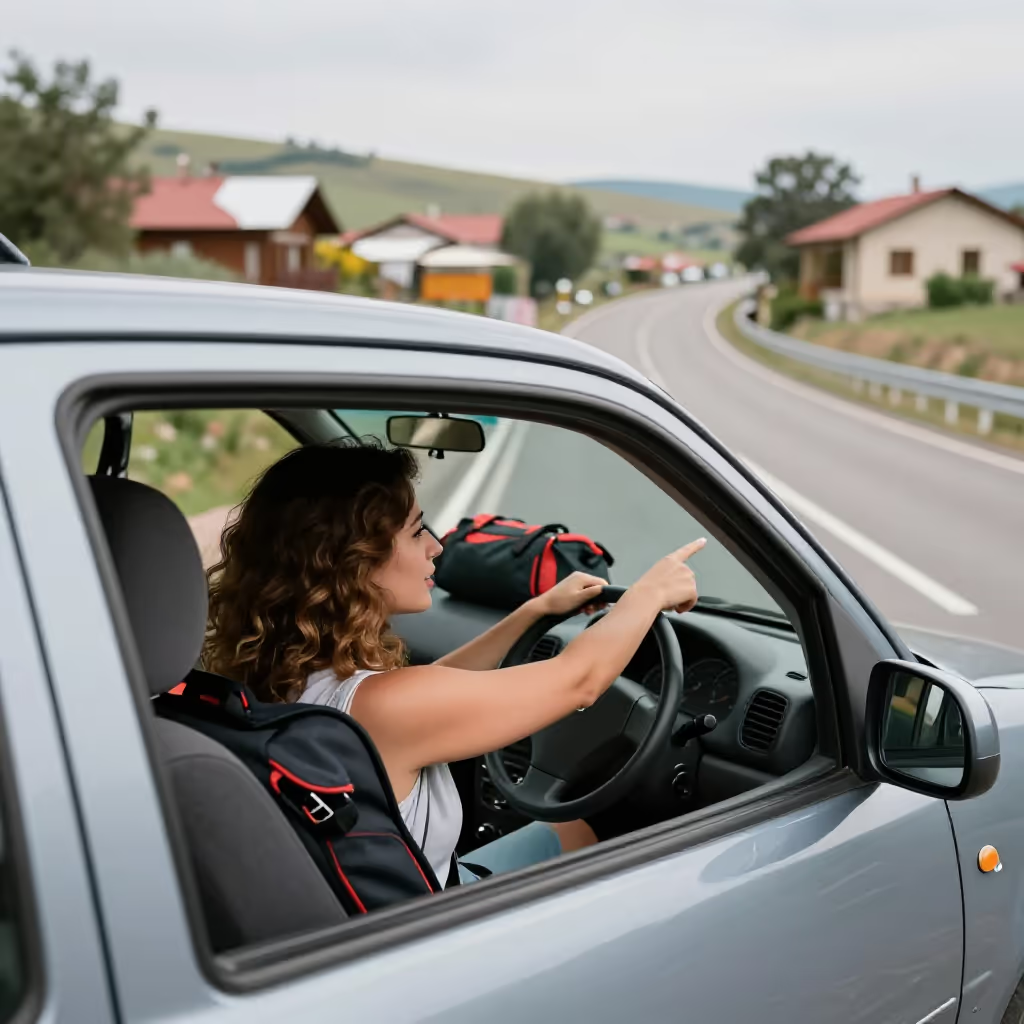
To make a short detour from a main route or original plan in order to visit a particular place or meet someone.
example
Auf dem Rückweg vom Urlaub haben wir noch einen Abstecher zu unseren Freunden nach Nürnberg gemacht.
On the way back from vacation, we made a detour to visit our friends in Nuremberg.
Usage tips
Fixed expression
'Der Abstecher' (detour) is almost always used in the fixed expression 'einen Abstecher machen' (to make a detour). It describes a planned, short detour.
EXAMPLE
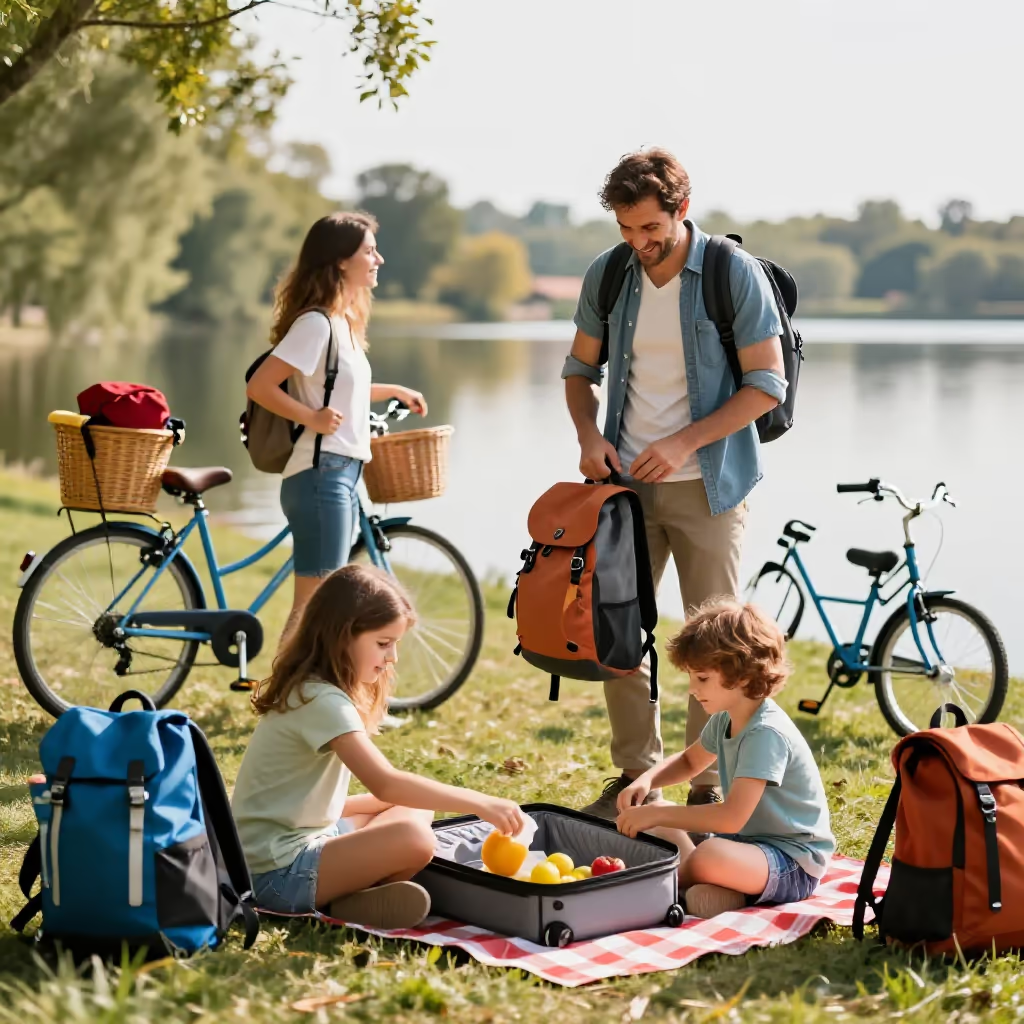
Lass uns auf dem Heimweg einen Abstecher zum See machen.
Let's make a detour to the lake on the way home.
Word structure
The word comes from the idea of 'abzustechen' (branching off), meaning to deviate from a straight line or main path. The prefix 'ab-' emphasizes movement away from the original route.
EXAMPLE
Der kleine Weg sticht hier vom Hauptweg ab.
The small path branches off from the main path here.
Correct preposition
The destination of the detour is indicated with the prepositions 'nach' (for places like cities or countries) or 'zu' (for people, specific places, or activities).
EXAMPLE
Wir machen einen Abstecher nach Hamburg.
We're making a detour to Hamburg.
Compare with
near_synonym · confusable
Abstecher vs Besuch
visit / visitor
'der Besuch' and 'der Abstecher' can both mean that you go to a place or to a person. 'der Besuch' is neutral and can be short or long. 'der Abstecher' emphasizes that you briefly deviate from your actual route or plan. You often make an 'Abstecher' spontaneously or on the side. The words can be confused because in both cases a place is visited. If the place is the actual destination, you would more likely say 'Besuch'. If it is only a short detour, 'Abstecher' fits better.
Abstecher
Auf dem Rückweg machen wir noch einen kurzen Abstecher zum See.
On the way back, we'll make a quick detour to the lake.
Besuch
Am Wochenende planen wir einen Besuch bei meinen Eltern.
We're planning a visit to my parents this weekend.