


abwesend
absent
Not being present at a specific place; missing.
EXAMPLE
Der Angeklagte war bei der Urteilsverkündung abwesend.
The defendant was absent at the announcement of the verdict.
absent
Loading your saved state.
absent
Not being present at a specific place; missing.
Der Angeklagte war bei der Urteilsverkündung abwesend.
The defendant was absent at the announcement of the verdict.

absent-minded
Not mentally focused on the matter at hand; lost in thought and inattentive.
Er nickte zwar, wirkte aber während des ganzen Gesprächs irgendwie abwesend.
He nodded, but somehow seemed absent-minded throughout the whole conversation.
'Abwesend' (absent) is the direct opposite of 'anwesend' (present). The prefix 'ab-' means 'away', while 'an-' describes presence at a place. The word stem '-wesend' is an old form related to 'sein' (to be).
Alle Schüler waren heute im Unterricht anwesend.
All students were present in class today.
When naming the place or event where someone is missing, the preposition 'bei' (+ dative) is often used. For example, someone is 'bei einer Sitzung abwesend' (absent from a meeting).
Leider war sie bei der wichtigen Besprechung krankheitsbedingt abwesend.
Unfortunately, she was absent from the important meeting due to illness.
The meaning 'not mentally focused on the matter at hand' can often be recognized from verbs like 'wirken' (to seem), 'scheinen' (to seem), or 'aussehen' (to look). The sentence then describes not where a person is, but how they behave in a situation.
Er starrte aus dem Fenster und wirkte völlig abwesend.
He stared out the window and seemed completely absent-minded.
missing
When referring to people, fehlend and abwesend can both express that someone is not there. Abwesend describes only this state. Fehlend additionally emphasizes that the person is expected or needed in the situation.
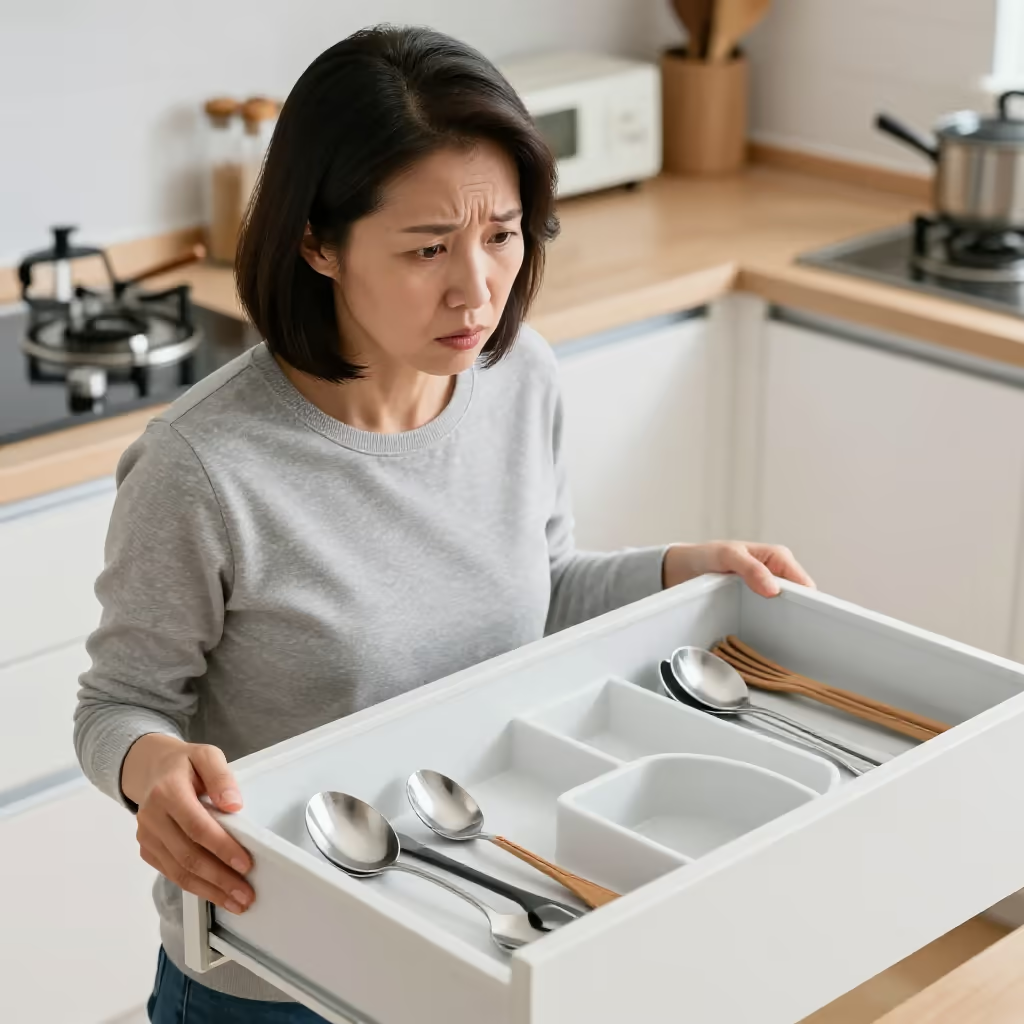
Die Vorsitzende ist heute bei der Sitzung abwesend.
The chairwoman is absent from today's meeting.
Wegen der fehlenden Vorsitzenden muss die wichtige Abstimmung warten.
Because the chairwoman is missing, the important vote has to wait.