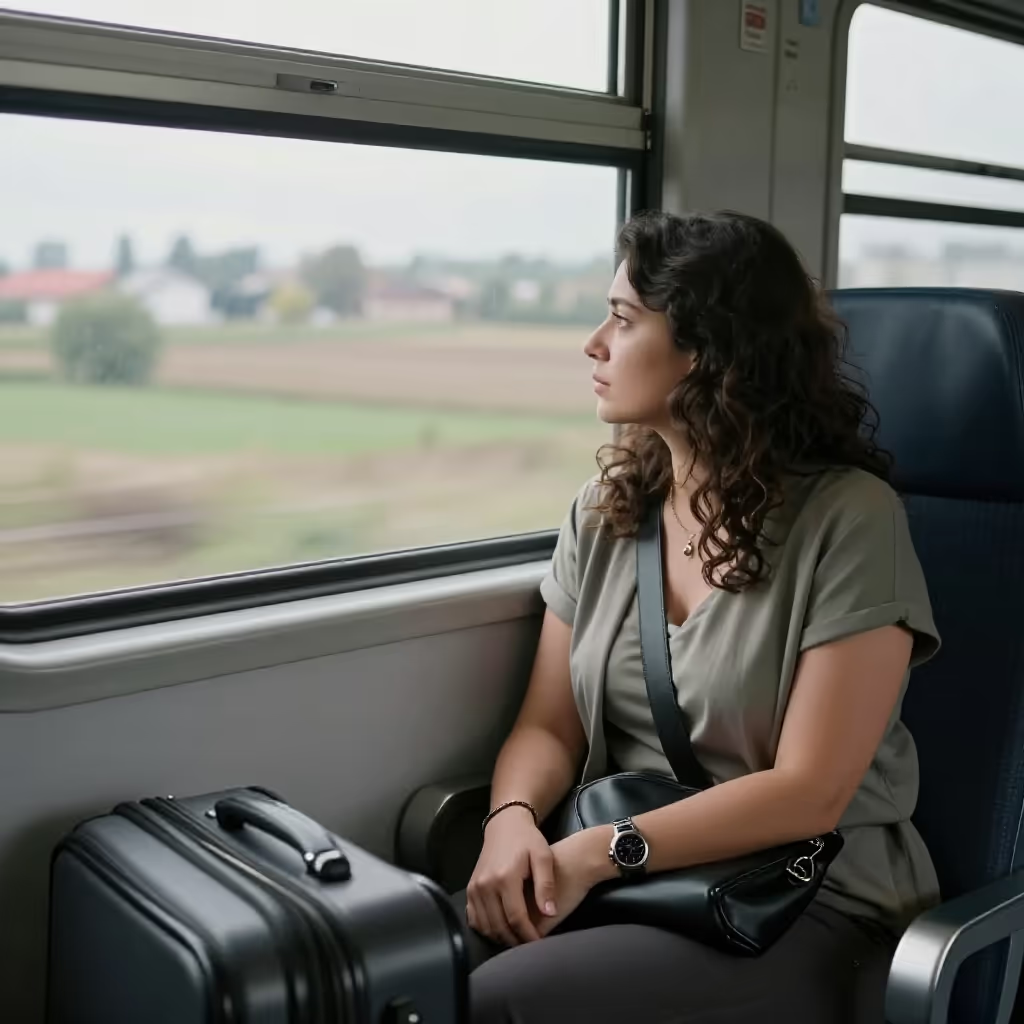
In a place other than at home or at one's usual location. Often used to describe an activity outside one's own city or house.
example
Da wir keine Lust zum Kochen hatten, haben wir auswärts gegessen.
Since we didn't feel like cooking, we ate out.

Usage tips
Word formation with '-wärts'
The ending '-wärts' expresses a direction or place. You can also find it in other adverbs such as 'vorwärts' (forward), 'rückwärts' (backward), 'abwärts' (downward), or 'heimwärts' (homeward).
EXAMPLE
Nach dem langen Tag im Büro fahre ich jetzt heimwärts.
After the long day at the office, I'm heading home now.
Sentence position
As an adverb, 'auswärts' (away/out) can be placed flexibly in a sentence. It can stand in position 1 (then the verb follows) or after the verb in the middle field of the sentence.
EXAMPLE
Auswärts schläft er immer sehr schlecht.
When he's away from home, he always sleeps very badly.
Typical collocations
In its general meaning, 'auswärts' (away/out) is often connected with everyday activities. Typical phrases are 'auswärts essen' (to eat out), 'auswärts schlafen' (to sleep away from home), or 'auswärts arbeiten' (to work away from home).
EXAMPLE
Am Wochenende schlafen wir bei Freunden, also auswärts.
At the weekend, we're sleeping at friends' place, so away from home.
Sports context clue
You can recognize the sports-context meaning by typical verbs such as 'spielen' (to play), 'antreten' (to compete/play), or 'gewinnen' (to win), as well as by the names of clubs or cities.
EXAMPLE
Der FC Bayern hat sein letztes Spiel auswärts gewonnen.
FC Bayern won its last match away.
Compare with
near_synonym · confusable
auswärts vs unterwegs
on the way / out and about
'unterwegs' and 'auswärts' can both mean that someone is not at home. The difference lies in the perspective. 'unterwegs' emphasizes movement or the journey: you are currently on the way or out and about a lot. 'auswärts' emphasizes the other place where something happens, for example eating, working, or studying. So you can be 'unterwegs' while you are traveling; you are more likely to be 'auswärts' when doing an activity at an unfamiliar or different place. The words can be confused because both have to do with being 'not at home'.
auswärts
Am Freitag essen wir auswärts, weil niemand kochen möchte.
On Friday, we're eating out because nobody wants to cook.
unterwegs
Nach der Arbeit ist Max noch unterwegs zum Bahnhof.
After work, Max is still on the way to the train station.