

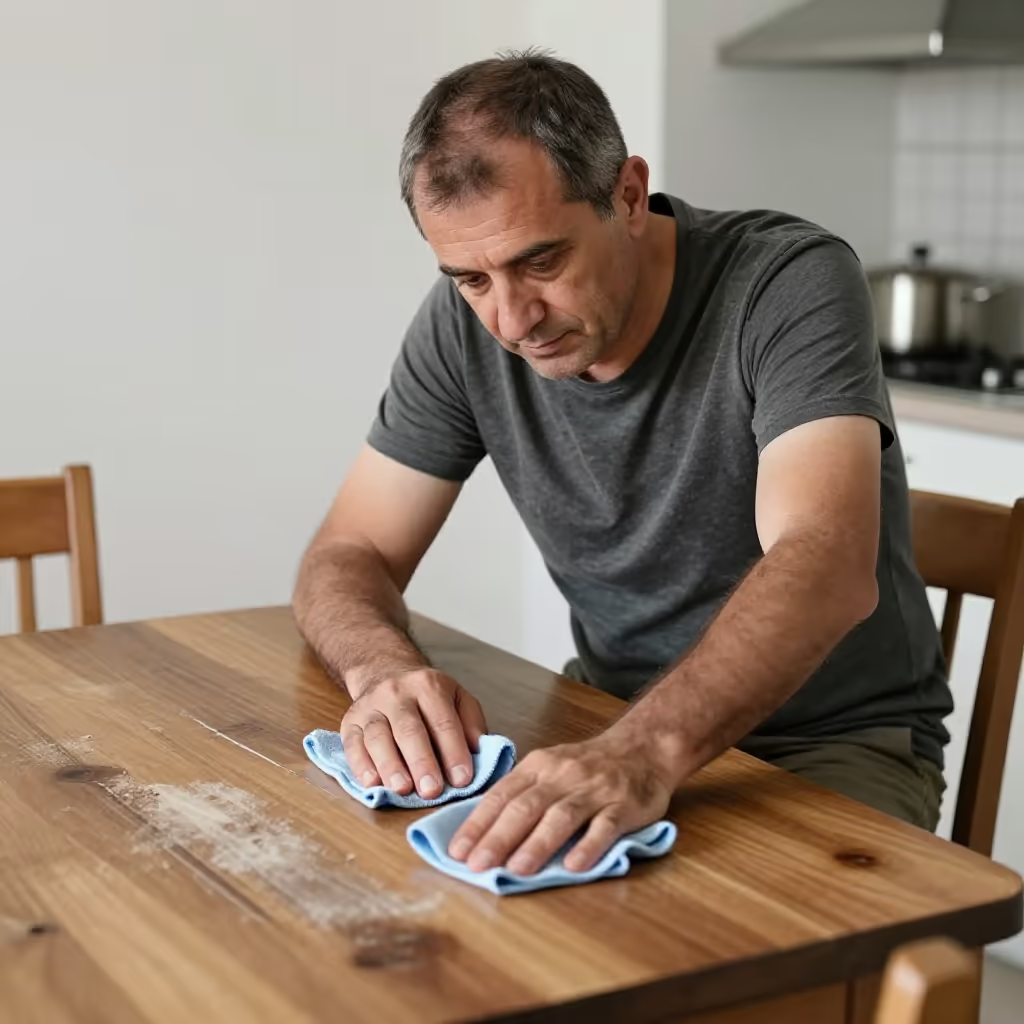
abwischen
to wipe down
To clean a surface by wiping away dirt, dust, or liquid.
EXAMPLE
Kannst du bitte den Tisch abwischen, bevor die Gäste kommen?
Can you please wipe down the table before the guests arrive?
to wipe
Loading your saved state.
to wipe down
To clean a surface by wiping away dirt, dust, or liquid.
Kannst du bitte den Tisch abwischen, bevor die Gäste kommen?
Can you please wipe down the table before the guests arrive?

to wipe off
To remove something that is on a surface with a wiping motion.
Er wischte sich die Krümel vom Pullover ab.
He wiped the crumbs off his sweater.
'Abwischen' (to wipe) is a separable verb. The prefix 'ab-' separates from the verb in a main clause and goes to the end of the sentence. In subordinate clauses and in the infinitive with 'zu', the verb stays together.
Wischst du bitte den Staub vom Regal ab?
Could you please wipe the dust off the shelf?
The direct object in the accusative shows what is meant. If the object is the surface, e.g. 'den Tisch' (the table), that surface is cleaned. If the object is the dirt, e.g. 'die Flecken' (the stains), it is removed.
Sie wischt schnell die Küchentheke ab.
She quickly wipes down the kitchen counter.
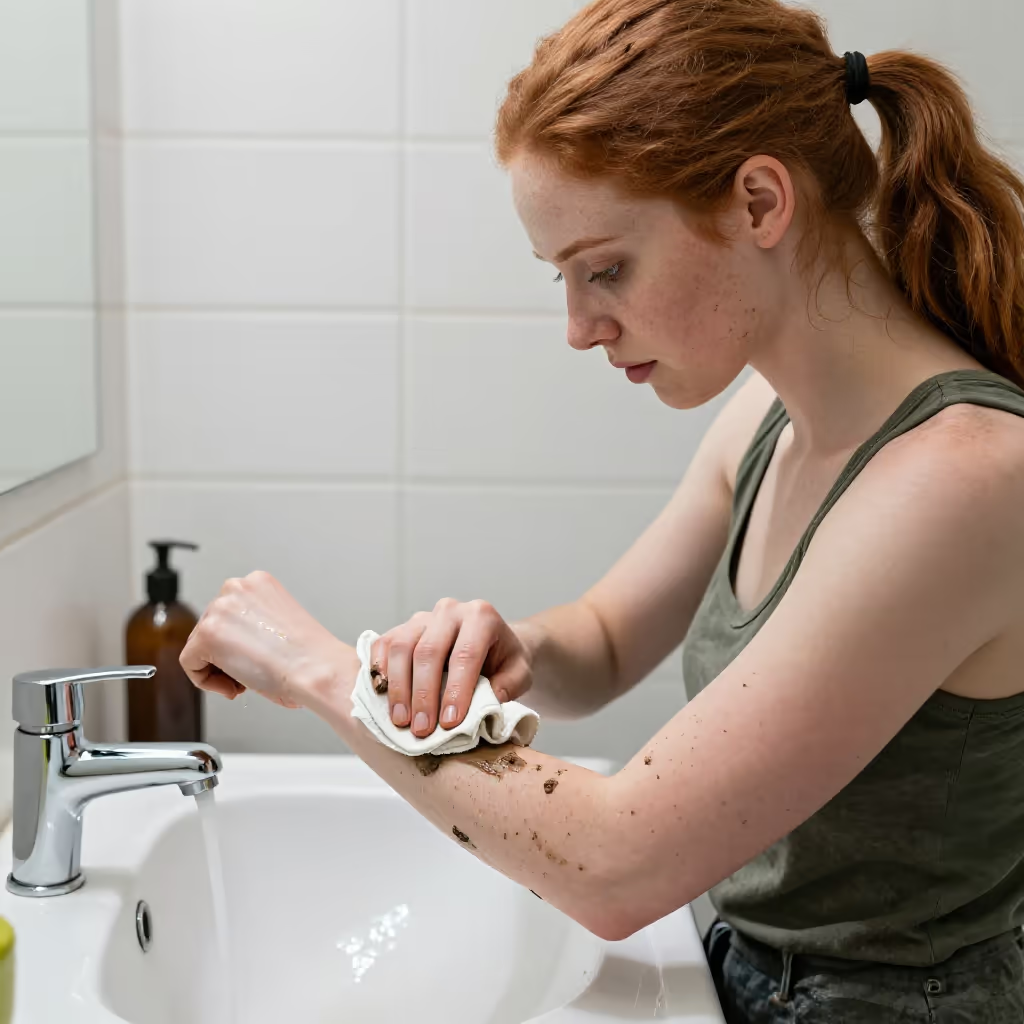
The verb is often used reflexively with a dative pronoun to express that someone removes something from themselves. The construction is: sich (dative) + etwas (accusative) + abwischen.
Er wischte sich den Schweiß von der Stirn ab.
He wiped the sweat off his forehead.
to wash up / wash off
Abwischen and abwaschen can both refer to cleaning a surface. Abwischen emphasizes the wiping motion or removing dirt with a cloth. Abwaschen emphasizes the use of water; a damp cloth can also be used.
Sie wischt den klebrigen Fleck mit einem feuchten Tuch vom Tisch ab.
She wipes the sticky spot off the table with a damp cloth.
Sie wäscht den klebrigen Tisch gründlich mit Wasser ab.
She washes the sticky table thoroughly with water.