


der Alarm
alarm
An acoustic or visual signal that warns of immediate danger.
EXAMPLE
Plötzlich ertönte der Feueralarm im ganzen Gebäude.
Suddenly, the fire alarm sounded throughout the whole building.
alarm
Loading your saved state.
alarm
An acoustic or visual signal that warns of immediate danger.
Plötzlich ertönte der Feueralarm im ganzen Gebäude.
Suddenly, the fire alarm sounded throughout the whole building.

to raise the alarm
To draw the attention of the public or the responsible authorities to a serious danger or problem.
Umweltschützer schlagen wegen des Bienensterbens Alarm.
Environmentalists are raising the alarm about the decline in bee populations.
alarm
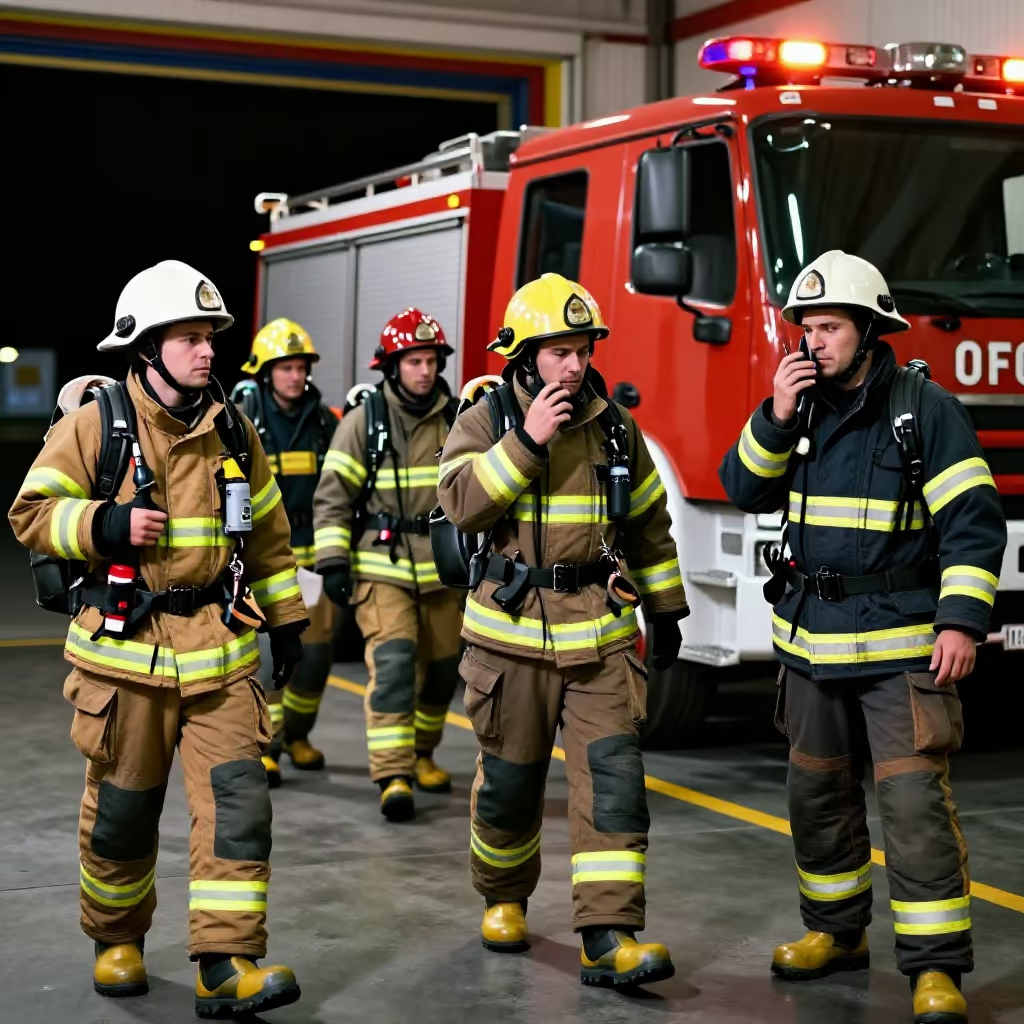
A state of highest readiness and tension among emergency services such as the fire department or police because of a danger report.
Nach dem Notruf wurde bei der Rettungsstaffel stiller Alarm ausgelöst.
After the emergency call, a silent alarm was triggered for the rescue unit.
'Alarm' is often used in fixed compounds to specify the type of danger. Common ones are 'Feueralarm' (fire alarm), 'Einbruchsalarm' (burglar alarm), or 'Fehlalarm' (false alarm).
Mitten in der Nacht gab es einen Fehlalarm.
In the middle of the night, there was a false alarm.
An alarm is 'ausgelöst' (triggered). When it starts, it 'geht los' (goes off) or 'ertönt' (sounds). These verbs are very typical in connection with a warning signal.
Durch den Rauch in der Küche wurde der Alarm ausgelöst.
The smoke in the kitchen triggered the alarm.
The expression 'Alarm schlagen' (to raise the alarm) is a fixed combination. It means that someone actively draws attention to a danger or a major problem.
Ärzte schlagen wegen der Zunahme von psychischen Erkrankungen Alarm.
Doctors are raising the alarm about the increase in mental illnesses.
warning
Warnung and Alarm draw attention to a danger. A Warnung can serve as a precautionary indication of a possible danger or problem. An Alarm, by contrast, usually signals immediate danger and calls for heightened readiness. Use Warnung for the notice and Alarm for the acute situation.

Wegen des starken Gewitters löste die Feuerwehr einen Alarm aus.
Because of the severe thunderstorm, the fire department sounded an alarm.
Die Warnung vor dem starken Gewitter erreichte die Bewohner schon am Nachmittag.
The warning about the severe thunderstorm reached the residents that afternoon.