


die Allee
avenue
A road or path with trees planted at regular intervals on both sides.
EXAMPLE
Wir sind durch eine wunderschöne alte Allee mit Kastanienbäumen gefahren.
We drove through a beautiful old avenue lined with chestnut trees.
avenue
Loading your saved state.
avenue
A road or path with trees planted at regular intervals on both sides.
Wir sind durch eine wunderschöne alte Allee mit Kastanienbäumen gefahren.
We drove through a beautiful old avenue lined with chestnut trees.
The word 'Allee' (avenue) comes from the French verb 'aller' (to go). It therefore originally describes a path or broad road meant for walking or driving.
Die historische Allee führt direkt zum Schloss.
The historic avenue leads directly to the castle.
An 'Allee' (avenue) is often described more precisely by the type of trees. This creates compound words such as 'Kastanienallee' (chestnut avenue), 'Lindenallee' (linden avenue), or 'Birkenallee' (birch avenue).
Im Herbst sammeln die Kinder in der Kastanienallee Kastanien.
In autumn, the children collect chestnuts in the chestnut avenue.
When moving along or through an 'Allee' (avenue), the prepositions 'durch' (through) or 'entlang' (along) are typically used.
Wir spazierten die lange Allee entlang.
We walked along the long avenue.
boulevard
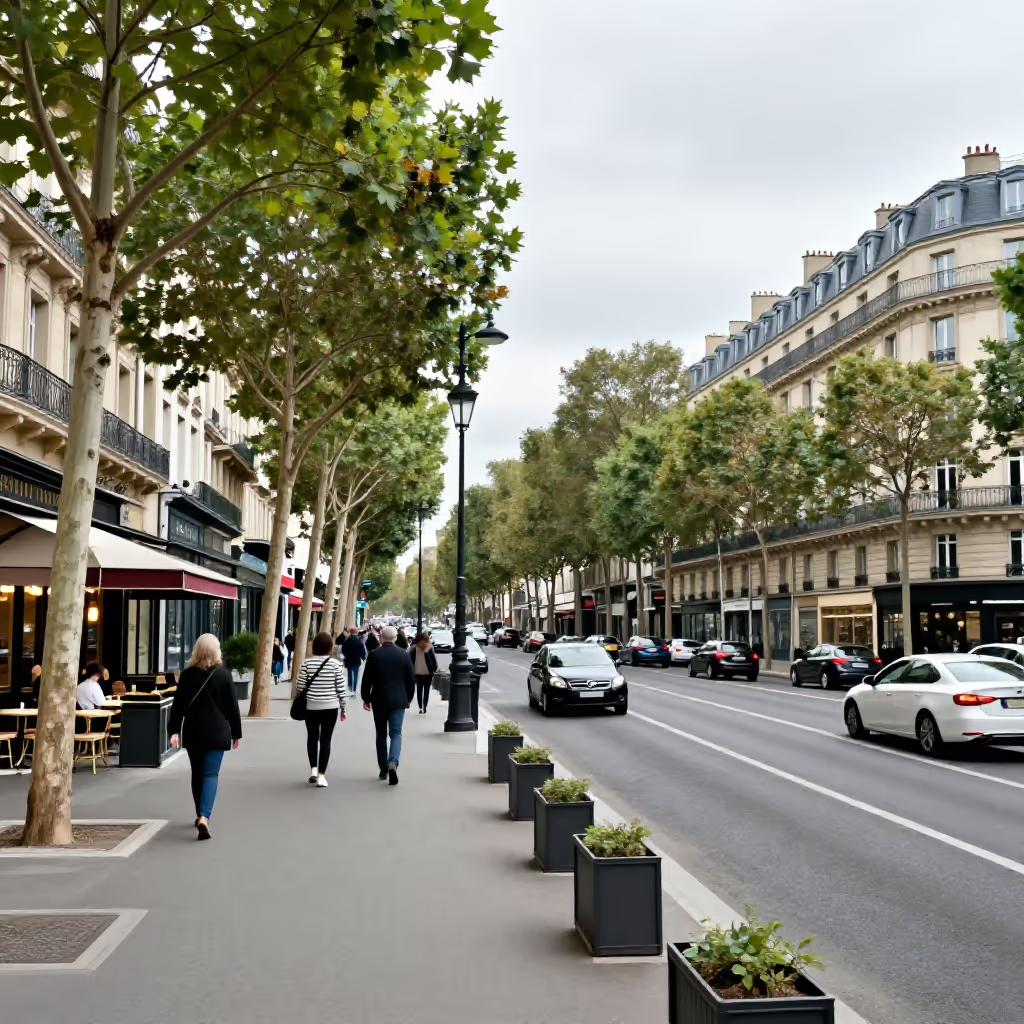
Both words can refer to a broad city street lined with trees. „Allee“ emphasizes the regular rows of trees, while „Boulevard“ focuses more on an impressive urban street with sidewalks and often shops. Use „Allee“ when the planting is essential, and „Boulevard“ when the urban character is the main focus.
Die Allee führt mit regelmäßigen Baumreihen bis zum alten Schloss.
The avenue leads to the old castle, lined with regular rows of trees.
Der Boulevard ist wegen seiner Geschäfte und breiten Gehwege sehr beliebt.
The boulevard is very popular because of its shops and wide sidewalks.