


sich ansiedeln
to settle
To take up a new residence in a particular place and become settled there.
EXAMPLE
Nach dem Krieg siedelten sich viele Flüchtlinge in dieser Region an.
After the war, many refugees settled in this region.
to settle / establish
Loading your saved state.
to settle
To take up a new residence in a particular place and become settled there.
Nach dem Krieg siedelten sich viele Flüchtlinge in dieser Region an.
After the war, many refugees settled in this region.
to establish
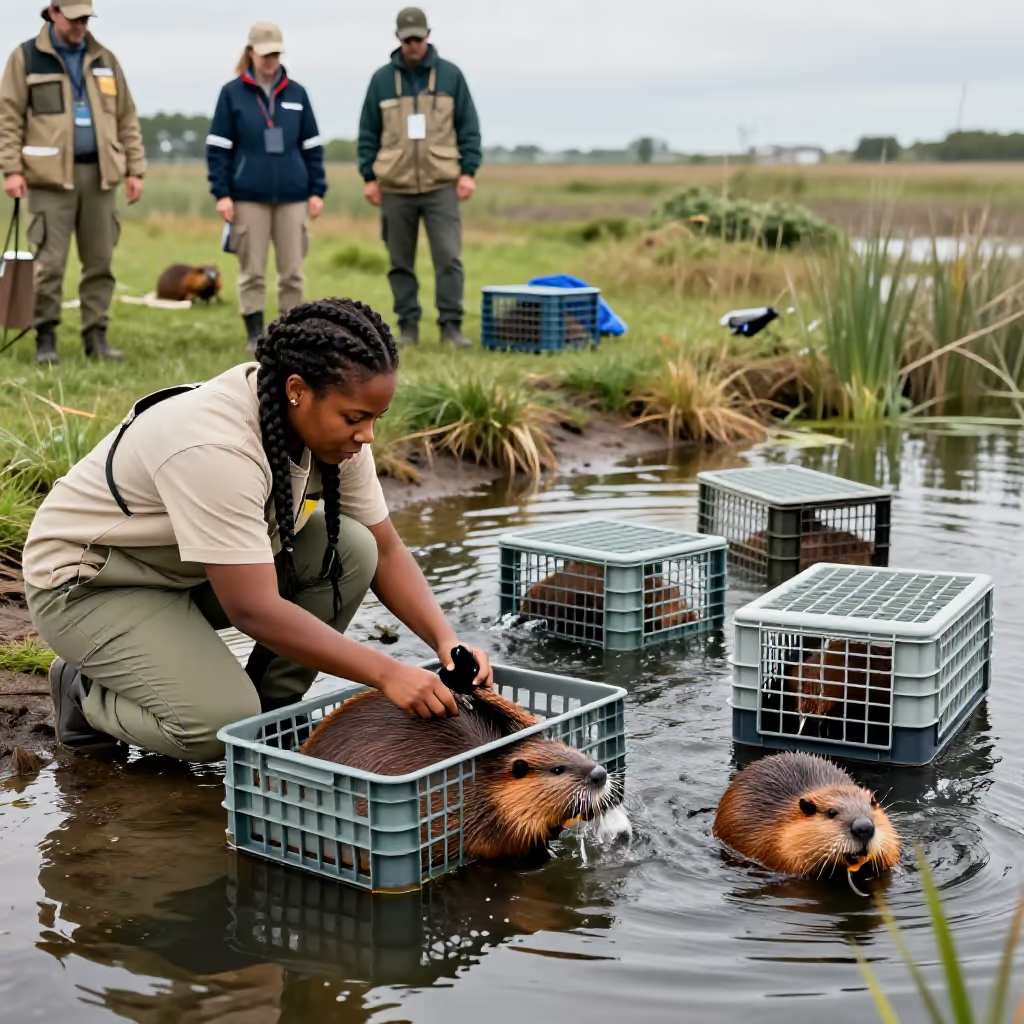
To deliberately establish companies, industries, or even animal species in a new place.
Die Stadt versucht, neue Technologie-Firmen im Gewerbegebiet anzusiedeln.
The city is trying to establish new technology companies in the business park.

to set
To set a story, novel, or film in a particular time or place context.
Der Autor siedelt seinen neuen Roman im Berlin der 1920er Jahre an.
The author sets his new novel in Berlin in the 1920s.
'Ansiedeln' (to settle / establish) is a separable verb. The prefix 'an' comes at the end in a main clause; in subordinate clauses and in the infinitive, it remains attached to the verb.
Die Firma siedelt viele neue Mitarbeiter in der Stadt an.
The company is settling many new employees in the city.
The verb 'ansiedeln' (to settle / establish) belongs to the word family around 'siedeln' (to settle, live). Related words are 'die Siedlung' (a settlement, a group of houses) and 'der Siedler' (a settler, a person who lives in a new place).
Die ersten Siedler bauten kleine Holzhäuser.
The first settlers built small wooden houses.
When people or animals begin living in a new place, the verb is used reflexively: 'sich ansiedeln' (to settle). The person or animal is then the subject of the sentence.
Viele junge Familien siedeln sich am Stadtrand an.
Many young families settle on the outskirts of the city.
When the meaning is to deliberately establish companies or animal species in a place, the verb is used transitively (with an accusative object). The subject is the person or institution controlling this process.
Die Regierung will gezielt neue Industrien in der Region ansiedeln.
The government wants to deliberately establish new industries in the region.
In this meaning, the accusative object is always something creative, such as a 'Roman' (novel), a 'Film' (film), or a 'Geschichte' (story). The place or time is usually given with the preposition 'in' (+ dative).
Die Regisseurin siedelt die Handlung im mittelalterlichen Frankreich an.
The director sets the plot in medieval France.
to establish
Ansiedeln emphasizes deliberately bringing a company to a new location. Etablieren, by contrast, emphasizes building it into a permanent and recognized institution. Use ansiedeln when choosing the location, and etablieren when referring to its successful, lasting development.

Die Gemeinde will das Unternehmen in der Region ansiedeln.
The municipality wants to attract the company to the region.
Nach einigen erfolgreichen Jahren hat sich das Unternehmen fest in der Region etabliert.
After several successful years, the company has become firmly established in the region.