

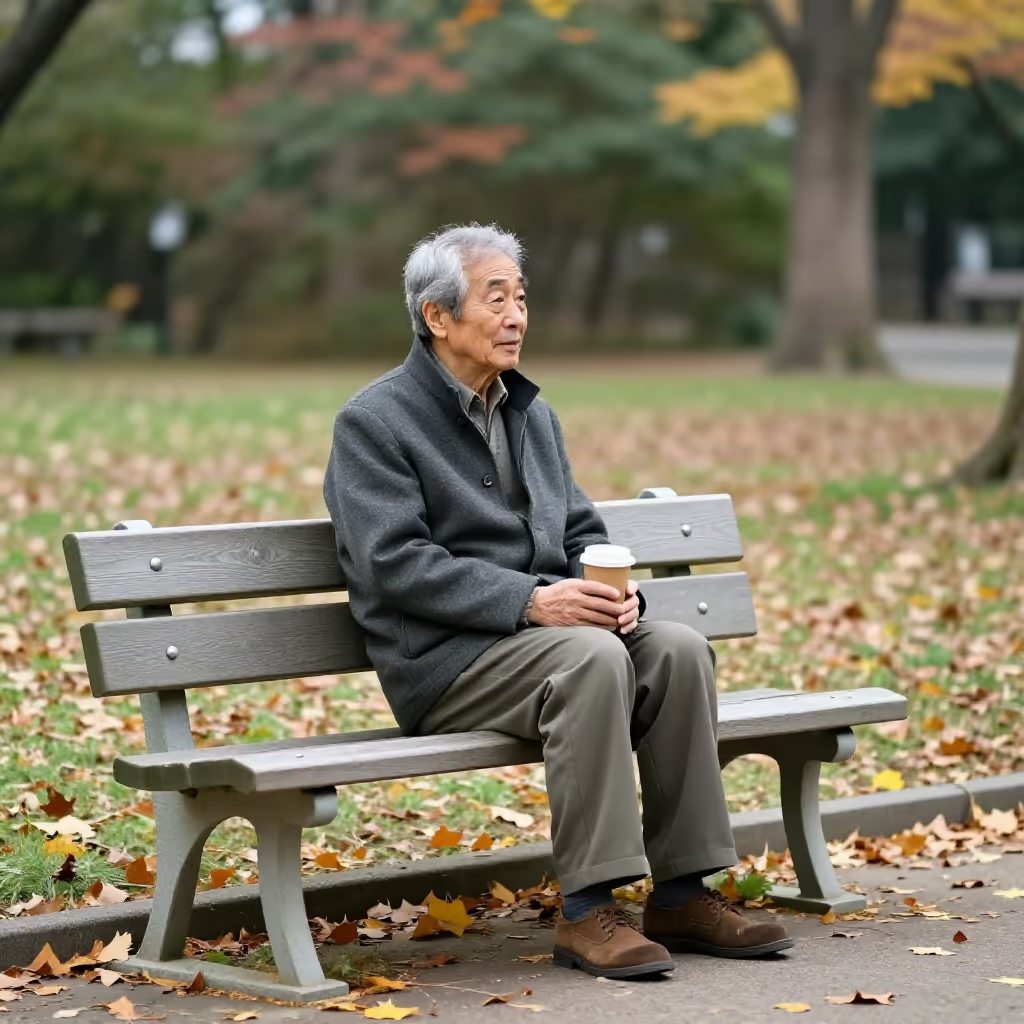
allein
alone
Describes the state of being without the company of other people.
EXAMPLE
Nach der Trennung lebte sie mehrere Monate allein in der großen Wohnung.
After the breakup, she lived alone in the large apartment for several months.
alone / only
Loading your saved state.
alone
Describes the state of being without the company of other people.
Nach der Trennung lebte sie mehrere Monate allein in der großen Wohnung.
After the breakup, she lived alone in the large apartment for several months.

only
Means 'nur' (only) or 'ausschließlich' (exclusively) and limits a statement to a specific thing or person.
Allein der Gedanke an die Prüfung macht mich schon nervös.
Just the thought of the exam makes me nervous already.

on one's own
Used to express that someone does or manages something without help from others.
Er hat das komplexe Problem ganz allein gelöst.
He solved the complex problem completely on his own.
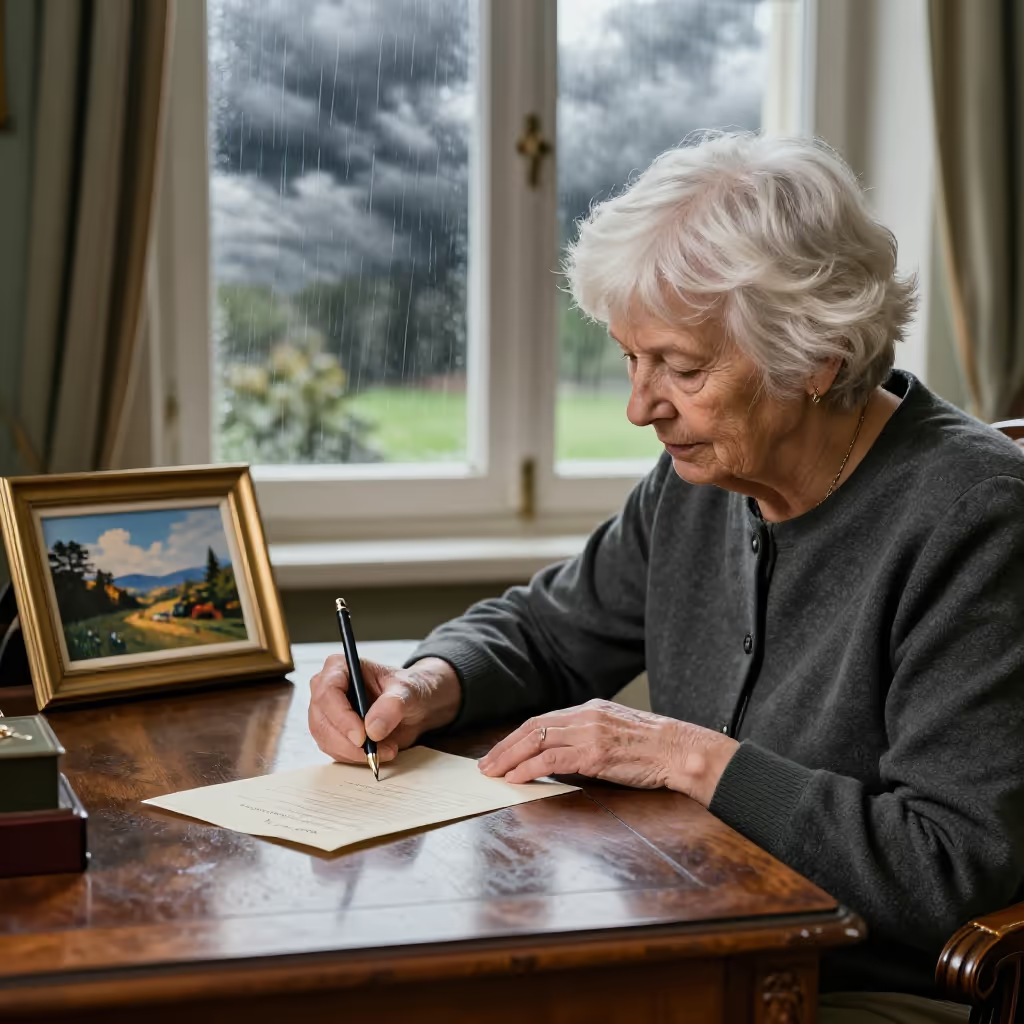
however
Functions as a conjunction meaning 'jedoch' (however) or 'aber' (but) and introduces a contrast. This use is rather formal or literary.
Dein Plan ist gut, allein er berücksichtigt nicht die möglichen Risiken.
Your plan is good; however, it does not take the possible risks into account.
The word 'allein' can be derived from 'all' and 'ein'. The literal meaning 'completely one' helps you understand the core idea of being separate or unique.
Er war der Erste, der das Problem allein verstanden hat.
He was the first to understand the problem on his own.
When 'allein' means that someone is without company or without help, it normally comes after the noun or pronoun it refers to. In this position, it is not declined.
Ich möchte heute Abend allein sein.
I want to be alone this evening.
In the meaning 'without others', 'allein' is often used with certain verbs. Typical combinations are 'allein sein' (to be alone), 'allein leben' (to live alone), and 'jemanden allein lassen' (to leave someone alone).
Bitte lass mich mit meinen Gedanken allein.
Please leave me alone with my thoughts.
When 'allein' has the meaning 'nur' (only) or 'ausschließlich' (exclusively), it usually comes before the word or phrase it limits. In this function, it is also not declined.
Allein die Vorstellung, eine Rede zu halten, macht sie nervös.
Just the idea of giving a speech makes her nervous.
As a conjunction, 'allein' introduces a main clause that expresses a contrast. The word order in the following sentence is normal (subject-verb-object). This use is rather formal and found in written language.
Die Reise war schön, allein das Wetter hätte besser sein können.
The trip was nice; however, the weather could have been better.
but
As conjunctions, „aber“ and „allein“ can both introduce the same contrast. „Aber“ is neutral and common in everyday language today. „Allein“ sounds formal or literary in this function and is therefore more appropriate for correspondingly elevated texts.

Der Weg ist kurz, allein er ist steil.
The path is short; however, it is steep.
Der Weg ist kurz, aber er ist steil.
The path is short, but it is steep.