

A Christian holiday on November 1 on which all saints are commemorated. In some German federal states, it is a public holiday.
example
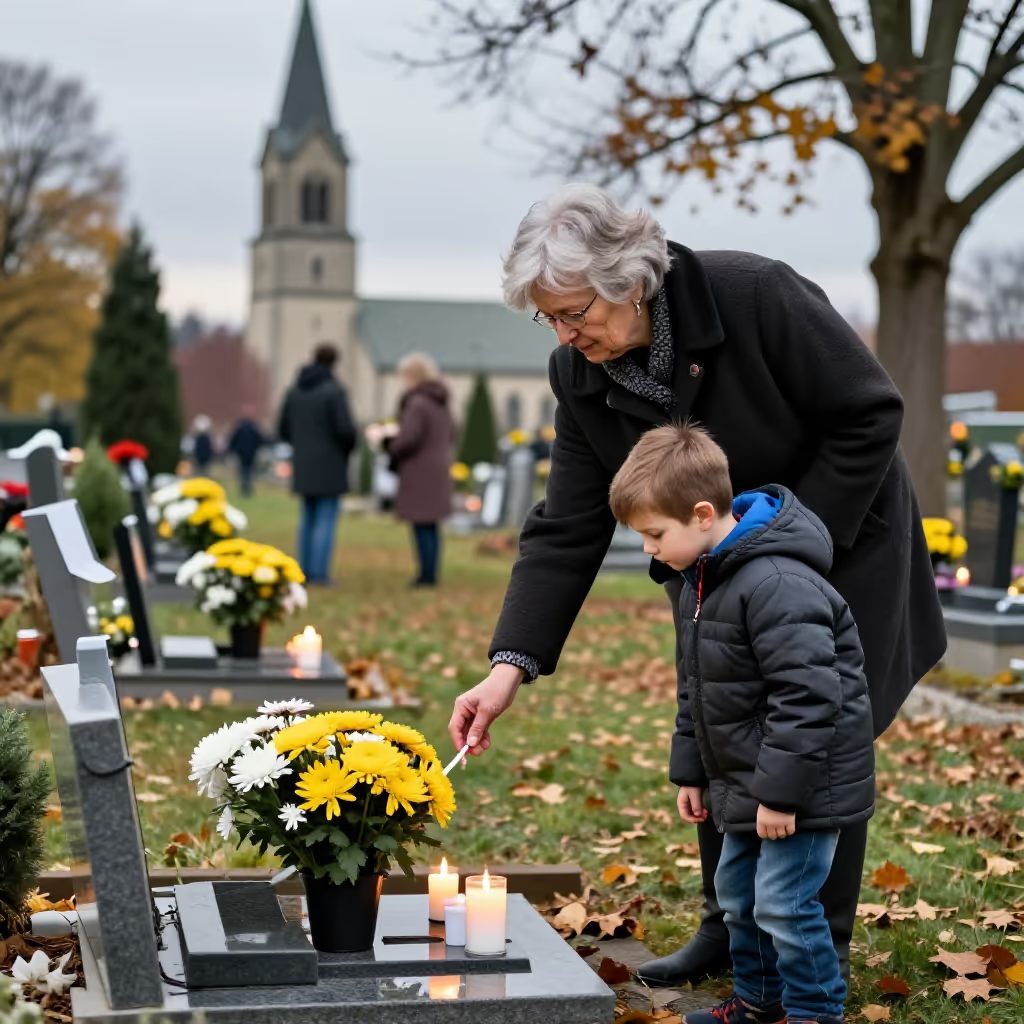
An Allerheiligen besuchen viele Menschen die Gräber ihrer Angehörigen und schmücken sie mit Blumen.
On All Saints' Day, many people visit the graves of their relatives and decorate them with flowers.
Usage tips
Word composition
The word consists of 'Aller' and 'Heiligen'. 'Aller' is an old genitive plural form of 'alle' (all). The word therefore literally means 'the day of all saints'.
EXAMPLE
Allerheiligen ist ein wichtiger Tag im katholischen Kirchenjahr.
All Saints' Day is an important day in the Catholic church year.
Correct preposition
As with most holidays, the preposition 'an' is used here as well. As a rule, the word then appears without an article: 'an Allerheiligen' (on All Saints' Day).
EXAMPLE
An Allerheiligen sind die Geschäfte in Bayern geschlossen.
On All Saints' Day, the shops in Bavaria are closed.
Cultural context
Although the name commemorates 'aller Heiligen' (all saints), in practice the day is above all a day for remembering the deceased members of one's own family. It is a fixed tradition to visit and decorate graves on All Saints' Day.
EXAMPLE
Meine Oma geht an Allerheiligen immer auf den Friedhof, um die Gräber zu pflegen.
My grandma always goes to the cemetery on All Saints' Day to tend the graves.