

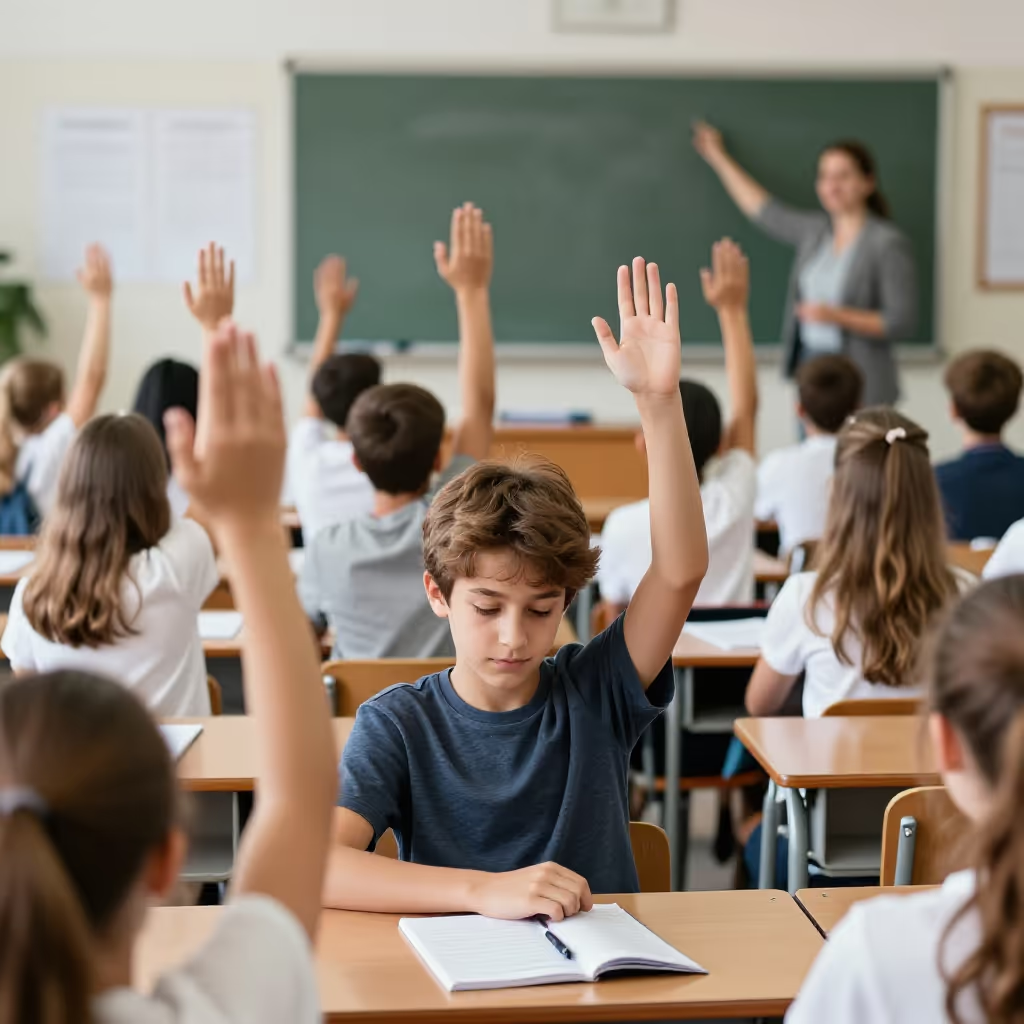
Expresses that something refers to by far the largest part or almost all of a group. It is an intensification of 'meist' (most) or 'die meisten' (most people/things).
example
Die allermeisten Menschen wünschen sich ein friedliches Leben.
The vast majority of people wish for a peaceful life.
Usage tips
Word structure
The word consists of 'aller-' and 'meist'. The prefix 'aller-' is used in German to intensify the superlative, e.g. 'der Allerbeste' (the very best), 'das Allerschönste' (the very most beautiful thing). 'Allermeist' is therefore a stronger form of 'meist' (most).
EXAMPLE
Das war der allerbeste Kuchen, den ich je gegessen habe.
That was the very best cake I have ever eaten.
Use as an adjective
When 'allermeist' (vast majority/very most) stands before a noun, it is declined like a normal adjective and gets an ending. Since it expresses a superlative, it is almost always used in the plural.
EXAMPLE
Die allermeisten Studierenden haben die Prüfung bestanden.
The vast majority of students passed the exam.
Typical combinations
Common combinations are 'die allermeisten Menschen' (the vast majority of people), 'in den allermeisten Fällen' (in the vast majority of cases), and 'die allermeiste Zeit' (the vast majority of the time).
EXAMPLE
Die allermeiste Zeit verbringe ich im Büro.
I spend the vast majority of my time in the office.
Compare with
near_synonym · confusable
allermeist vs meist
mostly / most
'meist' and 'allermeist' both express that something applies to the larger part. 'meist' is neutral and simply means 'in most cases'. 'allermeist' is stronger: it means almost all or by far the largest part. Learners may confuse the words because both have to do with a majority. The difference is the strength. For normal frequency, use 'meist'. 'allermeist' only fits when you want to strongly emphasize that very few exceptions remain.
allermeist
Die allermeisten Schüler sind heute gut auf die Prüfung vorbereitet.
The vast majority of students are well prepared for the exam today.
meist
Vor einer Reise packt Mia meist schon am Abend vorher.
Before a trip, Mia usually packs the evening before.