

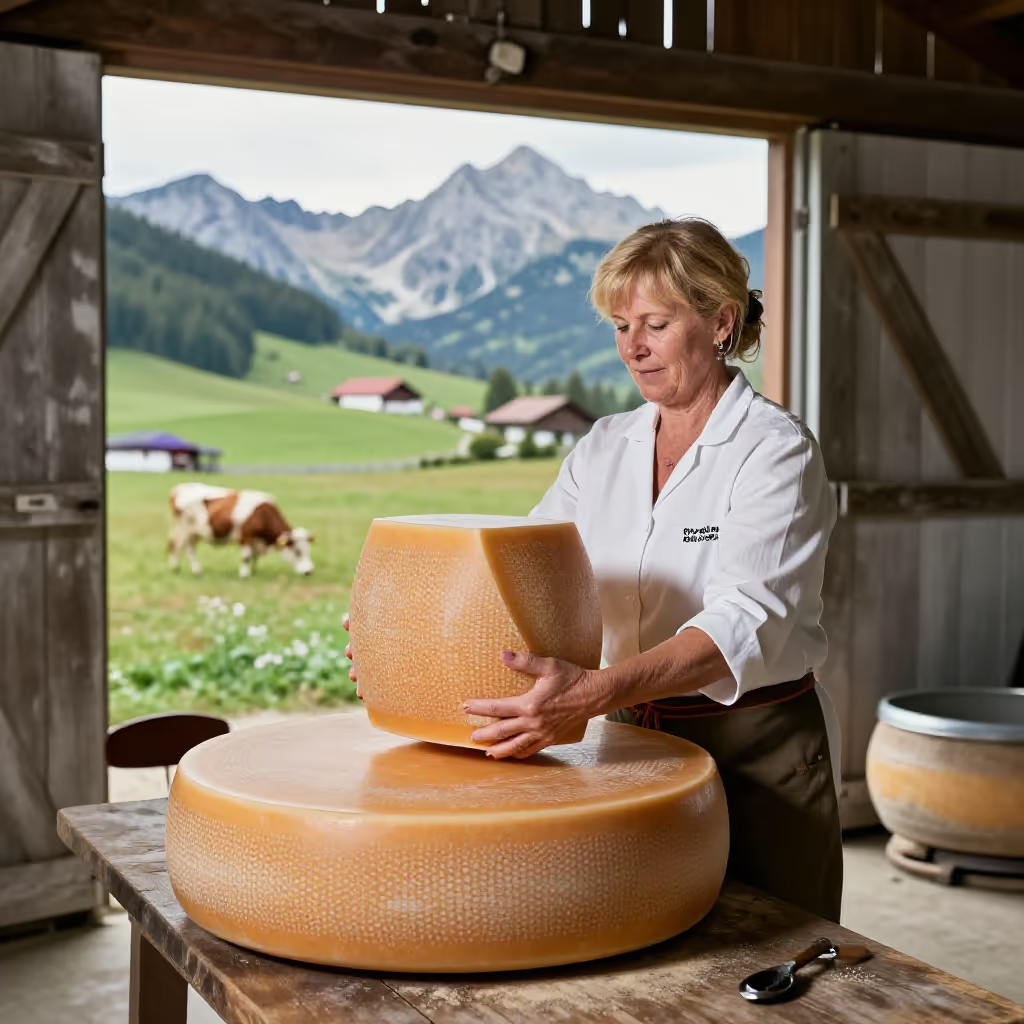
allgäuer
from the Allgäu
Refers to origin from the Allgäu region in southern Germany. The adjective is not declined.
EXAMPLE
Der allgäuer Bergkäse ist für seinen kräftigen Geschmack bekannt.
Allgäu mountain cheese is known for its strong flavor.
Allgäu
Loading your saved state.
from the Allgäu
Refers to origin from the Allgäu region in southern Germany. The adjective is not declined.
Der allgäuer Bergkäse ist für seinen kräftigen Geschmack bekannt.
Allgäu mountain cheese is known for its strong flavor.
Adjectives derived from a place name and ending in '-er' are not declined. The form 'allgäuer' therefore always stays the same, no matter which case, gender, or number follows.
Ich esse gerne allgäuer Käse.
I like eating Allgäu cheese.
A typical mistake is to decline this adjective like a normal adjective. But it is always 'mit allgäuer Käse' and not 'mit allgäuerem Käse'.
Die Suppe wird mit allgäuer Sahne verfeinert.
The soup is refined with Allgäu cream.
The word is formed from the name of the region 'das Allgäu' and the suffix '-er'. This pattern is used for many German cities and regions, for example 'Berliner', 'Hamburger', or 'Kölner'.
Viele Touristen bewundern die allgäuer Architektur.
Many tourists admire Allgäu architecture.
The adjective is used almost exclusively in connection with products, places, or traditions from the Allgäu region. Typical examples are 'allgäuer Käse' (Allgäu cheese), 'allgäuer Alpen' (Allgäu Alps), and 'allgäuer Brauchtum' (Allgäu customs/traditions).
Im Urlaub haben wir eine traditionelle allgäuer Sennerei besucht.
On vacation, we visited a traditional Allgäu dairy.