

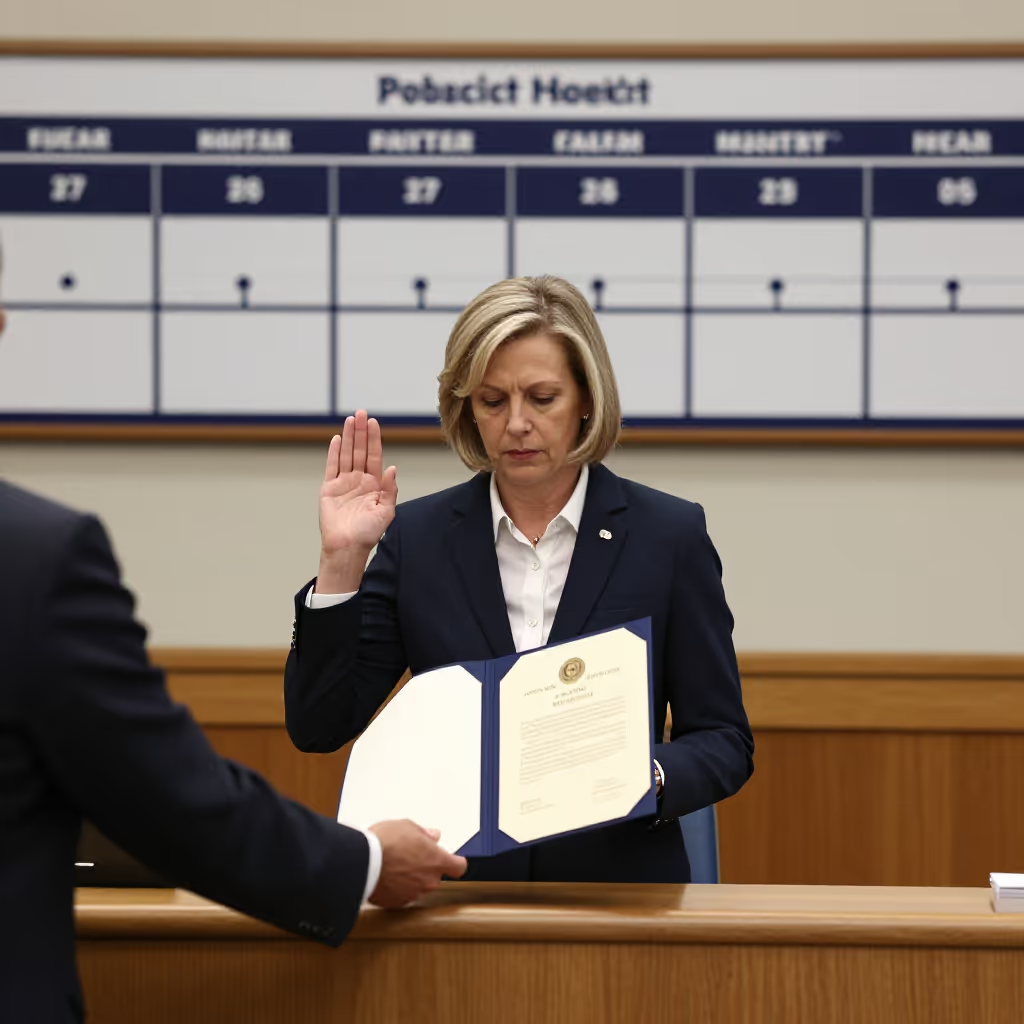
The period of time, set by law or by statutes, for which a person is elected or appointed to a public office or function.
example
Die Amtsperiode des US-Präsidenten dauert vier Jahre.
The term of office of the U.S. president lasts four years.
Usage tips
Word composition
The word is made up of 'Amt' (office, official position) and 'Periode' (period of time). So it refers precisely to the period during which someone holds an office.
EXAMPLE
Seine erste Amtsperiode als Bürgermeister war sehr erfolgreich.
His first term of office as mayor was very successful.
Sentence structure and use
To say whose term of office is meant, the genitive or the preposition 'von' (of/by) is often used. Both forms are correct and common.
EXAMPLE
Die Amtsperiode des Bundeskanzlers ist gesetzlich festgelegt.
The chancellor's term of office is defined by law.
Typical collocations
Common combinations are 'eine Amtsperiode dauert' (a term of office lasts), 'eine Amtsperiode beginnt/endet' (a term of office begins/ends), or 'für eine zweite Amtsperiode kandidieren' (to run for a second term of office).
EXAMPLE
Er wurde für eine zweite Amtsperiode wiedergewählt.
He was reelected for a second term of office.
Compare with
synonym
Amtsperiode vs Amtszeit
term of office
'die Amtszeit' and 'die Amtsperiode' mean very nearly the same thing: the fixed period during which someone holds an official office. Both words fit well with elected or appointed functions, for example in politics, associations, or organizations. 'Amtszeit' sounds a little more common and direct in everyday language. 'Amtsperiode' puts more emphasis on the individual period for which someone was elected or appointed. In many sentences, you can use both words without much difference in meaning.
Amtsperiode
Yusuf möchte in der nächsten Amtsperiode mehr für den Umweltschutz tun.
Yusuf wants to do more for environmental protection in the next term of office.
Amtszeit
Die Amtszeit des neuen Vorstands beginnt im Januar.