

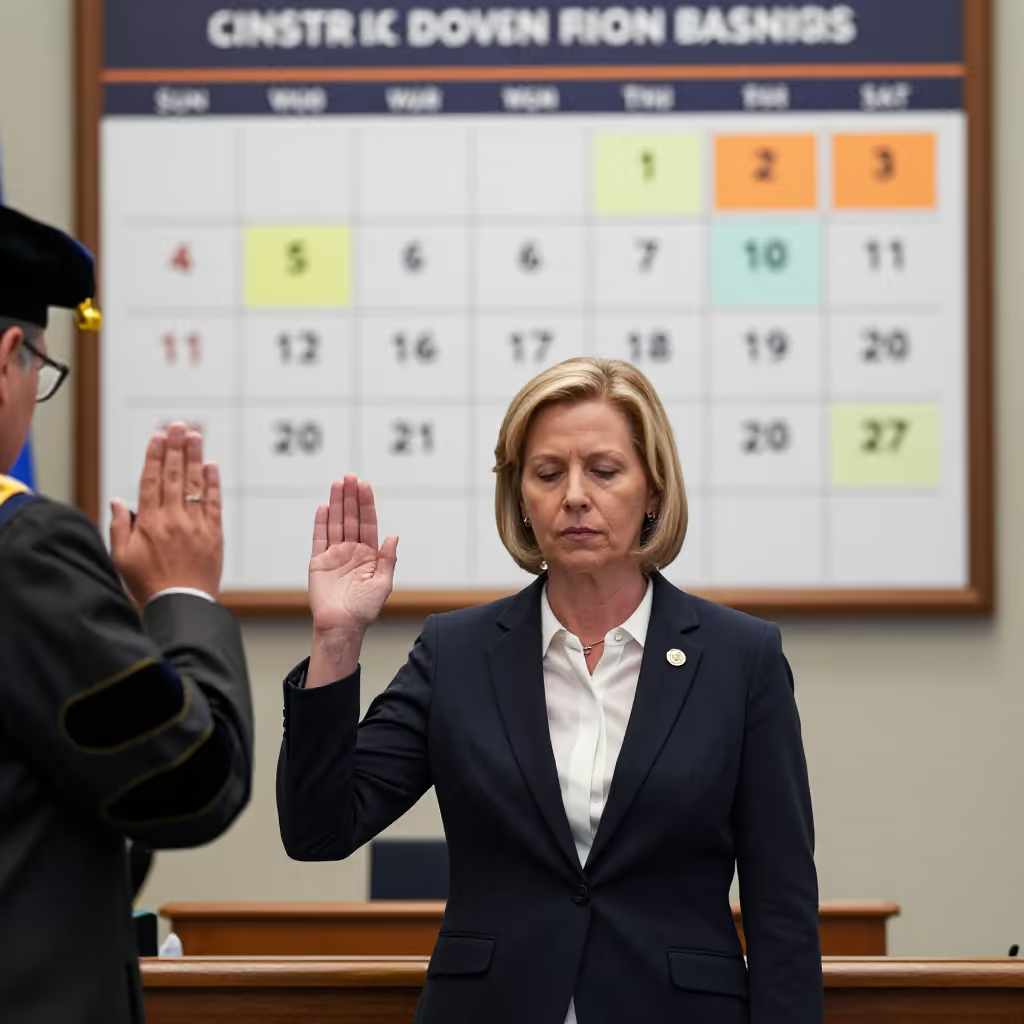
die Amtszeit
term of office
The legally or statutorily defined period of time for which a person holds a public office or an official function.
Die Amtszeit des Bürgermeisters endet im nächsten Frühjahr.
The mayor’s term of office ends next spring.
term of office
Loading your saved state.

term of office
The legally or statutorily defined period of time for which a person holds a public office or an official function.
Die Amtszeit des Bürgermeisters endet im nächsten Frühjahr.
The mayor’s term of office ends next spring.
'Die Amtszeit' (term of office) is a compound noun made up of 'das Amt' (an official position) and 'die Zeit' (time). So it literally describes the time during which someone holds an office.
Er bewirbt sich um das Amt des Schatzmeisters.
He is applying for the office of treasurer.
Common phrases are 'eine Amtszeit beginnt' (a term of office begins) or 'endet' (ends). People also talk about doing something 'während seiner/ihrer Amtszeit' (during his/her term of office) or running 'für eine weitere Amtszeit' (for another term of office).
Während seiner ersten Amtszeit wurden viele neue Gesetze verabschiedet.
During his first term of office, many new laws were passed.
This word is used almost exclusively in the context of politics and official functions. It refers to people such as presidents, chancellors, mayors, or board members.
Die Kanzlerin wurde für eine vierte Amtszeit wiedergewählt.
The chancellor was reelected for a fourth term of office.
electoral term
Amtszeit refers to a person who holds public office or an official position. Wahlperiode, by contrast, refers to an elected political body. A municipal council therefore has a Wahlperiode, while a mayor has an Amtszeit.

Die Amtszeit des Bürgermeisters beträgt laut Satzung sechs Jahre.
According to the bylaws, the mayor's term of office is six years.
Die Wahlperiode des Gemeinderats beträgt laut Satzung fünf Jahre.
According to the bylaws, the municipal council's electoral term is five years.